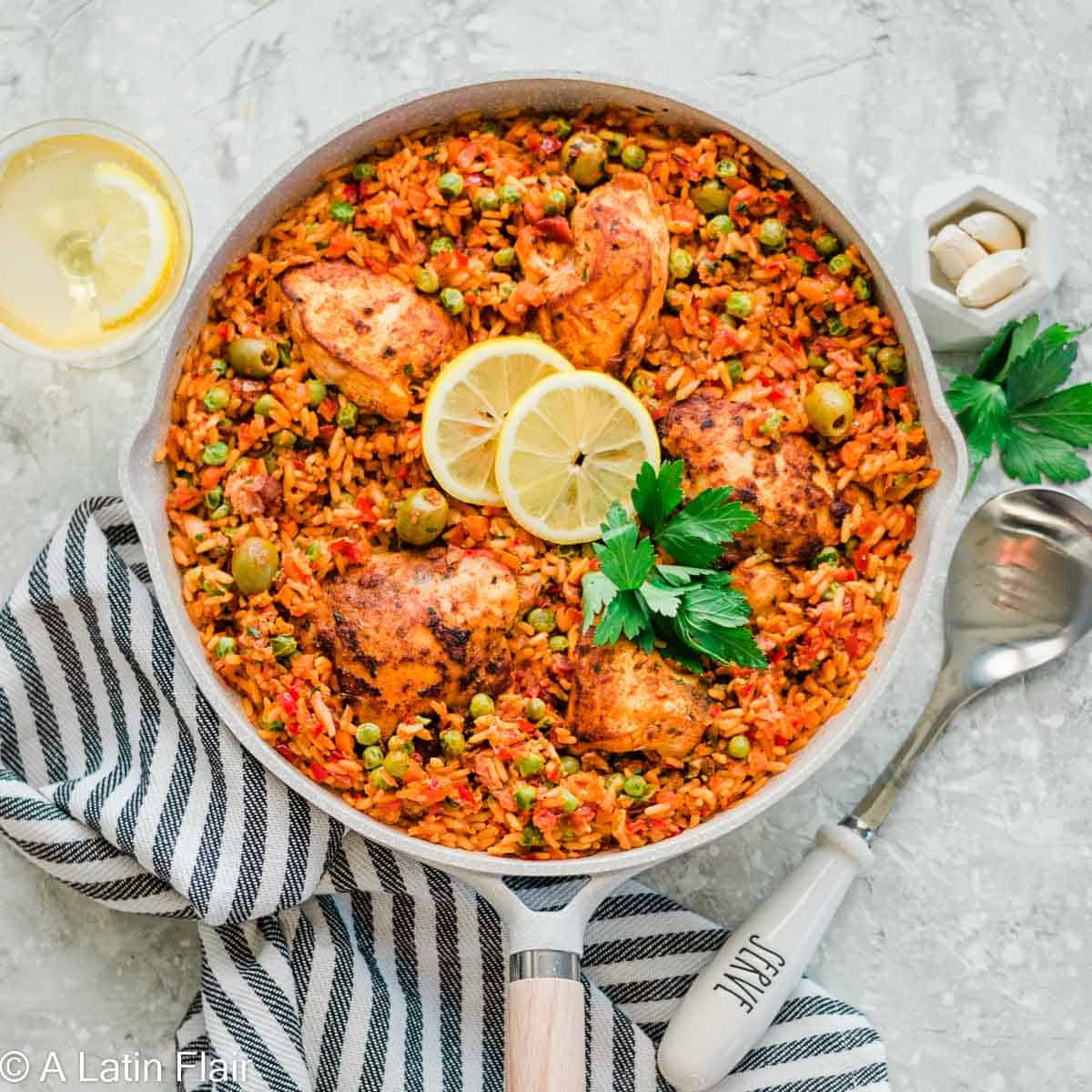
Arroz con Pollo
Arroz con Pollo (ah-ROHS kohn POH-yoh)
Equatorial Guinean Chicken Rice
Fragrant rice cooked with chicken, tomatoes, and a blend of African and Spanish spices, tinted golden with palm oil. A dish that perfectly embodies the culinary fusion of Equatorial Guinea.
Nutrition & Info
Equipment Needed
Instructions
-
1
Season the chicken pieces with salt, pepper, cumin, and smoked paprika. Let them sit for twenty minutes to absorb the spices.
-
2
Heat palm oil in a large pot over medium-high heat. Brown the chicken pieces on all sides for about eight minutes total. Remove and set aside.
-
3
In the same pot, saute the diced onions and bell pepper until softened, about seven minutes. Add garlic and tomato paste, cooking two minutes more.
-
4
Pour in the blended tomatoes and cook for eight minutes until the sauce thickens and the oil begins to separate from the tomatoes.
-
5
Add the washed rice to the pot and stir to coat every grain with the tomato sauce. Cook for two minutes, stirring constantly.
-
6
Return the chicken pieces to the pot, add the chicken broth and bay leaf. Bring to a boil, then reduce heat to low, cover tightly, and cook for twenty-five minutes without lifting the lid.
-
7
Remove from heat and let rest, covered, for ten minutes. Fluff with a fork, remove the bay leaf, and garnish with fresh cilantro. Serve hot.
Did You Know?
Arroz con Pollo in Equatorial Guinea uses palm oil instead of olive oil, giving the rice a distinctive golden-orange color not found in the Spanish original.
Chef's Notes
Equipment Tips
- large pot with lid
- wooden spoon
- sharp knife
- cutting board
The Story Behind Arroz con Pollo
Arroz con Pollo arrived in Equatorial Guinea through Spanish colonization, but the local version transformed into something uniquely Central African. By substituting palm oil for olive oil, adding scotch bonnet peppers, and incorporating local seasonings, Equatorial Guinean cooks created a dish that honors its Spanish roots while celebrating African culinary identity. This fusion dish is now a staple at family gatherings and represents the complex cultural heritage of the country.


Comments (0)
Log in to leave a comment.
No comments yet. Be the first to share your thoughts!