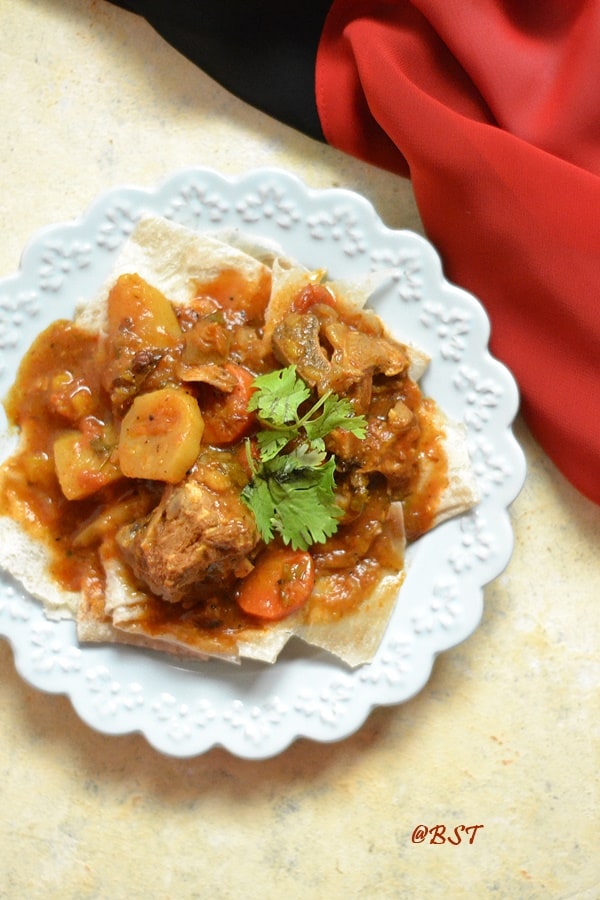
Emirati Bread Stew, or 'Majboos,' embodies the soul of UAE hospitality with its aromatic layers of tender lamb and seasonal vegetables swimming in a rich tomato-based broth. The dish presents as a golden-brown stew crowned with delicate, pillowy regag bread that soaks up every savory drop, creating a textural contrast between the soft, fluffy bread and the hearty meat. Each bite delivers a symphony of flavors—warm spices, earthy vegetables, and the subtle tang of dried limes—while the bread acts as a gentle sponge, absorbing the complex flavors. Traditionally served during Ramadan and special gatherings, this dish connects diners to centuries of Bedouin culinary heritage, often shared family-style from a communal dish. The stew's preparation is a ritual, symbolizing abundance and the warmth of Emirati hospitality.
Nutrition & Info
Instructions
-
1
Brown the lamb cubes in oil in a large pot, then add diced onion and garlic, cooking until softened and fragrant.
-
2
Add bezar, turmeric, pierced dried limes, diced tomatoes, and water, bring to a boil, then simmer covered for about an hour until the lamb is tender.
-
3
Add the potatoes, zucchini, and carrots and continue cooking for another 20 minutes until the vegetables are tender and the sauce is rich.
-
4
Line a deep serving dish with sheets of regag bread, ladle the meat and vegetable stew over the bread, and let it sit for a few minutes to soak up the broth before serving.
Did You Know?
The regag bread used in this stew is traditionally made by women in the UAE using a special technique passed down through generations, with each family having their own secret recipe that includes specific ratios of flour, water, and a unique fermentation process that can take up to 24 hours.
The Story Behind Thereed Emirati
Majboos traces its roots to the traditional cooking methods of the Gulf region, where nomadic tribes would prepare hearty stews using available ingredients during long desert journeys. The dish evolved from ancient Persian influences brought by traders, blending with local Emirati customs. It gained prominence during the 19th century as the UAE's culinary identity solidified, becoming a staple at wedding celebrations and religious festivals, representing the region's agricultural abundance and the importance of communal dining.



Comments (0)
Log in to leave a comment.
No comments yet. Be the first to share your thoughts!