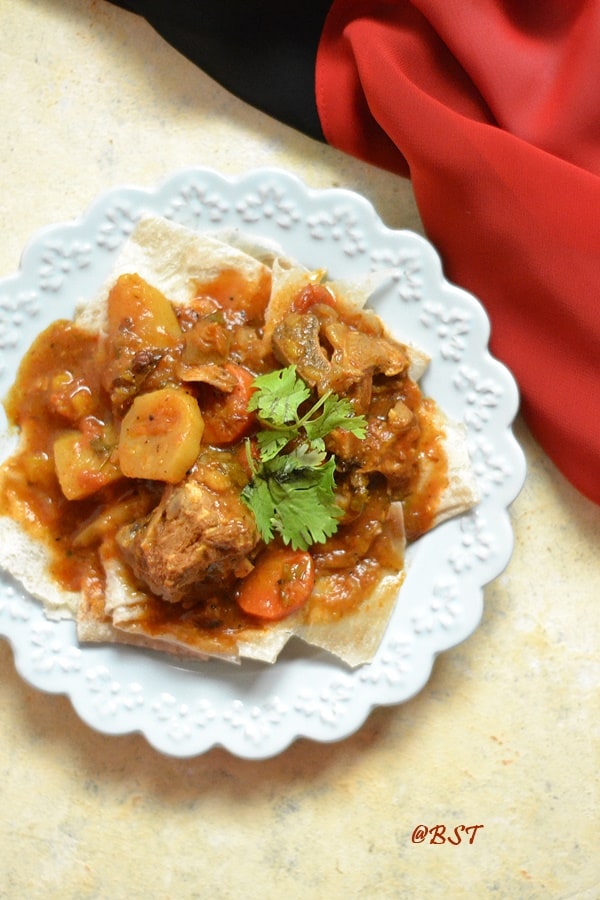
Tender lamb and vegetables simmered in a rich tomato-spiced broth, ladled over layers of thin crispy regag bread that softens into silky sheets. A beloved Ramadan dish mentioned in the Prophet's traditions.
Nutrition & Info
Allergen Warnings
Equipment Needed
Presentation Guide
Vessel: deep wide serving bowl
Garnishes: fresh parsley, lemon wedges
Accompaniments: pickles, yogurt
Instructions
-
1
Heat oil in a large pot and brown lamb cubes on all sides. Remove and set aside.
-
2
Saute onions until soft, add garlic and spices, cook 1 minute. Add tomato paste and fresh tomatoes, stir well.
-
3
Return lamb to pot, add enough water to cover by 2 inches. Simmer covered 45 minutes.
-
4
Add potatoes, zucchini, and carrot. Cook another 20 minutes until vegetables are tender.
-
5
Line a deep serving dish with torn pieces of regag bread. Ladle the hot stew over the bread.
-
6
Let bread absorb broth for 5 minutes before serving. Garnish with parsley and lemon wedges.
Did You Know?
The Prophet Muhammad reportedly said thareed is superior among foods as Aisha is superior among women, making it one of the most culturally revered dishes in the Gulf.
Chef's Notes
Equipment Tips
- large pot
- deep serving dish
- ladle
Garnishing
fresh parsley, lemon wedges
Accompaniments
pickles, yogurt
The Story Behind Thareed
Thareed is one of the oldest documented dishes in Arabian cuisine, predating Islam itself. The concept of layering bread beneath stew was a practical desert innovation that ensured no precious broth went to waste. In the UAE, thareed holds special significance during Ramadan when families gather for iftar. The dish connects modern Emiratis to their nomadic ancestors who created this hearty meal using the simplest available ingredients in harsh desert conditions.



Comments (0)
Log in to leave a comment.
No comments yet. Be the first to share your thoughts!