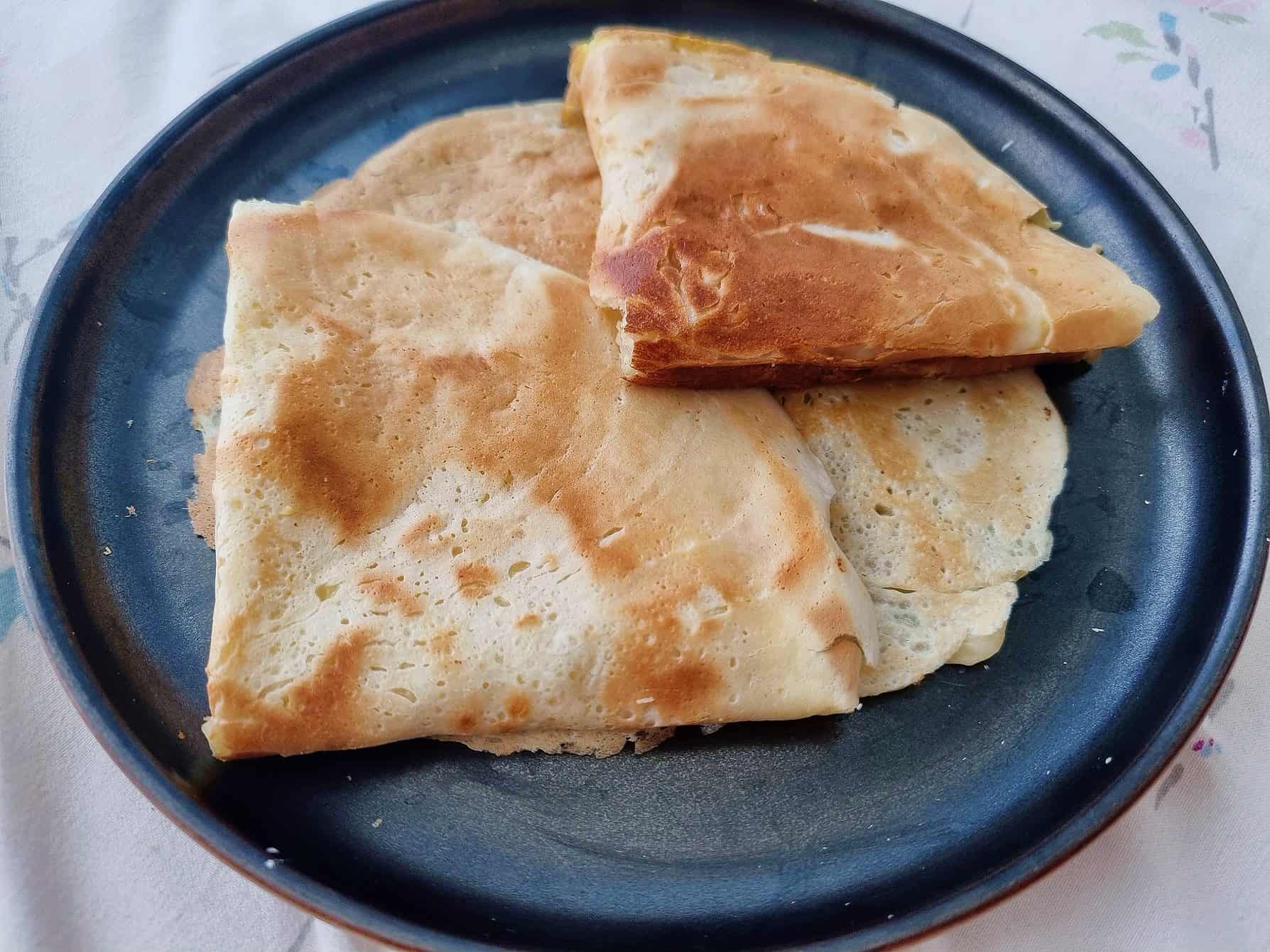
Ultra-thin crepes cooked on a domed hot plate, producing crispy, lacy flatbread. Eaten plain, with cheese, egg, or honey, regag is the iconic Emirati street bread.
Nutrition & Info
Allergen Warnings
Equipment Needed
Presentation Guide
Vessel: flat plate
Garnishes: honey drizzle, cheese spread
Accompaniments: karak tea, date syrup
Instructions
-
1
Mix flour, salt, and sugar. Gradually add water and oil, whisking to a very thin, smooth batter with no lumps.
-
2
Let batter rest 15 minutes. It should be the consistency of thin cream.
-
3
Heat a large flat skillet or domed griddle over medium-high heat. Lightly oil the surface.
-
4
Pour a small ladle of batter and quickly spread it paper-thin across the surface using circular motions.
-
5
Cook until the edges lift and the crepe is golden and crispy, about 1-2 minutes. Peel off carefully.
-
6
Fold or roll and serve immediately with desired toppings — honey, cheese, or egg.
Did You Know?
Skilled regag makers in the UAE can spread batter so thin you can read newspaper through the cooked bread.
Chef's Notes
Equipment Tips
- domed griddle or large flat skillet
- ladle
- spatula
Garnishing
honey drizzle, cheese spread
Accompaniments
karak tea, date syrup
The Story Behind Regag
Regag is one of the most ancient breads in the Arabian Peninsula, originally cooked on heated flat stones in the desert. Emirati women traditionally used a special domed iron plate to create these impossibly thin breads. Today, regag stalls are found across the UAE, and the skill of making perfect paper-thin bread is considered an art form passed down through generations of Emirati women.



Comments (0)
Log in to leave a comment.
No comments yet. Be the first to share your thoughts!