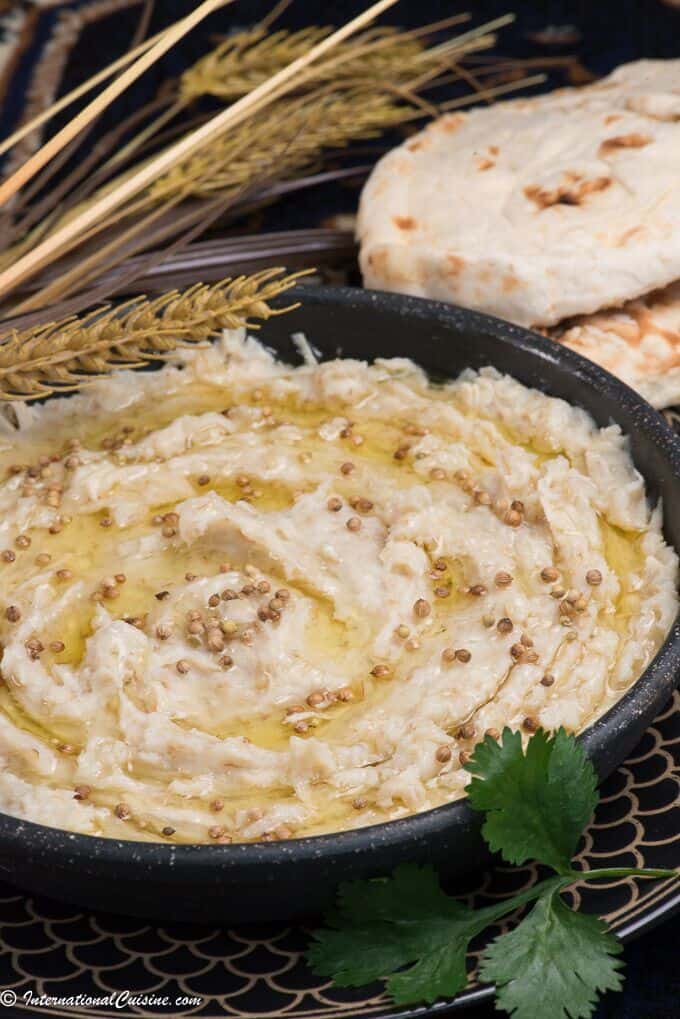
Slow-cooked wheat berries and chicken beaten into a smooth, comforting porridge enriched with a pool of melted ghee. Lighter than the lamb version, equally soul-warming.
Nutrition & Info
Allergen Warnings
Equipment Needed
Presentation Guide
Vessel: shallow bowl
Garnishes: melted ghee pool, ground cinnamon
Accompaniments: pickles, green salad
Instructions
-
1
Soak crushed wheat in water for 2 hours. Drain.
-
2
Place chicken, onion, and salt in a heavy pot with 6 cups water. Bring to a boil, skimming foam.
-
3
Add soaked wheat, reduce heat to very low, and cook covered for 2-3 hours, stirring occasionally to prevent sticking.
-
4
Remove chicken, shred meat off bones, and return meat to pot. Discard bones.
-
5
Beat the mixture vigorously with a whisk or use a hand blender until smooth and porridge-like.
-
6
Serve in shallow bowls with a generous pool of melted ghee and a dusting of cinnamon on top.
Did You Know?
During Ramadan in the UAE, mosques distribute free bowls of harees to worshippers after evening prayers.
Chef's Notes
Equipment Tips
- heavy pot or slow cooker
- hand blender or whisk
- wooden spoon
Garnishing
melted ghee pool, ground cinnamon
Accompaniments
pickles, green salad
The Story Behind Chicken Harees
Chicken harees follows the same ancient preparation method as lamb harees but uses poultry, making it an everyday variation of this revered dish. In the UAE, harees is synonymous with Ramadan — the slow cooking process begins in the afternoon so the porridge is ready by iftar. Community harees pots at mosques and neighborhood gatherings reinforce the communal spirit that defines Emirati Ramadan traditions.



Comments (0)
Log in to leave a comment.
No comments yet. Be the first to share your thoughts!