
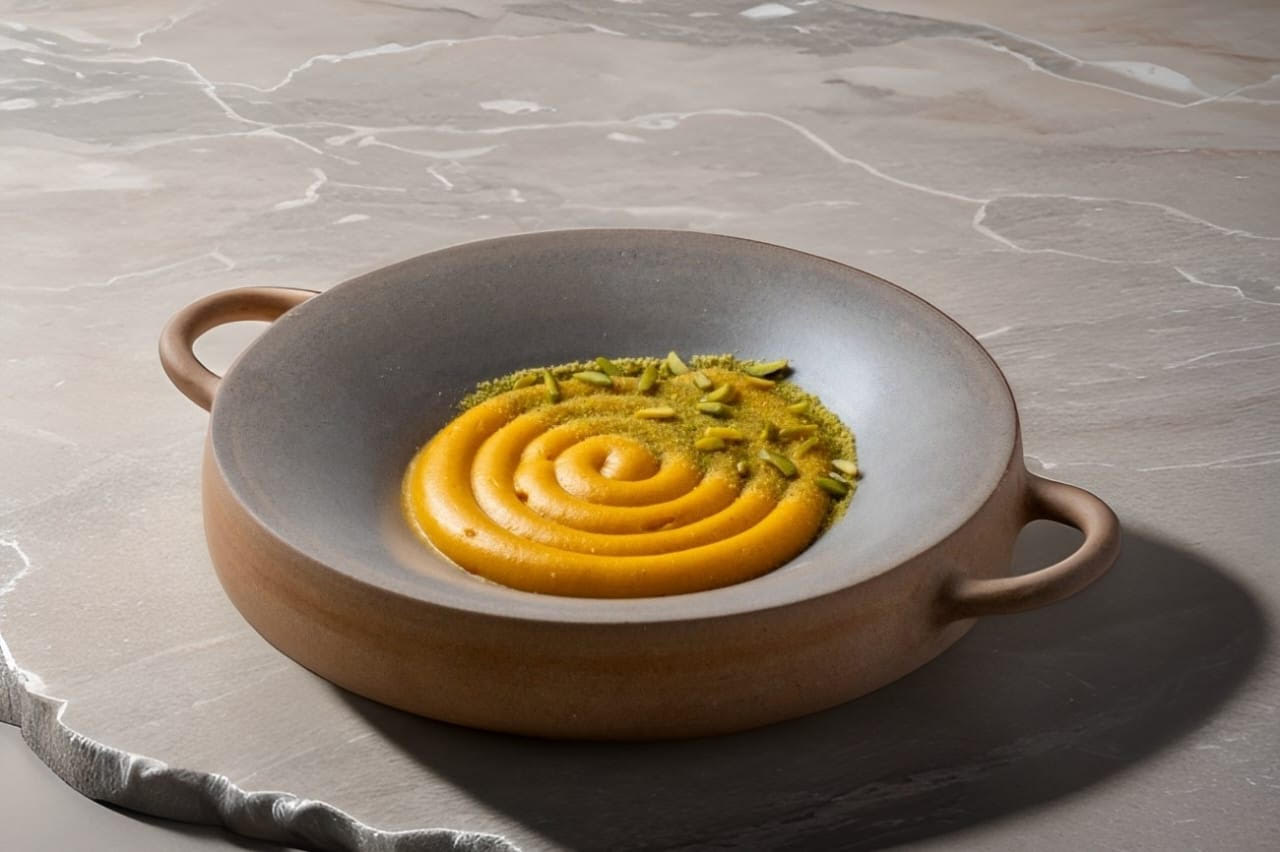
A dense, warm pudding of wheat flour cooked with water and butter, traditionally shaped with a well in the center filled with melted ghee and date syrup. Deeply comforting and ancient.
Nutrition & Info
Allergen Warnings
Equipment Needed
Presentation Guide
Vessel: round serving plate, mounded
Garnishes: ghee pool in center, date syrup drizzle
Accompaniments: Arabic coffee
Instructions
-
1
Bring water, salt, and cardamom to a rolling boil in a heavy pot.
-
2
Gradually stream in the flour while stirring vigorously with a wooden spoon to prevent lumps.
-
3
Reduce heat to low. Add ghee and continue stirring for 10-15 minutes until the mixture pulls away from the sides.
-
4
The aseedah is done when it forms a smooth, dense mass that holds its shape.
-
5
Mound onto a serving plate. Make a deep well in the center. Fill with melted ghee and date syrup.
-
6
Eat by pinching off pieces and dipping in the ghee and date syrup pool.
Did You Know?
In Emirati culture, aseedah is traditionally made to celebrate the birth of a baby, and the new mother eats it for energy and recovery.
Chef's Notes
Equipment Tips
- heavy pot
- wooden spoon
- serving plate
Garnishing
ghee pool in center, date syrup drizzle
Accompaniments
Arabic coffee
The Story Behind Aseedah
Aseedah is one of the most ancient dishes in Arabian cuisine, a simple flour pudding that sustained desert communities for millennia. In the UAE, it holds deep cultural significance as a celebratory food prepared for births, religious occasions, and gatherings. The technique of vigorous stirring over heat to transform flour and water into a smooth, dense pudding requires strength and skill. The central well filled with ghee and date syrup creates a built-in sauce for this communal dish.



Comments (0)
Log in to leave a comment.
No comments yet. Be the first to share your thoughts!