
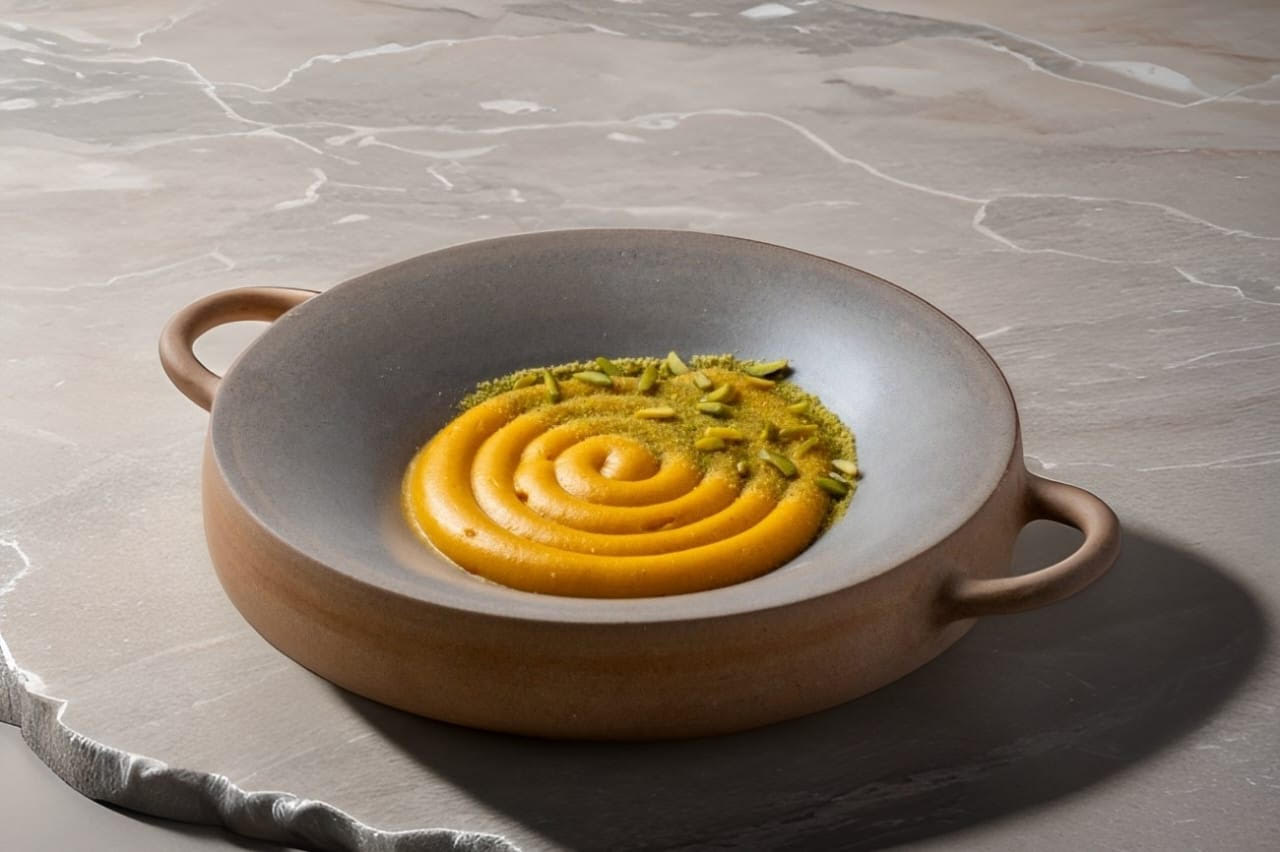
Slow-cooked wheat and lamb beaten into velvety porridge, enriched with ghee. Served during Ramadan and special occasions.
Nutrition & Info
Allergen Warnings
Equipment Needed
Presentation Guide
Vessel: shallow bowl
Garnishes: melted ghee pool on top, ground cinnamon
Accompaniments: none (self-contained)
Instructions
-
1
Drain the overnight-soaked wheat and rinse thoroughly under cold water. Place it in a large heavy-bottomed pot with the lamb chunks, salt, and six cups of fresh water. Bring to a boil over high heat, skimming any foam that rises to the surface.
-
2
Reduce the heat to low, cover the pot tightly, and simmer for two and a half to three hours, stirring every thirty minutes to prevent sticking on the bottom. The wheat should gradually break down and the meat should become extremely tender.
-
3
After three hours, the meat should be so tender it falls apart when pressed with a spoon. Remove the lamb pieces, shred the meat finely with two forks, discarding any bones and gristle, then return the shredded meat to the pot.
-
4
Using a large wooden spoon or a special harees paddle, beat the wheat and meat mixture vigorously for ten to fifteen minutes. The goal is to break down the wheat grains completely until the mixture becomes a smooth, porridge-like consistency.
-
5
Add the ghee, cinnamon, and cardamom, then continue stirring over very low heat for another ten minutes. The harees should be thick, smooth, and slightly glossy from the ghee, with no visible individual grains or meat fibres remaining.
-
6
Taste and adjust seasoning with salt. The finished harees should have a flowing but substantial consistency, similar to smooth oatmeal, with a subtle sweetness from the slow-cooked wheat and richness from the lamb and ghee.
-
7
Ladle the harees into shallow serving bowls, creating a slight well in the centre. Pour a generous amount of melted ghee into the well and dust with a light sprinkle of cinnamon. Serve hot, traditionally during Ramadan and celebrations.
Did You Know?
Emirati families historically buried sealed pots of harees in hot sand to slow-cook overnight.
Chef's Notes
Equipment Tips
- heavy pot or slow cooker
- wooden spoon
- whisk
Garnishing
melted ghee pool on top, ground cinnamon
Accompaniments
none (self-contained)
The Story Behind Al Harees
The Story: Al Harees is one of the oldest and most revered dishes in Emirati cuisine: wheat berries and meat (typically lamb or chicken) slow-cooked with a pinch of salt and ghee until they break down into a smooth, porridge-like consistency with a deeply savory, almost primal flavor. The dish requires hours of patient stirring and cooking, traditionally in a clay pot buried in hot embers. Al Harees traces its origins to ancient Arabian desert cooking, where Bedouin communities transformed basic provisions into sustenance through long, slow cooking. The technique of breaking down wheat and meat together appears in medieval Arab cookbooks dating to the Abbasid period.
On the Calendar: Al Harees is the quintessential Ramadan dish in the UAE, prepared in enormous quantities for iftar meals and distributed to neighbors and mosques. It is also served at weddings, Eid celebrations, and funerals, marking every significant life event.
Then & Now: While traditional preparation in clay pots over embers continues in some families, many modern Emirati cooks use pressure cookers or slow cookers. Commercial harees, available during Ramadan from restaurants and hotel buffets, has made the dish accessible to the UAE's diverse population.
Legacy: Al Harees is Emirati patience made edible, a dish that cannot be rushed and whose simplicity conceals a depth of flavor that only time and devotion can achieve.


Comments (0)
Log in to leave a comment.
No comments yet. Be the first to share your thoughts!