
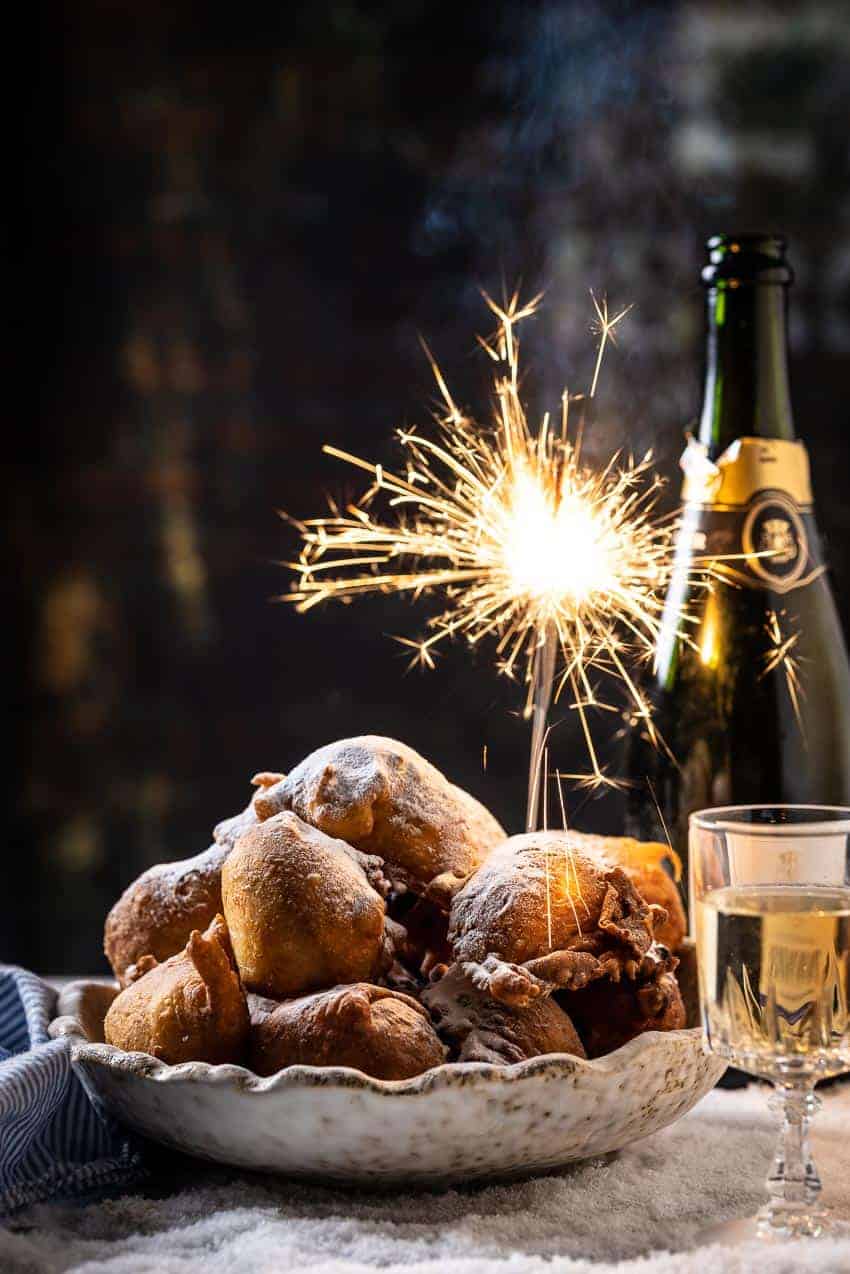
Fluffy deep-fried dough balls studded with raisins and apple, dusted with powdered sugar. The Netherlands' essential New Year's Eve treat — eaten by the dozen as midnight approaches.
Nutrition & Info
Allergen Warnings
Equipment Needed
Presentation Guide
Vessel: paper bag or plate
Garnishes: powdered sugar
Accompaniments: none
Instructions
-
1
Combine the flour, yeast, sugar, and salt in a large mixing bowl. In a separate bowl, whisk together the warm milk, eggs, vanilla extract, and lemon zest. Pour the wet ingredients into the dry and stir vigorously with a wooden spoon for five minutes until a thick, sticky batter forms. It should be too wet to knead but thick enough to hold shape.
-
2
Fold the drained raisins and diced apple into the batter, distributing them evenly throughout. Cover the bowl with a damp towel and let the batter rise in a warm place for one hour until it has doubled in volume and the surface is bubbly and active with yeast fermentation.
-
3
Heat vegetable oil in a deep fryer or large heavy pot to 175 degrees Celsius. Use a deep-fry thermometer to monitor the temperature carefully. Oil that is too hot will burn the outside before the inside cooks through, while oil that is too cool produces greasy, heavy oliebollen.
-
4
Using two tablespoons dipped in hot water to prevent sticking, scoop a generous ball of batter and carefully drop it into the hot oil. Form rough spheres about the size of a tennis ball. Fry no more than four at a time to maintain the oil temperature and allow room for turning.
-
5
Fry each batch for six to seven minutes, turning the oliebollen occasionally with a slotted spoon so they brown evenly on all sides to a deep golden colour. When done, they should feel light for their size and the surface should be crispy and crackled. Cut one open to test that the centre is cooked through.
-
6
Remove the oliebollen with a slotted spoon and drain on a wire rack set over paper towels. While still warm, dust generously with powdered sugar by shaking it through a fine sieve. Serve immediately as a traditional Dutch New Year's Eve treat, ideally with hot coffee or warm chocolate milk.
Did You Know?
The Dutch eat over 300 million oliebollen during the New Year period. Dedicated oliebollen stalls pop up across the Netherlands from November through January.
Chef's Notes
Equipment Tips
- deep fryer
- mixing bowl
- slotted spoon
Garnishing
powdered sugar
Accompaniments
none
The Story Behind Oliebollen
The Story: Oliebollen, literally oil balls, are yeasted dough fritters studded with raisins and currants, deep-fried until golden brown and dusted heavily with powdered sugar. They are the Netherlands' most beloved seasonal treat, inseparable from New Year's Eve celebrations. The tradition dates to at least the sixteenth century, with paintings by Dutch Golden Age masters depicting oliebollen being fried and sold at winter markets. Some food historians trace the concept to medieval Germanic fried dough traditions, while others note similarities to Middle Eastern and North African fritters brought through Mediterranean trade routes.
On the Calendar: Oliebollen are strictly seasonal, appearing in late November and reaching their peak on New Year's Eve, when the Dutch consume an estimated seven hundred million oliebollen in a nation of seventeen million people. Oliebollen kramen (temporary stalls) pop up across every Dutch city during the season.
Then & Now: The basic recipe is virtually unchanged, though modern fillings now include apple, custard, and advocaat (Dutch egg liqueur). Annual competitions crown the best oliebollen stall in the country, generating fierce local pride.
Legacy: Oliebollen are the taste of Dutch New Year, a tradition so powerful that the mere smell of frying dough can summon an entire nation's collective memory of celebration and renewal.


Comments (0)
Log in to leave a comment.
No comments yet. Be the first to share your thoughts!