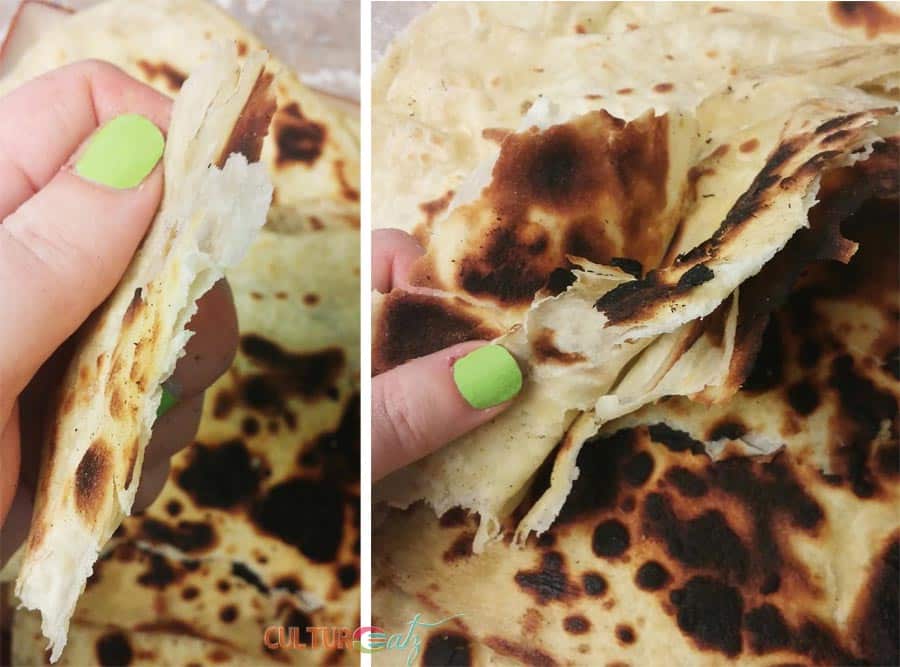
A flaky, multi-layered flatbread brushed with ghee between each fold, cooked on a griddle until crispy and golden. Each layer pulls apart to reveal a tender, buttery interior.
Nutrition & Info
Allergen Warnings
Equipment Needed
Presentation Guide
Instructions
-
1
Combine flour, salt, and sugar in a bowl. Add warm water gradually, kneading for ten minutes until the dough is smooth and elastic. Rest covered for twenty minutes.
-
2
Divide into four balls. Roll each ball into a thin circle about thirty centimeters in diameter on a floured surface.
-
3
Brush the entire surface generously with melted ghee. Roll up tightly into a long rope, then coil the rope into a spiral disc. Flatten gently with your palm.
-
4
Roll the coiled disc out again into a circle about twenty centimeters wide. The layering creates the flaky structure.
-
5
Cook on a hot dry griddle for three minutes per side, brushing with more ghee as it cooks, until golden brown with crispy spots.
Did You Know?
The technique of layering and coiling the dough is similar to Indian paratha, evidence of the deep culinary connections between Djibouti and the Indian subcontinent.
Chef's Notes
Equipment Tips
- mixing bowl
- rolling pin
- flat griddle or pan
- pastry brush
- clean cloth
Garnishing
drizzled honey
Accompaniments
The Story Behind Sabaayadh
Sabaayadh reflects the Indian culinary influence that arrived in Djibouti through centuries of trade across the Indian Ocean. Indian merchants, sailors, and settlers brought the paratha-style technique of creating flaky, layered bread by folding ghee into dough. Djiboutian cooks adopted and adapted the method, making it slightly thinner and crispier than its Indian counterpart. Today, sabaayadh is a breakfast favorite, served with honey, tea, or as an accompaniment to stews.
More Djiboutian Dishes
 Easy
📜 Story
Easy
📜 Story
Baguette Djiboutienne
Djiboutian-Style Baguette Sandwich
Breakfast or lunch
Medium
📜 Story
Bariis Iskukaris
Djiboutian Spiced Rice
Lunch or celebrations Easy
📜 Story
Easy
📜 Story
Caano Geel
Fermented Camel Milk
Any time, especially hot weather Easy
📜 Story
Easy
📜 Story
Cambulo
Sweet Adzuki Bean Porridge
Breakfast or dessert
Comments (0)
Log in to leave a comment.
No comments yet. Be the first to share your thoughts!