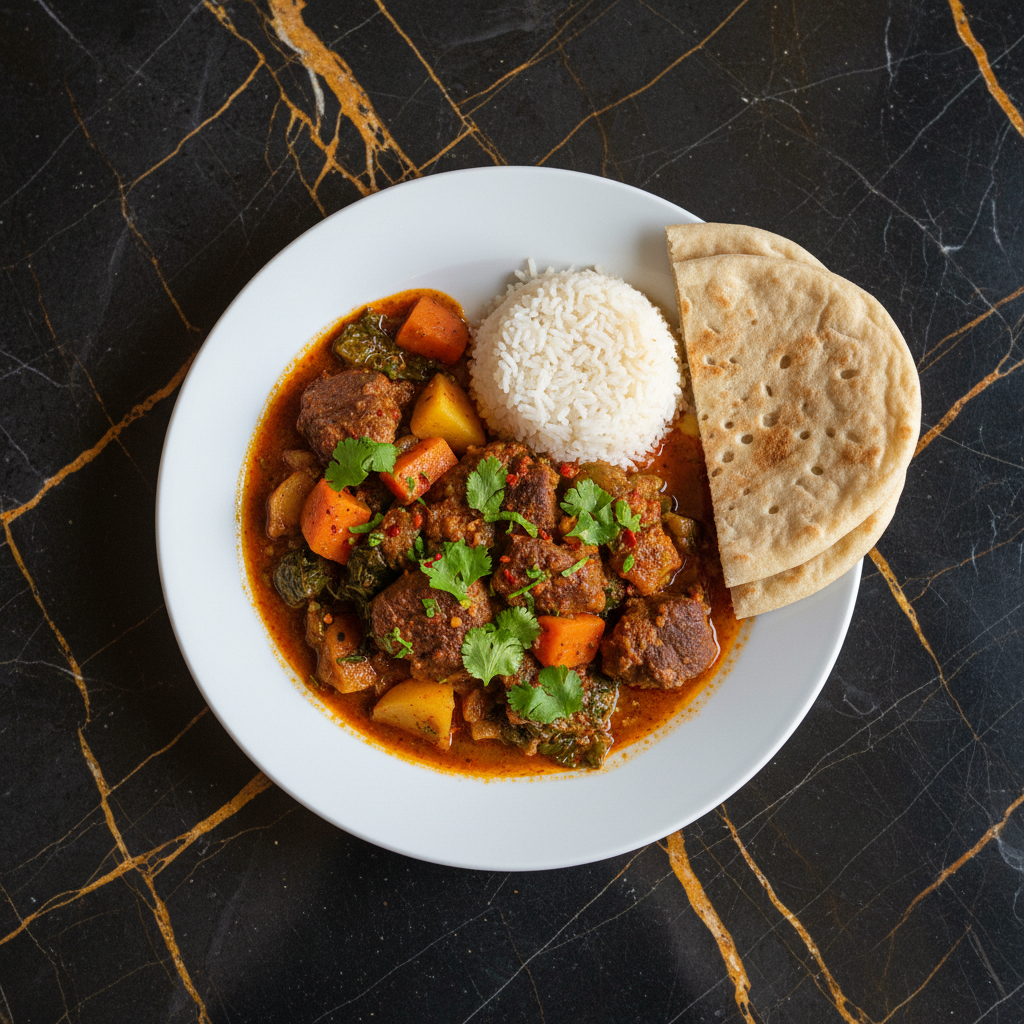
Tender chunks of camel meat slow-braised with tomatoes, potatoes, and aromatic spices until falling apart. This iconic dish celebrates the camel's central role in Djiboutian pastoral life.
Nutrition & Info
Equipment Needed
Presentation Guide
Vessel: large communal bowl
Garnishes: fresh cilantro, chili slices
Accompaniments: bariis iskukaris, laxoox
Instructions
-
1
Heat oil in a large heavy pot. Sear camel meat chunks in batches for five minutes per batch until browned on all sides. Set aside.
-
2
Saute diced onions in the same pot for six minutes until golden. Add garlic, cumin, turmeric, coriander, and cardamom, stirring for one minute until fragrant.
-
3
Add chopped tomatoes and cook for five minutes until they break down. Return the seared meat to the pot along with the whole green chili.
-
4
Pour in the water and bring to a boil. Reduce heat to a gentle simmer, cover, and cook for ninety minutes until the camel meat begins to soften.
-
5
Add potatoes and carrots. Continue simmering for thirty minutes until vegetables are tender and the stew has thickened naturally.
-
6
Season with salt and pepper. Serve in deep bowls garnished with cilantro, alongside bariis or laxoox.
Did You Know?
Camel meat is leaner than beef and has been a primary protein source for Djiboutian nomads for thousands of years, with the animals also providing milk and transport.
Chef's Notes
Equipment Tips
- large heavy pot
- sharp knife
- wooden spoon
- cutting board
Garnishing
fresh cilantro, chili slices
Accompaniments
The Story Behind Hilibka Geel
The camel is sacred to the pastoral communities of Djibouti, serving as transport, milk provider, and status symbol. Hilibka geel is prepared for significant celebrations such as weddings, births, and religious festivals, reflecting the high value placed on camel meat. The Afar people, who have herded camels across the Danakil region for millennia, developed slow-braising techniques to tenderize the lean, firm meat. The spice blend used in the stew reflects centuries of trade with Arabian and Indian merchants.
More Djiboutian Dishes
 Easy
📜 Story
Easy
📜 Story
Baguette Djiboutienne
Djiboutian-Style Baguette Sandwich
Breakfast or lunch
Medium
📜 Story
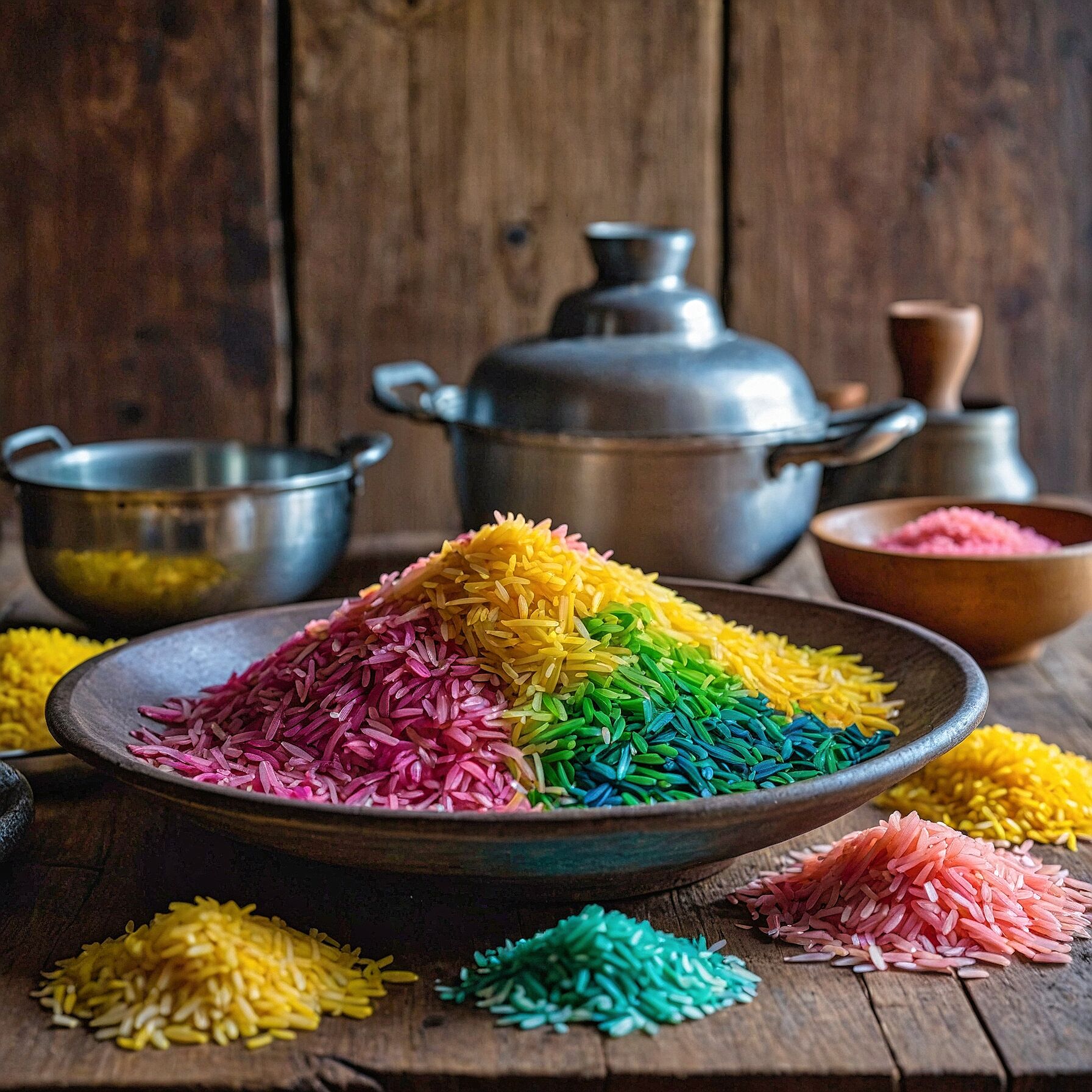
Bariis Iskukaris
Djiboutian Spiced Rice
Lunch or celebrations Easy
📜 Story
Easy
📜 Story
Caano Geel
Fermented Camel Milk
Any time, especially hot weather Easy
📜 Story
Easy
📜 Story
Cambulo
Sweet Adzuki Bean Porridge
Breakfast or dessert
Comments (0)
Log in to leave a comment.
No comments yet. Be the first to share your thoughts!