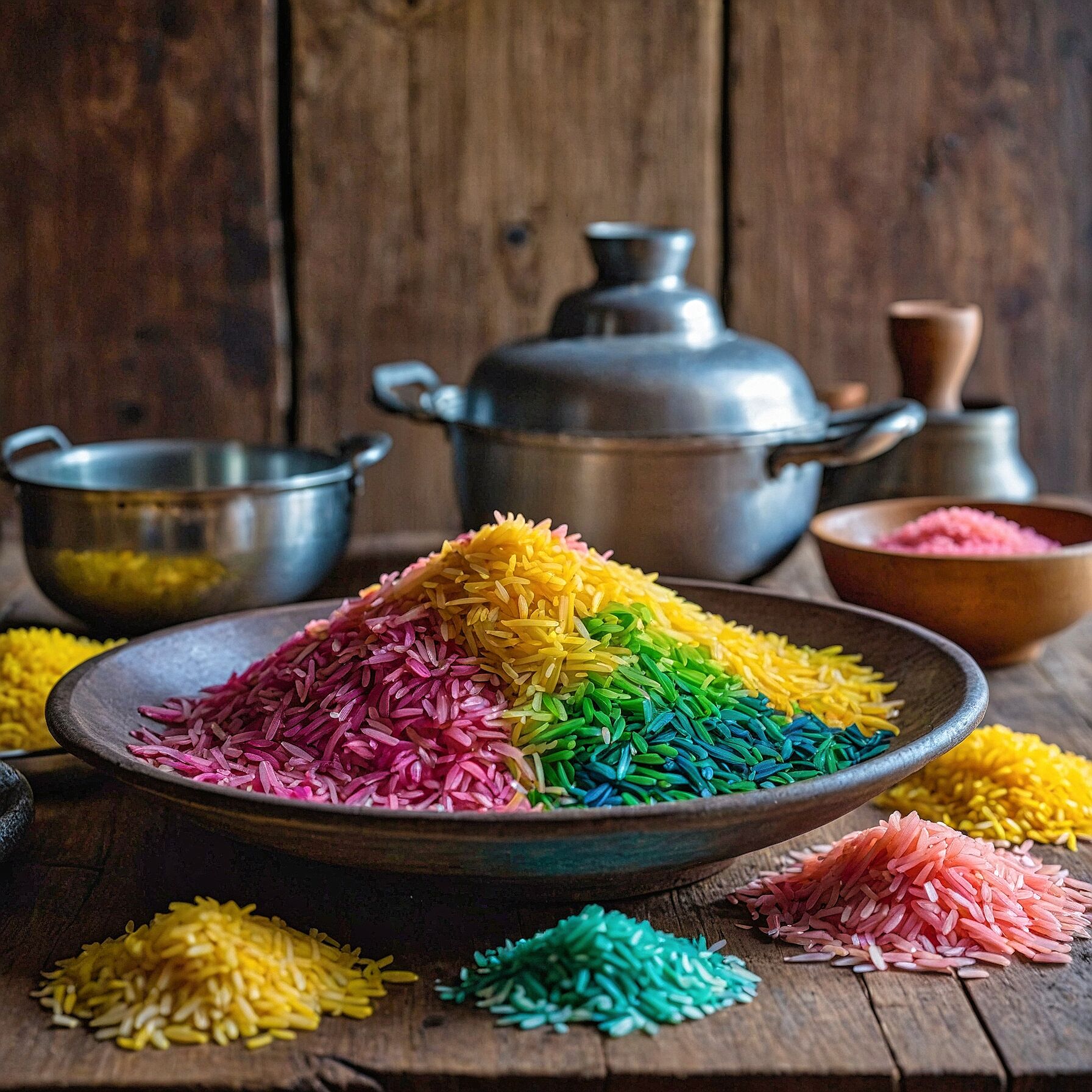
A dense, translucent confection made from cornstarch, sugar, ghee, and cardamom, cooked slowly until it achieves a jewel-like consistency. This prized sweet is reserved for special occasions and honored guests.
Nutrition & Info
Allergen Warnings
Equipment Needed
Presentation Guide
Vessel: decorative plate
Garnishes: crushed pistachios, edible rose petals
Accompaniments: shaah haleeb
Instructions
-
1
Dissolve the cornstarch in 250ml of cold water, stirring until completely smooth with no lumps remaining.
-
2
In a heavy pot, combine sugar with remaining 250ml water. Heat over medium flame, stirring until sugar dissolves completely into a clear syrup.
-
3
Add the ghee to the sugar syrup and stir until melted and fully incorporated. Add the saffron water for color and aroma.
-
4
Gradually pour the cornstarch mixture into the pot while stirring constantly. Continue stirring over medium-low heat as the mixture thickens dramatically.
-
5
Keep stirring for twenty-five to thirty minutes as the halwa transforms from opaque white to golden and translucent. The mixture is ready when it pulls away cleanly from the sides of the pot and the ghee separates slightly.
-
6
Add cardamom, nutmeg, and rose water. Pour into a greased dish, smooth the top, and let cool completely before cutting into diamond shapes.
Did You Know?
Making halwa is considered an art form in Djibouti, and experienced confectioners can tell when it is ready by the sound it makes as it bubbles in the pot.
Chef's Notes
Equipment Tips
- heavy-bottomed pot
- wooden spoon
- baking dish
- measuring cups
Garnishing
crushed pistachios, edible rose petals
Accompaniments
The Story Behind Halwa
Halwa (xalwo in Somali) arrived in Djibouti through Arab and Persian traders who plied the Red Sea for centuries. The confection became deeply embedded in Djiboutian celebration culture, appearing at weddings, naming ceremonies, Eid festivals, and as a gift for honored visitors. The lengthy cooking process and expensive ingredients like saffron and ghee make halwa a prestige food, and the skill required to achieve the perfect translucent texture means that accomplished halwa makers are highly respected in their communities.
More Djiboutian Dishes
Easy
📜 Story
Baguette Djiboutienne
Djiboutian-Style Baguette Sandwich
Breakfast or lunch
Medium
📜 Story
Bariis Iskukaris
Djiboutian Spiced Rice
Lunch or celebrations Easy
📜 Story
Easy
📜 Story
Caano Geel
Fermented Camel Milk
Any time, especially hot weather Easy
📜 Story
Easy
📜 Story
Cambulo
Sweet Adzuki Bean Porridge
Breakfast or dessert
Comments (0)
Log in to leave a comment.
No comments yet. Be the first to share your thoughts!