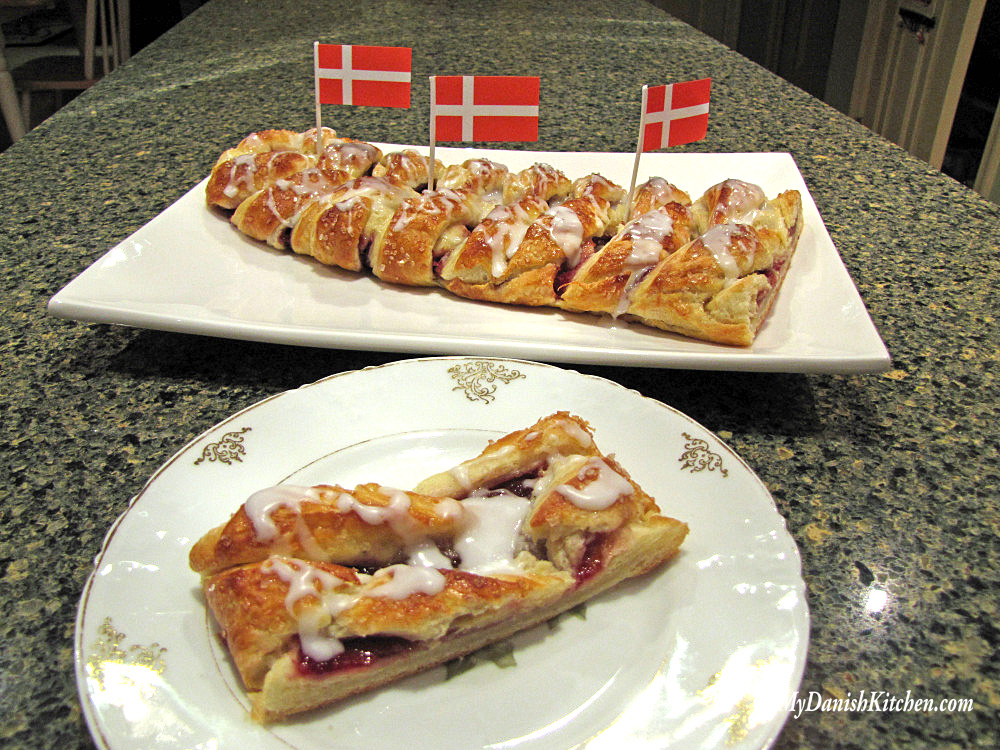
Flaky, buttery laminated pastry filled with custard, fruit, or almond paste. Denmark's sweet gift to the world.
Instructions
-
1
Combine the flour, sugar, yeast, cardamom, and salt in a large bowl. Add the cold milk and egg, mixing until a cohesive dough forms. Knead for five minutes until smooth but do not over-develop the gluten at this stage. Wrap the dough in plastic wrap and refrigerate for thirty minutes.
-
2
While the dough chills, prepare the butter block by placing the cold butter between two sheets of parchment paper and pounding it with a rolling pin into a fifteen-centimetre square of even thickness. The butter must be cold but pliable, not hard or soft. Refrigerate until needed.
-
3
Roll the chilled dough into a rectangle roughly thirty by twenty centimetres. Place the butter block in the centre and fold the dough over it like an envelope, sealing the edges. Roll out to a long rectangle, then perform the first fold by bringing one-third over the centre and the other third on top.
-
4
Wrap in plastic and refrigerate for thirty minutes. Repeat the rolling and folding process two more times, chilling for thirty minutes between each turn. This creates the characteristic flaky layers. After three turns, the dough will have eighty-one layers of butter throughout.
-
5
After the final rest, roll the dough to half a centimetre thick. Cut into twelve-centimetre squares for pinwheels, or strips for twists and crescents. Place a tablespoon of almond paste or custard cream in the centre of each square. Fold corners to the centre for pinwheel shapes, or roll into crescents.
-
6
Place the shaped pastries on parchment-lined baking sheets with five centimetres between each. Cover loosely with a towel and let rise in a warm place for forty-five minutes until puffy and nearly doubled. They should feel light and airy when gently nudged.
-
7
Brush each pastry with egg wash and sprinkle with flaked almonds. Bake at 200 degrees Celsius for twelve to fifteen minutes until deeply golden brown and the layers are visibly puffed and separated. Drizzle with the lemon icing while slightly warm and allow to set for five minutes before serving.
Did You Know?
Danes call these 'wienerbroed' (Viennese bread) because the technique came from Austrian bakers in the 1840s.
The Story Behind Wienerbroed
The Story: Wienerbroed, meaning Viennese bread, is the Danish laminated pastry known worldwide simply as the Danish. The technique of folding butter into yeast dough to create flaky, layered pastry arrived in Denmark in the 1840s when Austrian bakers were brought to Copenhagen during a bakery workers' strike. Danish bakers adopted and transformed the technique, creating distinctive shapes filled with custard, remonce (butter, sugar, and cinnamon paste), marzipan, and fruit preserves. The irony that Denmark's most famous pastry is named after Vienna, while Austrians call a similar pastry Kopenhagener, reflects the shared heritage.
On the Calendar: Wienerbroed is a daily indulgence in Denmark, eaten at breakfast, with afternoon coffee, and as a weekend treat. Special occasions call for elaborate pastry platters, and no Danish birthday or workplace celebration is complete without a visit from the bakery.
Then & Now: Industrial production has made Danish pastries ubiquitous worldwide, but Danish artisan bakeries maintain the labor-intensive hand-lamination process that produces superior flakiness. The New Nordic movement has inspired bakers to incorporate local grains, seasonal fruits, and heritage butter.
Legacy: The Danish pastry demonstrates how cultural exchange creates something greater than its origins, a Viennese technique perfected by Danish hands into one of the world's most beloved breakfast pastries.

Comments (0)
Log in to leave a comment.
No comments yet. Be the first to share your thoughts!