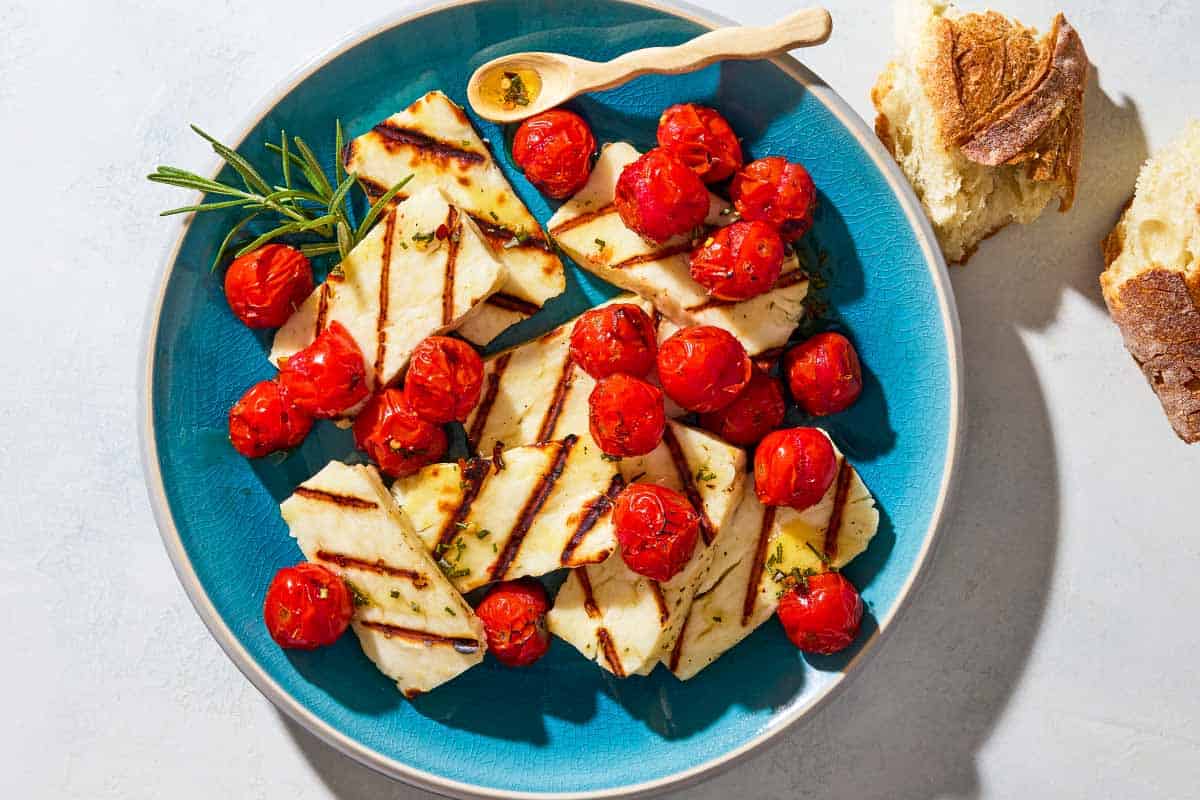
Halloumi
Χαλλούμι σχάρας (hah-LOO-mee SHAH-rahs)
Grilled Halloumi Cheese
Thick slices of Cyprus's famous halloumi cheese grilled until golden outside and squeaky-soft inside. The island's culinary ambassador.
Nutrition & Info
Allergen Warnings
Equipment Needed
Presentation Guide
Vessel: small plate
Garnishes: lemon wedge, dried mint, olive oil drizzle
Accompaniments: fresh bread, watermelon (summer)
Instructions
-
1
Remove the halloumi from its packaging and pat completely dry with paper towels. Cut the block into slices approximately one centimetre thick. Removing excess moisture is essential because it prevents the cheese from steaming instead of developing a proper golden crust on the grill.
-
2
Preheat a cast-iron grill pan or outdoor grill to high heat for at least five minutes. The surface must be very hot so the halloumi develops char marks quickly before the inside melts too much. Brush the grill surface lightly with a thin film of olive oil.
-
3
Brush both sides of each halloumi slice lightly with olive oil and sprinkle with dried oregano and black pepper. Place the slices on the hot grill and cook without moving for two minutes until distinct golden-brown grill marks form on the underside.
-
4
Flip each slice carefully using a thin spatula and grill the second side for another two minutes until equally golden with charred stripes. The cheese should be crispy and caramelized on the outside while remaining soft, squeaky, and slightly molten in the centre.
-
5
Transfer the grilled halloumi immediately to a serving platter while still hot. Squeeze fresh lemon juice over the slices and drizzle with a finishing touch of extra virgin olive oil. The acid from the lemon cuts through the richness of the cheese beautifully.
-
6
Arrange the sliced tomato and cucumber alongside the grilled halloumi. Scatter fresh mint leaves over the platter for a burst of colour and freshness. Serve immediately with warm pita bread and lemon wedges, as halloumi is best eaten within minutes of grilling before it firms up and becomes rubbery.
Did You Know?
Halloumi has EU protected designation of origin — only cheese made in Cyprus can legally be called halloumi.
Chef's Notes
Equipment Tips
- grill or grill pan
- tongs
Garnishing
lemon wedge, dried mint, olive oil drizzle
Accompaniments
fresh bread, watermelon (summer)
The Story Behind Halloumi
The Story: Grilled halloumi is Cyprus's most famous culinary gift to the world: thick slices of the island's signature semi-hard cheese, made from a mixture of goat's and sheep's milk, grilled or pan-fried until golden-brown outside and soft and squeaky inside. Halloumi's remarkable ability to hold its shape at high temperatures, rather than melting like other cheeses, is due to its unique production process involving heating, folding, and brining. Halloumi production in Cyprus dates back centuries, with traditional cheese-making knowledge passed through farming families.
On the Calendar: Grilled halloumi is served year-round as part of meze, as a standalone appetizer, in sandwiches, and alongside salads. It appears at virtually every Cypriot gathering and meal.
Then & Now: Halloumi has become a global phenomenon, exported worldwide and produced internationally, though Cypriot producers have fought for Protected Designation of Origin status to protect authentic production. The EU granted PDO status requiring traditional Cypriot production methods.
Legacy: Halloumi is Cyprus's most successful cultural export, a cheese that defied the universal rule that cheese must melt and, in doing so, created a category of its own.



Comments (0)
Log in to leave a comment.
No comments yet. Be the first to share your thoughts!