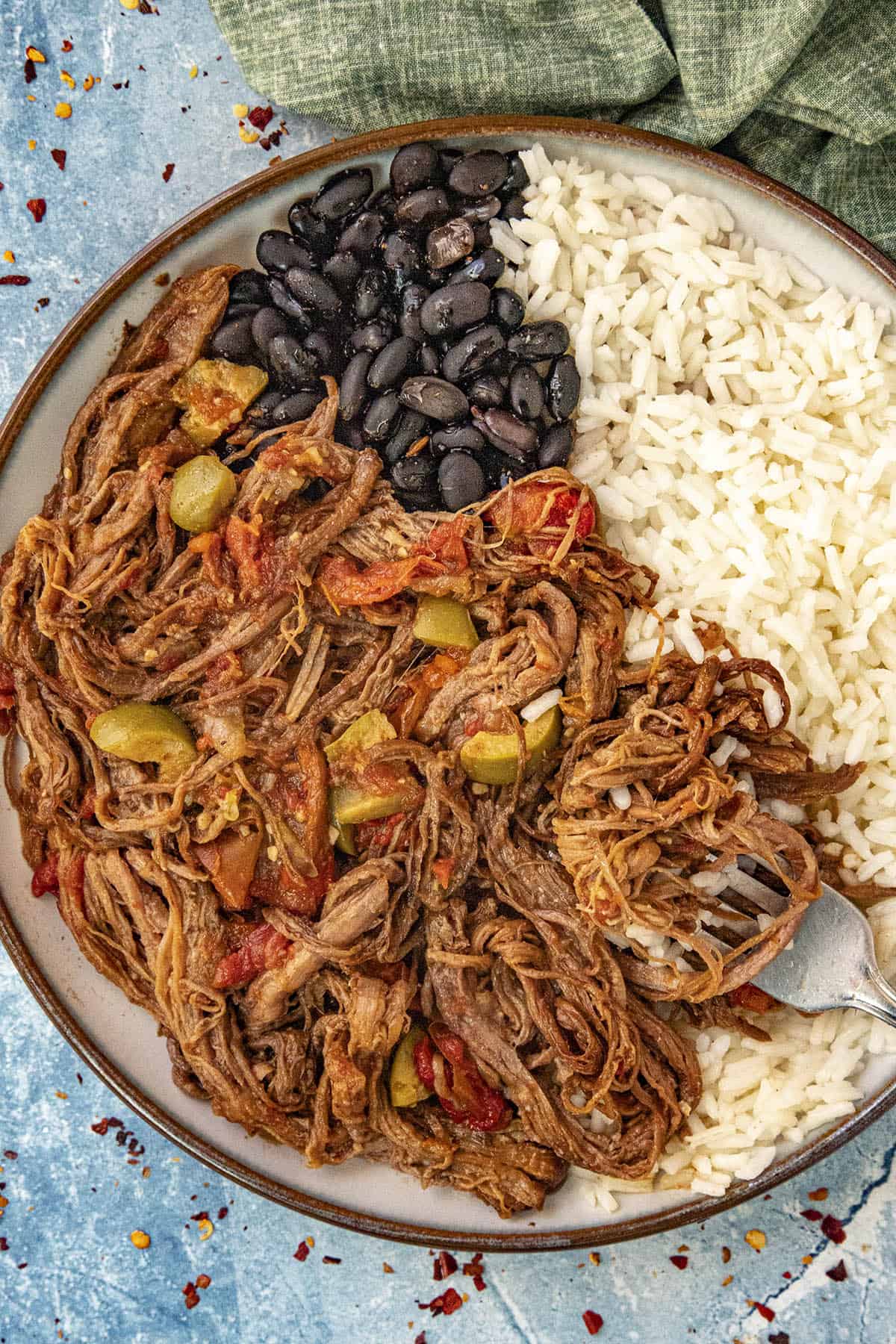
Cuba's national dish — tender shredded beef braised in a rich tomato-pepper sauce until it falls into rags (ropa vieja means 'old clothes'). The long, slow cooking creates intensely flavorful, meltingly soft meat.
Nutrition & Info
Equipment Needed
Presentation Guide
Vessel: flat plate
Garnishes: roasted red pepper strips, fresh cilantro
Accompaniments: white rice, black beans, fried plantains
Instructions
-
1
Place the whole flank steak in a large pot and cover with cold water by five centimetres. Add half the sliced onion, two crushed garlic cloves, one bay leaf, and a generous pinch of salt. Bring to a boil, then reduce to a gentle simmer and cook for two hours until the meat shreds easily with a fork.
-
2
Remove the steak from the broth and let it cool for fifteen minutes. Reserve two cups of the cooking broth for later. Using two forks, shred the beef along the grain into long, thin strips resembling old rags, which is the origin of the dish's name meaning 'old clothes' in Spanish.
-
3
Heat the olive oil in a large deep skillet or Dutch oven over medium heat. Add the remaining sliced onion and cook for five minutes until soft. Add the sliced green and red bell peppers and cook for another five minutes until they begin to soften and develop some colour.
-
4
Add the minced garlic, ground cumin, and dried oregano, stirring for one minute until fragrant. Stir in the tomato paste and cook for two minutes to caramelize slightly, then add the crushed tomatoes and white wine. Simmer for five minutes to meld the flavours.
-
5
Add the shredded beef to the sauce along with the reserved cooking broth, remaining bay leaf, olives, and capers. Stir well to coat all the meat in the rich sauce. Bring to a gentle simmer and cook uncovered for thirty minutes, stirring occasionally.
-
6
The sauce should reduce and thicken, coating the shredded beef in a glossy, deep red sauce. The peppers should be very tender but still hold their shape. Taste and adjust with salt and pepper as needed. Remove the bay leaves before serving.
-
7
Serve the ropa vieja over steamed white rice with a side of fried sweet plantains and black beans. Garnish generously with fresh cilantro. This dish tastes even better when made a day ahead and gently reheated, allowing the flavours to deepen overnight.
Did You Know?
Legend says ropa vieja was invented by a poor man who shredded and cooked his old clothes out of desperation, and they miraculously turned into meat.
Chef's Notes
Equipment Tips
- dutch oven or pressure cooker
- forks for shredding
- sharp knife
Garnishing
roasted red pepper strips, fresh cilantro
Accompaniments
white rice, black beans, fried plantains
The Story Behind Ropa Vieja
The Story: Ropa vieja, meaning old clothes in Spanish, is a dish of shredded beef braised in a rich tomato sauce with peppers, onions, and olives. Its name refers to the ragged appearance of the shredded meat. The dish originated in the Canary Islands and was brought to Cuba by Canarian immigrants, with the earliest documented Cuban preparation dating to 1857. In Cuba, it evolved from a method of using leftover cooked beef into a celebrated dish in its own right, with flank steak slowly braised until it falls into tender strands.
On the Calendar: Ropa vieja is served year-round as a weekday dinner and a celebration dish. It is a fixture of Cuban Christmas Eve (Noche Buena) feasts and family gatherings.
Then & Now: The recipe has remained consistent for over a century: beef, tomato, peppers, onions, garlic, cumin, and a bay leaf. During periods of scarcity, Cuban cooks adapted the dish using whatever proteins were available, but the classic beef version remains the standard.
Legacy: Ropa vieja is Cuba's national dish, a Canarian immigrant recipe that became the most iconic expression of Cuban cooking, proving that humble ingredients, slow-cooked with care, produce extraordinary results.
Comments (0)
Log in to leave a comment.
No comments yet. Be the first to share your thoughts!