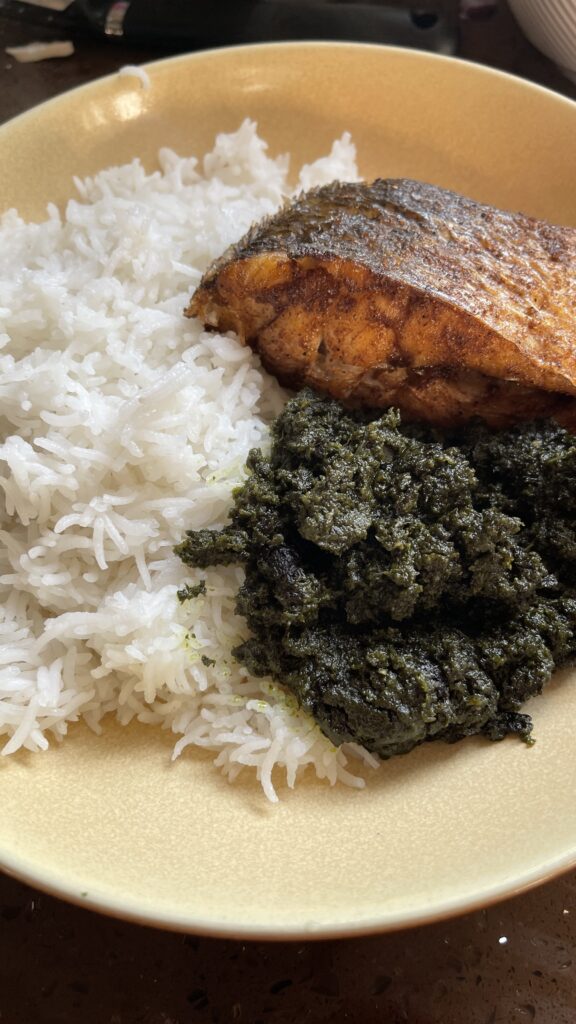
Slow-cooked cassava leaves pounded smooth and simmered in rich coconut milk with ground peanuts, creating a velvety, deeply savory stew that is the soul of Comorian home cooking.
Nutrition & Info
Allergen Warnings
Equipment Needed
Presentation Guide
Vessel: deep bowl
Garnishes: ground peanuts
Accompaniments: steamed rice
Instructions
-
1
Wash cassava leaves thoroughly, then pound in a mortar until reduced to a smooth green paste. This takes about 20 minutes of vigorous pounding.
-
2
Heat coconut oil in a heavy pot over medium heat. Saute onion and garlic for 3 minutes until softened.
-
3
Add the cassava leaf paste and stir well, cooking for 5 minutes.
-
4
Pour in coconut milk and water. Stir in ground peanuts and turmeric.
-
5
Bring to a gentle simmer, then reduce heat to low. Cover and cook for 90 minutes, stirring every 15 minutes to prevent sticking.
-
6
Season with salt and adjust coconut milk thickness as desired. The finished stew should be thick and creamy.
-
7
Serve hot over steamed white rice.
Did You Know?
Mataba is so central to Comorian identity that grandmothers judge a young cook's skill by the smoothness of the cassava leaf paste. A grainy mataba is considered a sign of impatience.
Chef's Notes
Equipment Tips
- mortar and pestle
- heavy pot
- wooden spoon
Garnishing
ground peanuts
Accompaniments
steamed rice
The Story Behind Mataba
Mataba traces its origins to the Bantu migrations that brought cassava cultivation to the Comoros Islands centuries ago. The dish evolved as islanders combined African cassava leaf traditions with the abundant coconut palms of the archipelago.
It became the everyday staple of Comorian households, eaten at nearly every meal alongside rice. The addition of ground peanuts reflects trade connections with mainland East Africa.
Today mataba remains the most beloved home-cooked dish in the Comoros, a symbol of maternal care and cultural continuity across all four islands.
More Comorian Dishes
 Easy
📜 Story
Easy
📜 Story
Achards de Legumes
Comorian Vegetable Pickle
Served alongside main meals Medium
📜 Story
Medium
📜 Story
Boko Boko
Comorian Cracked Wheat Porridge
Eid morning breakfast Easy
📜 Story
Easy
📜 Story
Cardamom Tea
Comorian Spiced Tea
Morning, afternoon, and after dinner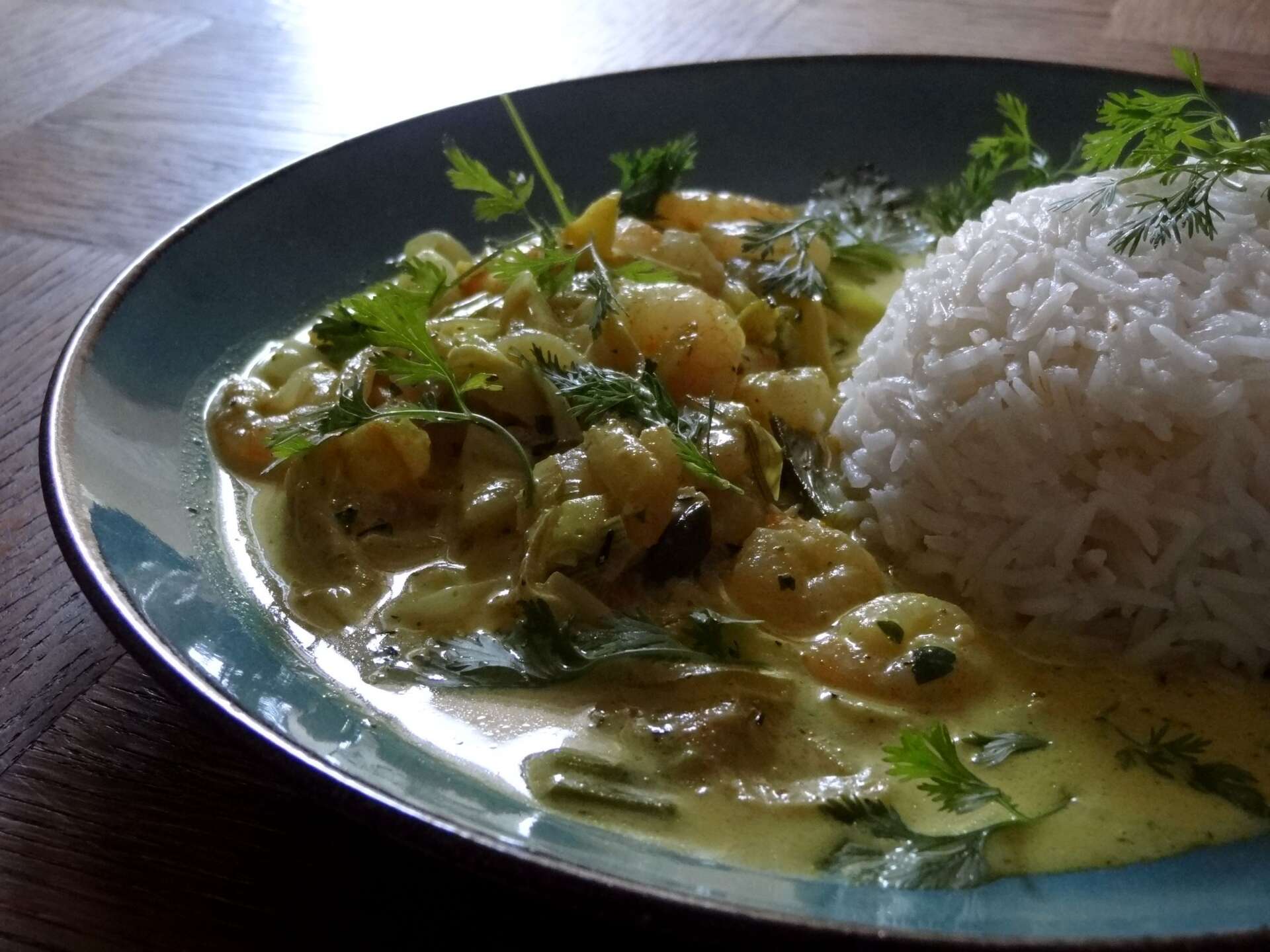 Easy
📜 Story
Easy
📜 Story
Curry de Crevettes
Comorian Shrimp Curry
Lunch or dinner
Comments (0)
Log in to leave a comment.
No comments yet. Be the first to share your thoughts!