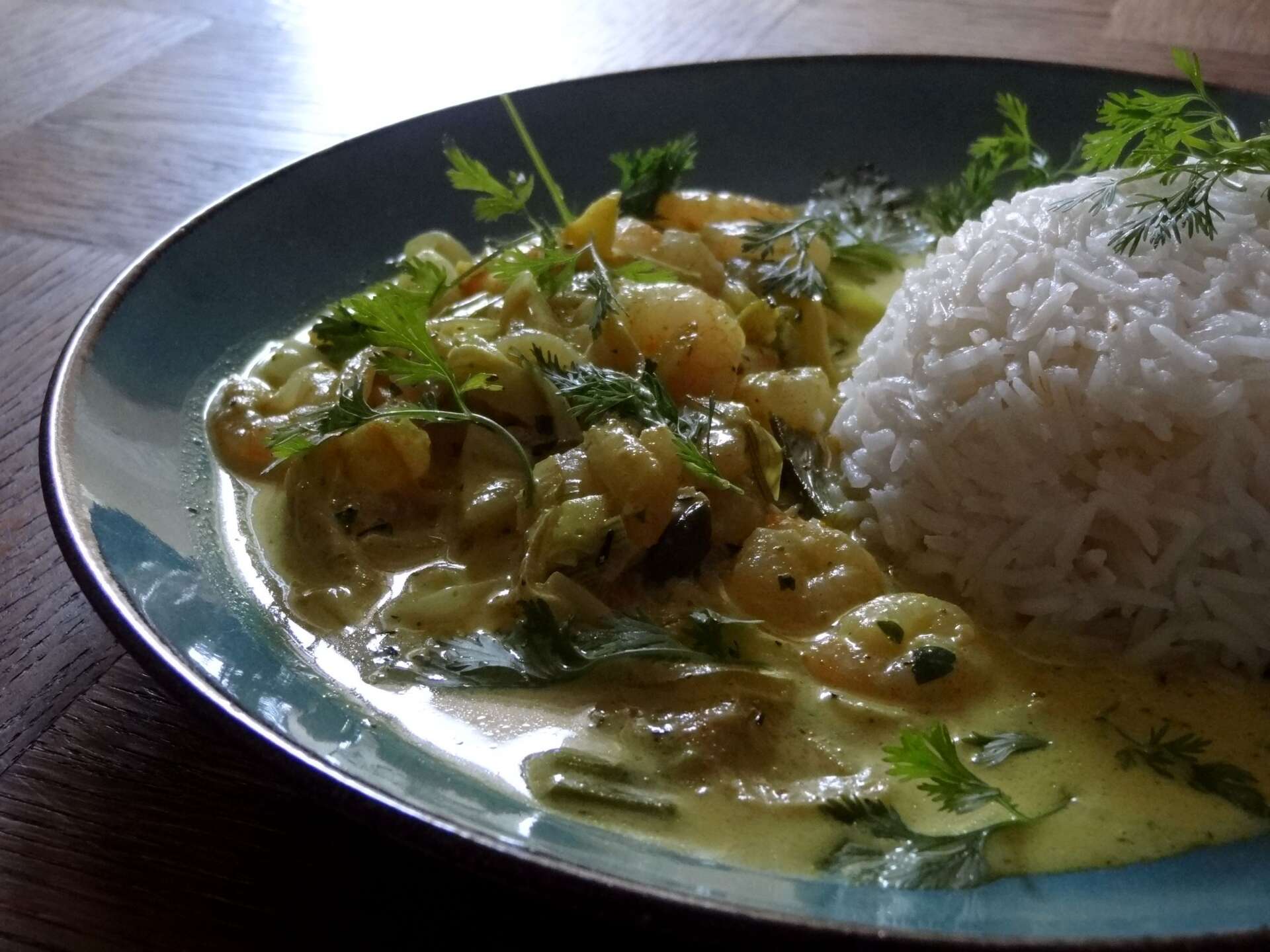
Curry de Crevettes
Curry de Crevettes (kuh-REE duh creh-VET)
Comorian Shrimp Curry
Plump shrimp cooked in a silky coconut curry sauce with tomatoes, ginger, and a whisper of cinnamon. This elegant yet simple dish reflects the French-Comorian culinary marriage.
Nutrition & Info
Allergen Warnings
Equipment Needed
Presentation Guide
Vessel: shallow bowl
Garnishes: fresh parsley, lime wedge
Accompaniments: steamed rice
Instructions
-
1
Heat oil in a skillet over medium heat. Saute onion for 3 minutes.
-
2
Add garlic and ginger, cook 1 minute.
-
3
Add tomatoes, turmeric, and cinnamon stick. Cook 5 minutes until tomatoes soften.
-
4
Pour in coconut milk and bring to a simmer.
-
5
Add shrimp and cook for 4-5 minutes until they turn pink and curl.
-
6
Remove cinnamon stick. Season with salt and pepper.
-
7
Garnish with parsley and serve over rice.
Did You Know?
The waters around Moheli island are particularly rich in large shrimp, and local fishermen there use traditional woven basket traps that have remained unchanged for generations.
Chef's Notes
Equipment Tips
- skillet
- knife
Garnishing
fresh parsley, lime wedge
Accompaniments
steamed rice
The Story Behind Curry de Crevettes
Shrimp curry in the Comoros blends French colonial cuisine with local cooking traditions. The French introduced the idea of dedicated shrimp dishes, while Comorian cooks contributed their coconut milk base and aromatic spice blends.
The dish is particularly popular on Moheli and Anjouan islands where shrimp are abundant. It is considered a slightly more refined dish than everyday fish preparations.
Curry de crevettes exemplifies how Comorian cuisine absorbs outside influences while maintaining its coconut-and-spice identity.
More Comorian Dishes
 Easy
📜 Story
Easy
📜 Story
Achards de Legumes
Comorian Vegetable Pickle
Served alongside main meals Medium
📜 Story
Medium
📜 Story
Boko Boko
Comorian Cracked Wheat Porridge
Eid morning breakfast Easy
📜 Story
Easy
📜 Story
Cardamom Tea
Comorian Spiced Tea
Morning, afternoon, and after dinner Easy
📜 Story
Easy
📜 Story
Donaz
Comorian Doughnuts
Breakfast and afternoon snack
Comments (0)
Log in to leave a comment.
No comments yet. Be the first to share your thoughts!