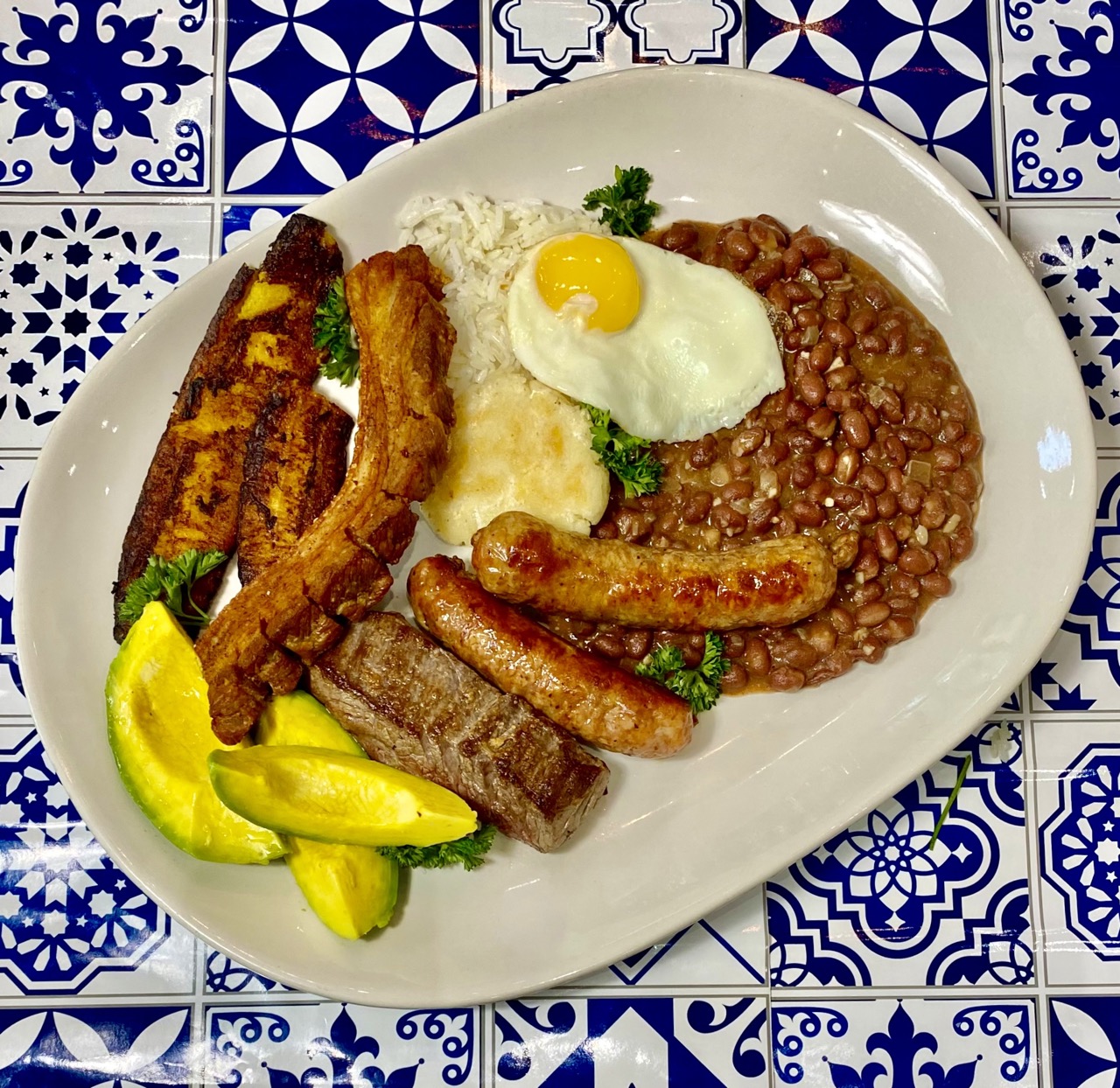
Bandeja Paisa
Bandeja Paisa (bahn-DEH-hah PIE-sah)
Bandeja Paisa (Beef)
Colombia's most epic platter — red beans with beef, rice, fried egg, plantain, arepa, avocado, and chicharrón. A mountain of food that represents the hearty Paisa culture of Antioquia.
Nutrition & Info
Allergen Warnings
Equipment Needed
Presentation Guide
Vessel: large oval platter
Garnishes: lime wedge, avocado slices
Accompaniments: white rice, red beans, chicharron, fried egg, plantain, arepa
Instructions
-
1
Drain the soaked kidney beans and place them in a large pot with fresh water, one diced tomato, half the diced onion, and two cloves of garlic. Bring to a boil, then simmer for one and a half hours until the beans are completely tender.
-
2
Season the beef flank steak generously with salt, pepper, and cumin. Grill or pan-sear over high heat for four minutes per side for medium doneness. Let rest for five minutes, then slice against the grain into thin strips.
-
3
Season the ground beef with salt and the remaining garlic. Form into thin flat patties and fry in a skillet over medium-high heat for three minutes per side until well-browned and cooked through. These are the traditional carne molida.
-
4
Cook the white rice in salted water according to package directions until fluffy and each grain is separate. While the rice cooks, peel the plantains and slice them on the diagonal into one-centimetre-thick pieces.
-
5
Fry the plantain slices in vegetable oil over medium heat for three to four minutes per side until they are deep golden brown and caramelized on the edges. Drain on paper towels and season lightly with salt.
-
6
Fry the eggs sunny-side up in a non-stick pan with a little oil, keeping the yolks runny. The runny yolk is essential to the dish as it acts as a sauce when broken over the rice and beans on the plate.
-
7
Make the hogao by sauteing the remaining onion and tomato with a pinch of salt and cumin until softened and jammy, about eight minutes over medium heat. This traditional Colombian sauce ties the entire platter together.
-
8
Assemble each bandeja paisa on a large oval platter: mound rice on one side, spoon beans next to it, arrange the sliced steak, ground beef patty, fried plantains, and fried egg around the plate, with avocado slices and hogao on top.
Did You Know?
Bandeja paisa was originally the breakfast of farmers and laborers in Antioquia who needed massive calories for hard physical work.
Chef's Notes
Equipment Tips
- multiple skillets
- large pot
- deep fryer
Garnishing
lime wedge, avocado slices
Accompaniments
white rice, red beans, chicharron, fried egg, plantain, arepa
The Story Behind Bandeja Paisa
The Story: Bandeja paisa originated in the Antioquia department and the broader Paisa region of Colombia's mountainous interior. It evolved as a hearty platter designed to fuel arrieros (mule drivers) and farmworkers who labored in the rugged Andean terrain. The dish assembles red beans, white rice, ground beef, fried egg, plantain, arepa, avocado, hogao sauce, and chorizo on a single oversized plate, representing the abundant agricultural output of the region.
On the Calendar: Bandeja paisa is a lunch dish, traditionally the largest meal of the day. It appears at family gatherings, rural festivals, and restaurants across the Paisa region and beyond.
Then & Now: Originally a farmworker's meal assembled from whatever was available, bandeja paisa has been elevated to Colombia's most recognized national dish, served in restaurants from Medellin to Miami. The composition has become somewhat standardized, though families still debate the correct number of components.
Legacy: Bandeja paisa is a monument to Paisa identity, embodying the region's values of hard work, generosity, and abundance at the table.

Comments (0)
Log in to leave a comment.
No comments yet. Be the first to share your thoughts!