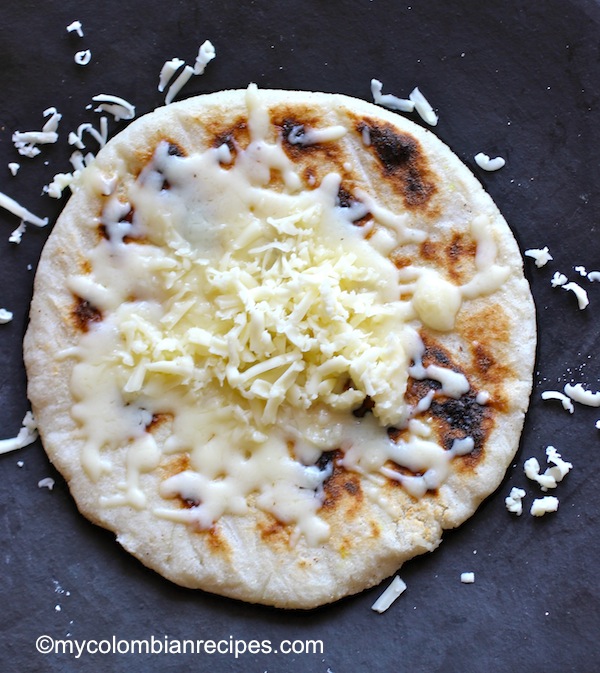
Warm, golden cornmeal cakes griddled until crispy outside and soft inside, split and stuffed with butter, cheese, or any filling you desire. Colombia's daily bread.
Instructions
-
1
Combine the warm water and salt in a large bowl, stirring until the salt dissolves completely. Add the softened butter and mix through the water before adding any cornmeal to ensure even flavour distribution.
-
2
Gradually add the pre-cooked cornmeal to the water while stirring continuously with your other hand. Let the mixture rest for three minutes to allow the cornmeal to fully absorb the liquid before kneading.
-
3
Knead the dough for five minutes until it is smooth, soft, and free of cracks. The consistency should resemble soft playdough. If the dough cracks when shaped, add warm water one tablespoon at a time until pliable.
-
4
Divide the dough into eight equal portions and roll each into a smooth ball between your palms. Flatten each ball into a disc about one centimetre thick and ten centimetres in diameter, smoothing any cracks at the edges.
-
5
Heat the vegetable oil in a large non-stick skillet or griddle over medium heat. Cook the arepas for five to six minutes per side until a golden crust forms and the surface sounds hollow when tapped gently.
-
6
For cheese-stuffed arepas, allow the cooked arepas to cool for two minutes, then slice each one open horizontally like a pita pocket. Stuff generously with shredded mozzarella and press closed so the cheese melts inside.
-
7
Serve the arepas hot, either stuffed with cheese or plain alongside shredded chicken, black beans, avocado, or queso fresco. They can also be finished under the broiler for two minutes for extra crispness on top.
Did You Know?
Arepas predate the arrival of Europeans — indigenous peoples have been making them for thousands of years. Venezuela and Colombia both claim arepas as their own.
The Story Behind Arepas
The Story: The arepa is a pre-Columbian staple that dates back thousands of years to the indigenous peoples of what is now Colombia, Panama, and Venezuela. The Muisca, Cumanagotos, and Timoto-Cuica peoples cultivated maize as their primary food source and ground it into dough for flat cakes cooked on clay griddles called budares. The Colombian Academy of Gastronomy has recognized the arepa as part of the nation's cultural heritage and a symbol of gastronomic unity.
On the Calendar: Arepas are eaten daily at breakfast, lunch, dinner, and as snacks. They are especially prominent during holiday gatherings and family celebrations, where regional varieties take center stage.
Then & Now: Once prepared entirely by hand-grinding dried maize, modern arepas are commonly made with pre-cooked cornmeal (masarepa), making them accessible worldwide. Colombia boasts over seventy-five documented regional preparations, from cheese-stuffed arepas de choclo to the egg-topped arepa de huevo of the Caribbean coast.
Legacy: The arepa is the single most unifying food in Colombian culture, crossing every regional, economic, and social boundary.

Comments (0)
Log in to leave a comment.
No comments yet. Be the first to share your thoughts!