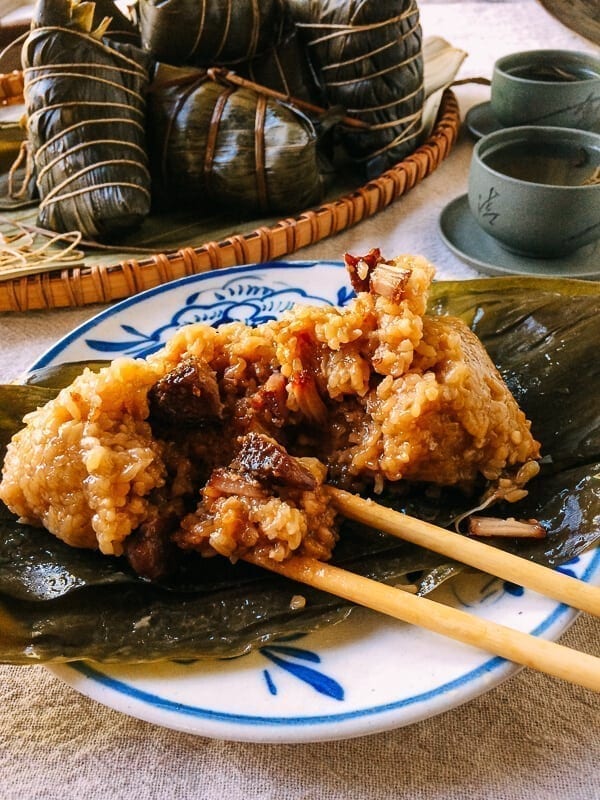
Pyramid-shaped parcels of glutinous rice stuffed with marinated chicken, shiitake mushrooms, and salted egg yolk, wrapped in fragrant bamboo leaves and steamed for hours until the rice becomes sticky and infused with the earthy aroma of the leaves.
Nutrition & Info
Allergen Warnings
Equipment Needed
Instructions
-
1
Soak glutinous rice overnight, drain, and season with soy sauce, five-spice powder, and sesame oil, tossing until every grain is evenly coated.
-
2
Marinate diced chicken thigh with soy sauce, oyster sauce, and five-spice powder for at least two hours to deeply season the meat.
-
3
Take two bamboo leaves and form them into a cone shape, spooning in a layer of seasoned rice followed by chicken, mushrooms, dried shrimp, and half a salted egg yolk.
-
4
Top with another layer of rice, fold the bamboo leaves over to enclose the filling completely, forming a tight pyramid shape, and secure firmly with kitchen twine.
-
5
Place zongzi in a large pot of boiling water, ensuring they are fully submerged, and boil for three hours, adding more boiling water as needed to keep them covered.
-
6
Remove from water and let rest for ten minutes before unwrapping, allowing the sticky rice to firm up slightly for the best texture.
Did You Know?
Zongzi are traditionally eaten during the Dragon Boat Festival to commemorate the poet Qu Yuan who drowned himself in the Miluo River in 278 BCE. Legend says villagers threw rice into the river to prevent fish from eating his body, and the tradition evolved into wrapping rice in leaves.
Chef's Notes
Equipment Tips
- large steamer
- bamboo leaves
- kitchen twine
The Story Behind 鸡肉粽子
Zongzi are one of the most historically significant foods in Chinese culture, with origins dating to the Warring States period over two thousand years ago. The dish is inextricably linked to the Dragon Boat Festival and the legend of Qu Yuan, a beloved poet and minister who drowned himself in protest against political corruption. The tradition of wrapping glutinous rice in bamboo or reed leaves developed as communities threw rice offerings into rivers to honor his memory. Over centuries, regional variations proliferated with northern Chinese zongzi tending toward sweet fillings while southern versions feature savory combinations. This chicken version follows the southern Cantonese tradition while omitting traditional ingredients that contain restricted proteins.

Comments (0)
Log in to leave a comment.
No comments yet. Be the first to share your thoughts!