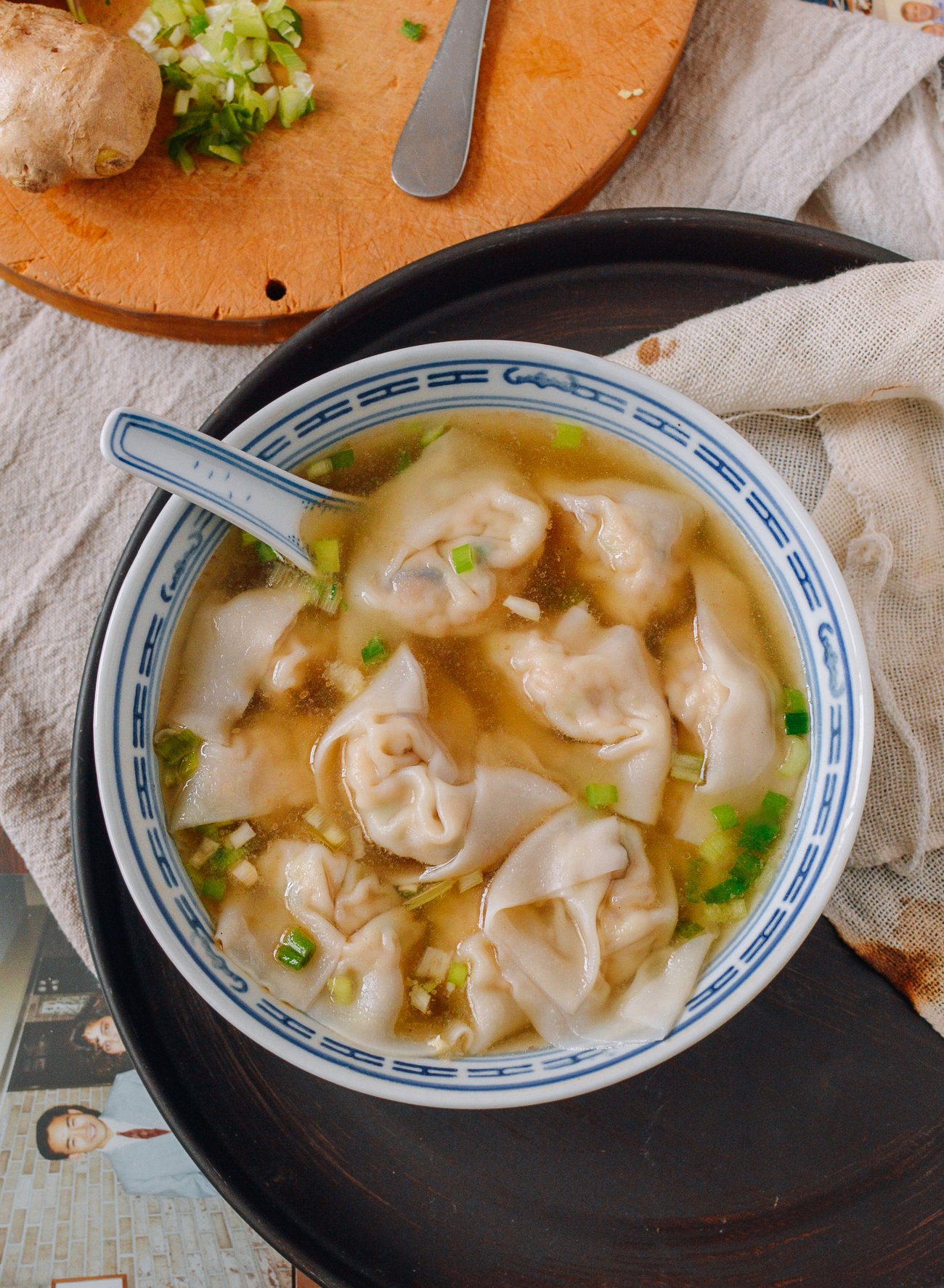
Delicate chicken-filled wontons floating in a clear, aromatic broth seasoned with ginger, sesame oil, and white pepper. Each wonton is wrapped in a silky-thin wheat skin that gives way to a juicy, well-seasoned filling.
Nutrition & Info
Allergen Warnings
Equipment Needed
Instructions
-
1
Combine ground chicken, chopped shrimp, soy sauce, sesame oil, Shaoxing wine, grated ginger, and green onions in a bowl, mixing in one direction until the filling becomes sticky and cohesive.
-
2
Place a teaspoon of filling in the center of each wonton wrapper, moisten the edges with water, fold into a triangle, then bring the two bottom corners together and press to seal into the classic wonton shape.
-
3
Bring chicken stock to a gentle boil with white pepper and a splash of sesame oil, adjusting seasoning with soy sauce to taste.
-
4
Blanch baby bok choy in the broth for one minute, then remove and set aside in serving bowls.
-
5
Gently lower wontons into the simmering broth in batches, cooking for four to five minutes until they float to the surface and the wrappers become translucent.
-
6
Divide wontons among bowls with bok choy, ladle hot broth over top, and finish with a drizzle of sesame oil and sliced green onions.
Did You Know?
The word wonton means swallowing clouds in Cantonese, referring to how the delicate dumplings float and billow in the broth like clouds in the sky. Traditional Cantonese wonton wrappers are made extra thin to enhance this cloud-like effect.
Chef's Notes
Equipment Tips
- large pot
- mixing bowl
The Story Behind 鸡肉馄饨汤
Wontons date back to the Han Dynasty and are among the oldest forms of Chinese dumplings. The Cantonese wonton tradition is particularly revered, with Hong Kong developing some of the most refined wonton-making techniques in the world. Traditional wonton noodle shops in Hong Kong are cultural institutions where masters hand-wrap hundreds of wontons daily using bamboo poles to knead the dough to an impossibly thin consistency. This chicken version maintains the essential technique while offering a lighter alternative that has become increasingly popular in modern Chinese cooking.

Comments (0)
Log in to leave a comment.
No comments yet. Be the first to share your thoughts!