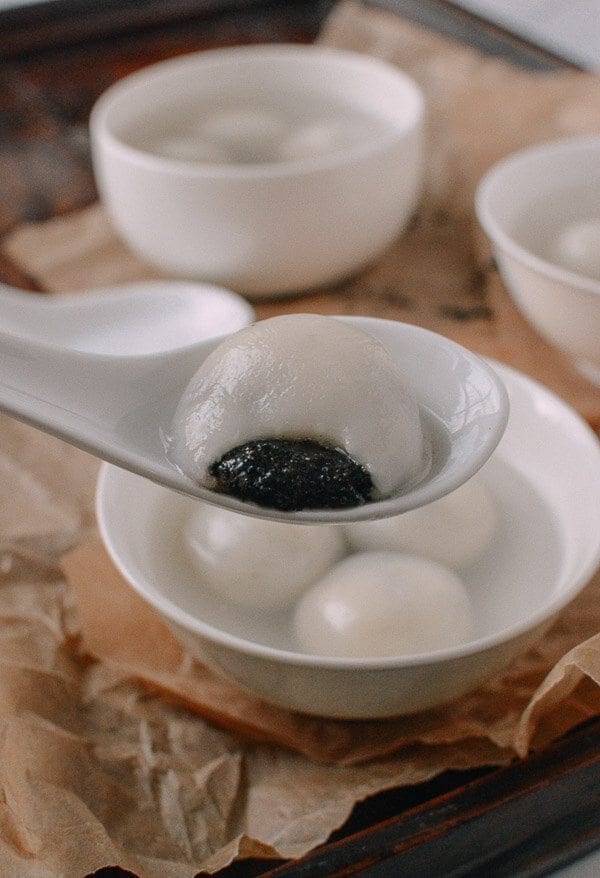
Soft, chewy glutinous rice balls filled with sweet black sesame paste, served in a warm ginger-infused syrup. When bitten into, the smooth, nutty filling flows out in a luscious stream, creating a beloved contrast of textures.
Nutrition & Info
Allergen Warnings
Equipment Needed
Instructions
-
1
Toast black sesame seeds in a dry pan until fragrant, then grind to a fine powder in a food processor, mixing with sugar and softened coconut oil to form a smooth, thick paste.
-
2
Roll sesame paste into small balls about one centimeter in diameter and freeze for thirty minutes until firm enough to handle easily.
-
3
Mix glutinous rice flour with warm water gradually, kneading until a smooth, pliable dough forms that does not stick to your hands.
-
4
Pinch off walnut-sized pieces of dough, flatten into a disk in your palm, place a frozen sesame ball in the center, and carefully seal the dough around it, rolling between your palms until perfectly round.
-
5
Bring a large pot of water to a gentle boil, carefully lower tang yuan in and cook until they float to the surface, then continue cooking for another two minutes.
-
6
Serve in a warm ginger syrup made by simmering rock sugar and sliced ginger in water for ten minutes.
Did You Know?
Tang yuan symbolizes family togetherness because the word yuan sounds like the Chinese word for reunion. Families traditionally gather to make tang yuan together on the night of the Lantern Festival, rolling the balls by hand as a bonding activity.
Chef's Notes
Equipment Tips
- large pot
- mixing bowl
The Story Behind 汤圆
Tang yuan originated during the Song Dynasty and became the defining food of the Lantern Festival, celebrated on the fifteenth day of the first lunar month. The round shape of the rice balls symbolizes completeness and family reunion, making them one of the most culturally significant desserts in Chinese tradition. The black sesame filling became the most classic variety during the Ming Dynasty when sesame paste was ground smooth with sugar and lard, though modern versions often use butter or coconut oil. Regional variations include savory tang yuan filled with meat in some parts of southern China, but the sweet sesame version remains the most beloved and widely prepared.

Comments (0)
Log in to leave a comment.
No comments yet. Be the first to share your thoughts!