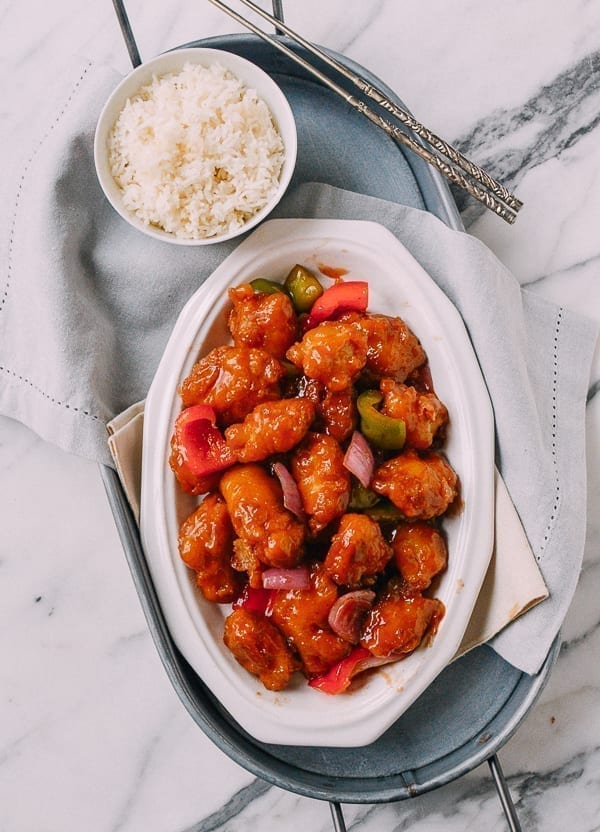
Crispy battered chicken pieces tossed in a vibrant sauce of pineapple, bell peppers, and a tangy-sweet glaze made from rice vinegar, ketchup, and sugar. Each bite delivers a satisfying crunch followed by a burst of fruity, balanced flavor.
Nutrition & Info
Allergen Warnings
Equipment Needed
Instructions
-
1
Season chicken pieces with salt and white pepper, dip in beaten egg, then coat thoroughly in a mixture of cornstarch and flour, shaking off any excess.
-
2
Heat vegetable oil to 180 degrees Celsius and deep-fry chicken in batches for four to five minutes until golden and cooked through, then drain on a wire rack.
-
3
In a clean wok, stir-fry bell peppers for one minute until slightly softened but still vibrant and crunchy.
-
4
Combine rice vinegar, sugar, ketchup, and soy sauce in the wok, bringing to a simmer until the sugar dissolves completely into a glossy sauce.
-
5
Add cornstarch slurry to thicken the sauce, then toss in pineapple chunks and fried chicken pieces, coating everything evenly in the sweet and sour glaze.
-
6
Serve immediately over steamed rice to preserve the crispy batter texture.
Did You Know?
Sweet and sour sauce dates back to the Qing Dynasty and was one of the first Chinese flavors adapted for Western palates. The original Cantonese version uses a lighter, more vinegar-forward sauce compared to the heavier Western adaptations.
Chef's Notes
Equipment Tips
- wok
- deep fryer or heavy pot
The Story Behind 甜酸鸡
Sweet and sour cooking is an ancient Cantonese technique that balances sugar and vinegar to create a harmonious flavor profile rooted in Chinese culinary philosophy of yin and yang. The original Cantonese version used a delicate sauce with rice vinegar and sugar over lightly battered fish or meat. When Chinese immigrants opened restaurants in the West during the nineteenth century, the sauce was adapted with ketchup and became one of the most iconic Chinese dishes globally. The chicken version became particularly popular and is now served in Chinese restaurants worldwide while Cantonese chefs continue to prepare the more refined traditional variation.

Comments (0)
Log in to leave a comment.
No comments yet. Be the first to share your thoughts!