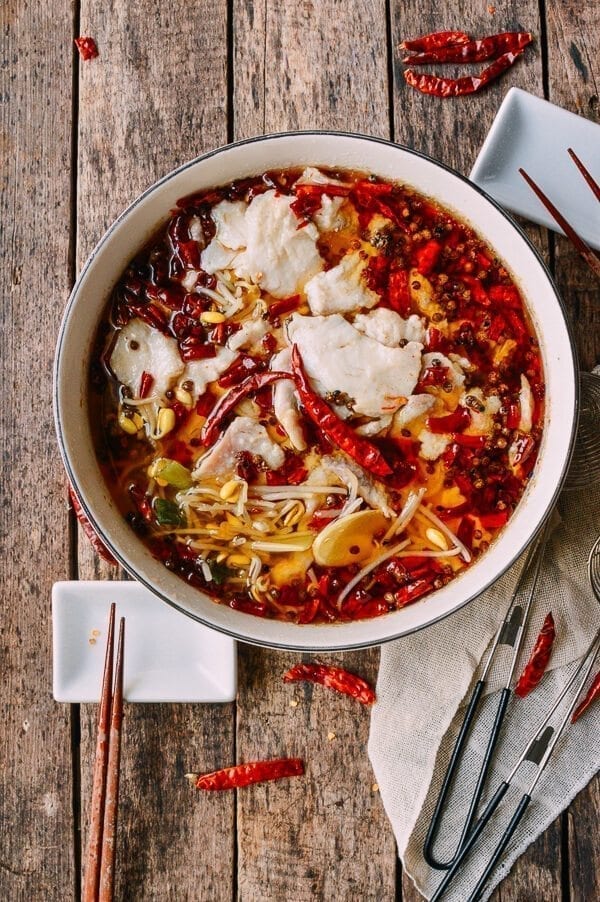
Silky slices of white fish poached in a fiery bath of chili oil, Sichuan peppercorns, and dried chilies, served over a bed of bean sprouts and celery. Despite the name boiled, the fish is actually gently poached and then drenched in sizzling aromatic oil.
Nutrition & Info
Allergen Warnings
Equipment Needed
Instructions
-
1
Marinate fish slices in egg white, cornstarch, and a pinch of salt for fifteen minutes to create a velvety coating that protects the delicate flesh during poaching.
-
2
Blanch bean sprouts and celery in boiling water for one minute, then arrange in the bottom of a large deep serving bowl.
-
3
Heat two tablespoons of oil in a wok and fry doubanjiang, ginger, and garlic for two minutes until the oil turns a deep red and the paste is fragrant.
-
4
Add one liter of water or stock, bring to a boil, then gently slide the marinated fish slices into the broth one at a time, poaching for three minutes until just cooked through.
-
5
Use a slotted spoon to transfer the fish onto the bed of vegetables in the serving bowl, ladling enough broth to partially cover the fish.
-
6
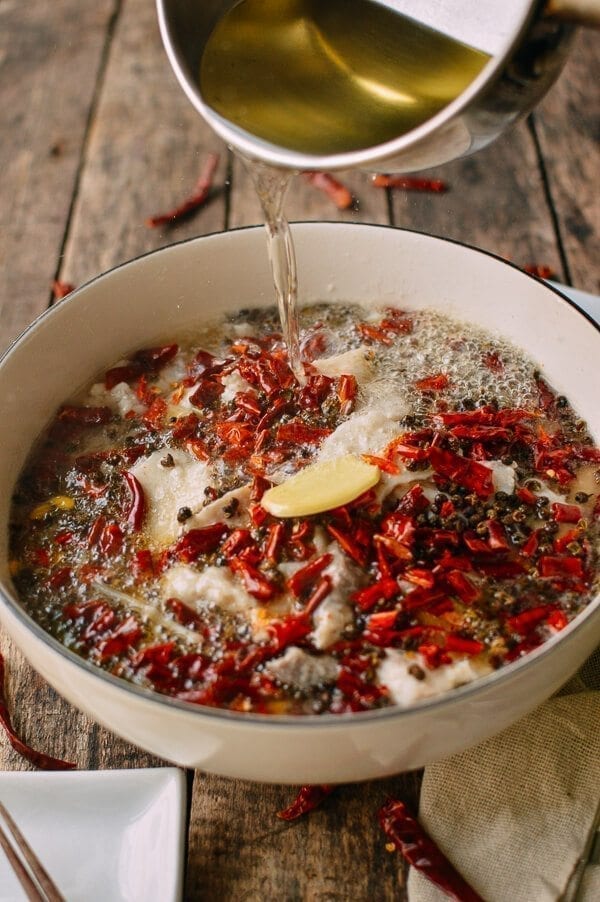
In a clean wok, heat remaining vegetable oil until smoking, scatter dried chilies, Sichuan peppercorns, and sliced garlic over the fish, then pour the sizzling oil over everything, creating a dramatic sizzle and releasing an intensely aromatic chili fragrance.
Did You Know?
The dramatic final step of pouring sizzling hot oil over dried chilies and Sichuan peppercorns tableside creates an explosive sizzle and a cloud of intoxicating chili-infused aroma that is as much theater as it is cooking technique.
Chef's Notes
Equipment Tips
- wok
- large deep bowl
- slotted spoon
The Story Behind 水煮鱼
Sichuan boiled fish is a relatively modern dish that emerged in the 1980s in Chongqing and quickly swept across China to become one of the most popular Sichuan dishes nationwide. The technique of poaching delicate fish fillets and then drenching them in sizzling chili oil draws from ancient Sichuan cooking methods but the specific combination and presentation style is a contemporary innovation. The dish exemplifies the Sichuan culinary philosophy of ma la, the simultaneous numbing and spicy sensation that defines the province's cuisine. Its rapid rise to popularity reflects the broader trend of Sichuan food becoming dominant across China's restaurant scene.

Comments (0)
Log in to leave a comment.
No comments yet. Be the first to share your thoughts!