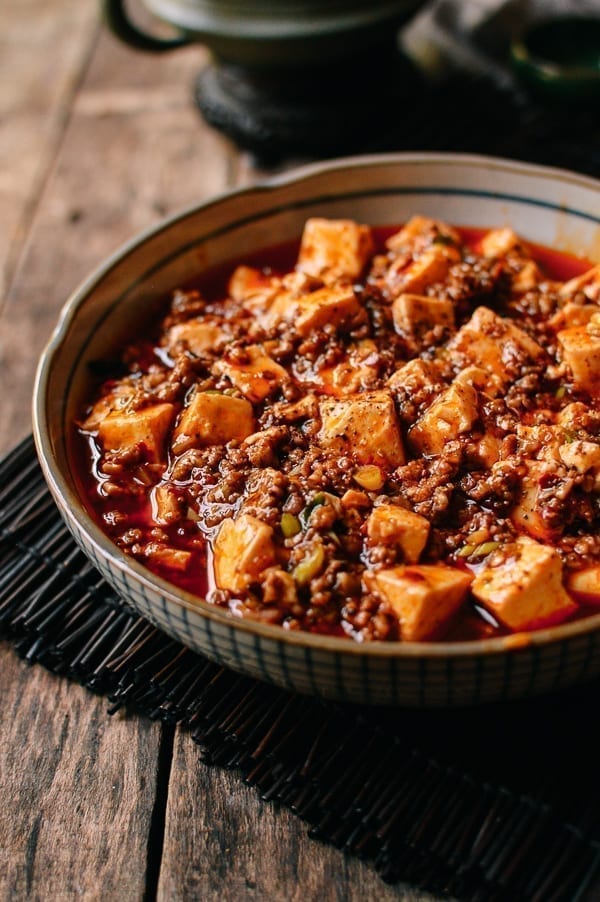
Silken tofu in a fiery sauce of chili bean paste, black beans, and ground beef, finished with Sichuan peppercorns. Uses beef instead of traditional meat.
Nutrition & Info
Allergen Warnings
Equipment Needed
Presentation Guide
Vessel: deep ceramic bowl
Garnishes: Sichuan peppercorn powder, sliced scallions, chili oil
Accompaniments: steamed white rice
Instructions
-
1
Gently slide the tofu cubes into a pot of salted simmering water and let them poach for three minutes. This firms up the tofu so it holds its shape during cooking. Drain carefully and set aside on a plate.
-
2
Heat the vegetable oil in a wok or large skillet over high heat. Add the ground beef and cook, breaking it into very fine crumbles with the edge of your spatula, until well-browned and crispy, about five minutes.
-
3
Reduce the heat to medium and push the beef to one side. Add the doubanjiang and chopped fermented black beans to the open space, frying them in the oil for about one minute until the oil turns a deep red colour.
-
4
Add the minced garlic, ginger, and scallion whites to the wok. Stir everything together and cook for thirty seconds until highly fragrant, being careful not to let the garlic burn at the edges of the pan.
-
5
Pour in the broth, soy sauce, and sugar, then bring to a gentle simmer. Carefully slide the poached tofu cubes into the sauce, spooning the liquid over the top rather than stirring, to avoid breaking the delicate cubes.
-
6
Simmer uncovered for five minutes to allow the tofu to absorb the flavours of the sauce. Give the cornstarch slurry a stir and drizzle it into the wok in a thin stream while gently swirling the pan to thicken the sauce.
-
7
Sprinkle the ground Sichuan peppercorn generously over the surface, followed by the sliced scallion greens. Serve immediately in a deep bowl alongside steamed jasmine rice to soak up the fiery, numbing sauce.
Did You Know?
Uses beef instead of traditional pork. Created by a pockmarked woman (mapo) in 1860s Chengdu.
Chef's Notes
Equipment Tips
- wok or deep skillet
- sharp knife
- ladle
Garnishing
Sichuan peppercorn powder, sliced scallions, chili oil
Accompaniments
steamed white rice
The Story Behind 麻婆豆腐
### The Story
Mapo tofu was created around 1862 in Chengdu during the Qing Dynasty by a woman known as Chen Mapo -- "mapo" meaning "pock-marked grandmother" -- who ran a small restaurant near Wanfu Bridge with her husband Chen Chunfu. Oil porters crossing the bridge would bring their own cooking oil and ask the restaurant to prepare something hearty and affordable. Chen Mapo developed a distinctive way of cooking tofu with fermented bean paste, chili oil, Sichuan peppercorn, and minced meat that became legendary for its bold, numbing heat. By 1909, the restaurant was listed among Chengdu's 23 most famous eateries in the Chengdu Records.
### On the Calendar
Mapo tofu has no seasonal association. It is a year-round staple served at lunch or dinner, valued for its affordability and satisfying flavors, particularly during cold weather.
### Then & Now
The original recipe emphasized the dish's defining characteristics: ma (numbing from Sichuan peppercorn), la (spicy from chili), tang (scalding hot), xian (fresh), nen (tender tofu), xiang (aromatic), and su (crispy minced meat). The Chen Mapo Tofu Restaurant still operates in Chengdu today. The dish has spread worldwide and is especially beloved in Japan, where it was popularized by Sichuan-trained chef Chen Kenmin in the 1950s.
### Legacy
Mapo tofu proves that genius requires neither wealth nor formal training -- a pock-marked cook in a humble bridge-side eatery created one of the most celebrated dishes in all of Chinese cuisine.

Comments (0)
Log in to leave a comment.
No comments yet. Be the first to share your thoughts!