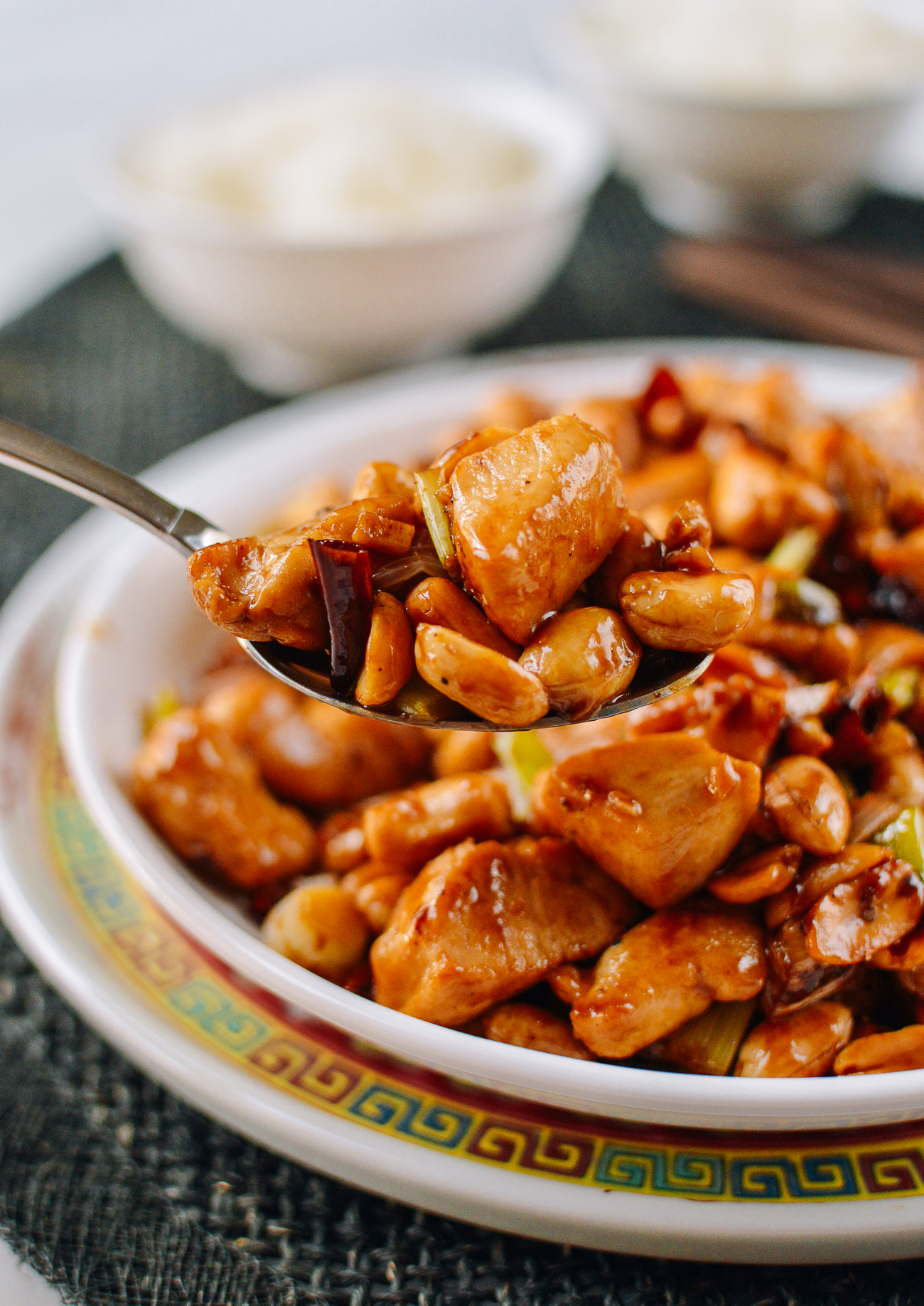
Tender chicken wok-tossed with roasted peanuts, fiery dried chilies, and mouth-numbing Sichuan peppercorns in a glossy sweet-savory sauce.
Nutrition & Info
Allergen Warnings
Equipment Needed
Presentation Guide
Vessel: round plate
Garnishes: roasted peanuts, dried chili peppers, scallion rings
Accompaniments: steamed white rice
Instructions
-
1
Toss the diced chicken thigh pieces with one tablespoon of soy sauce and the cornstarch in a bowl, massaging the marinade into the meat. Let it sit for fifteen minutes at room temperature to absorb the flavours.
-
2
Prepare the sauce by combining the remaining soy sauce, dark soy sauce, black vinegar, sugar, and two tablespoons of water in a small bowl. Stir until the sugar dissolves completely and set aside.
-
3
Heat the vegetable oil in a wok over high heat until wisps of smoke appear. Add the marinated chicken pieces in a single layer and sear without stirring for two minutes, then toss and cook until golden on all sides.
-
4
Push the chicken to the sides of the wok and add the dried red chilies and Sichuan peppercorns to the centre. Stir-fry them in the hot oil for thirty seconds until the chilies darken slightly and the kitchen smells fragrant.
-
5
Add the sliced garlic and minced ginger to the wok and stir-fry everything together for thirty seconds. Splash in the Shaoxing wine around the edge of the wok, letting it sizzle and steam before mixing through.
-
6
Pour the prepared sauce into the wok and toss everything vigorously over high heat for one to two minutes. The sauce should reduce and become glossy, coating each piece of chicken with a shiny lacquer.
-
7
Add the roasted peanuts and scallion segments, tossing for thirty seconds to warm them through without overcooking the scallions. Drizzle with sesame oil, give one final toss, and serve immediately with steamed rice.
Did You Know?
Named after Qing Dynasty governor Ding Baozhen whose title was 'Gong Bao.'
Chef's Notes
Equipment Tips
- wok
- sharp knife
- mixing bowls
Garnishing
roasted peanuts, dried chili peppers, scallion rings
Accompaniments
steamed white rice
The Story Behind 宫保鸡丁
### The Story
Kung Pao chicken is named after Ding Baozhen (1820-1886), a late Qing Dynasty official who served as governor of Sichuan Province. His official title was Gongbao, meaning "Palace Guardian," which gave the dish its name. Multiple origin stories compete for authenticity: one holds that as a child, Ding nearly drowned in a river and was saved by a passing family who later served him spicy diced chicken; another suggests the dish was a staple at family banquets during Ding's earlier governorship in Shandong, which he adapted with local chili peppers when transferred to Sichuan to suit local tastes.
### On the Calendar
Kung Pao chicken has no specific seasonal association. It is eaten year-round as a main course at lunch or dinner, and is one of the most commonly ordered dishes in Sichuan restaurants.
### Then & Now
From its Sichuan origins, the dish spread throughout China and was among the first Chinese dishes to gain international recognition. The classic version features diced chicken stir-fried with dried chili peppers, Sichuan peppercorns, and roasted peanuts, delivering the signature ma la (numbing-spicy) sensation. Westernized versions often omit the Sichuan peppercorn, losing the numbing dimension, but authentic preparations remain a benchmark for Sichuan cooking.
### Legacy
Kung Pao chicken is perhaps the world's most famous Sichuan dish, embodying the province's bold approach to flavor and demonstrating how a regional specialty can become a global icon.

Comments (1)
Log in to leave a comment.
I substituted coconut milk and it worked great. Highly recommend!