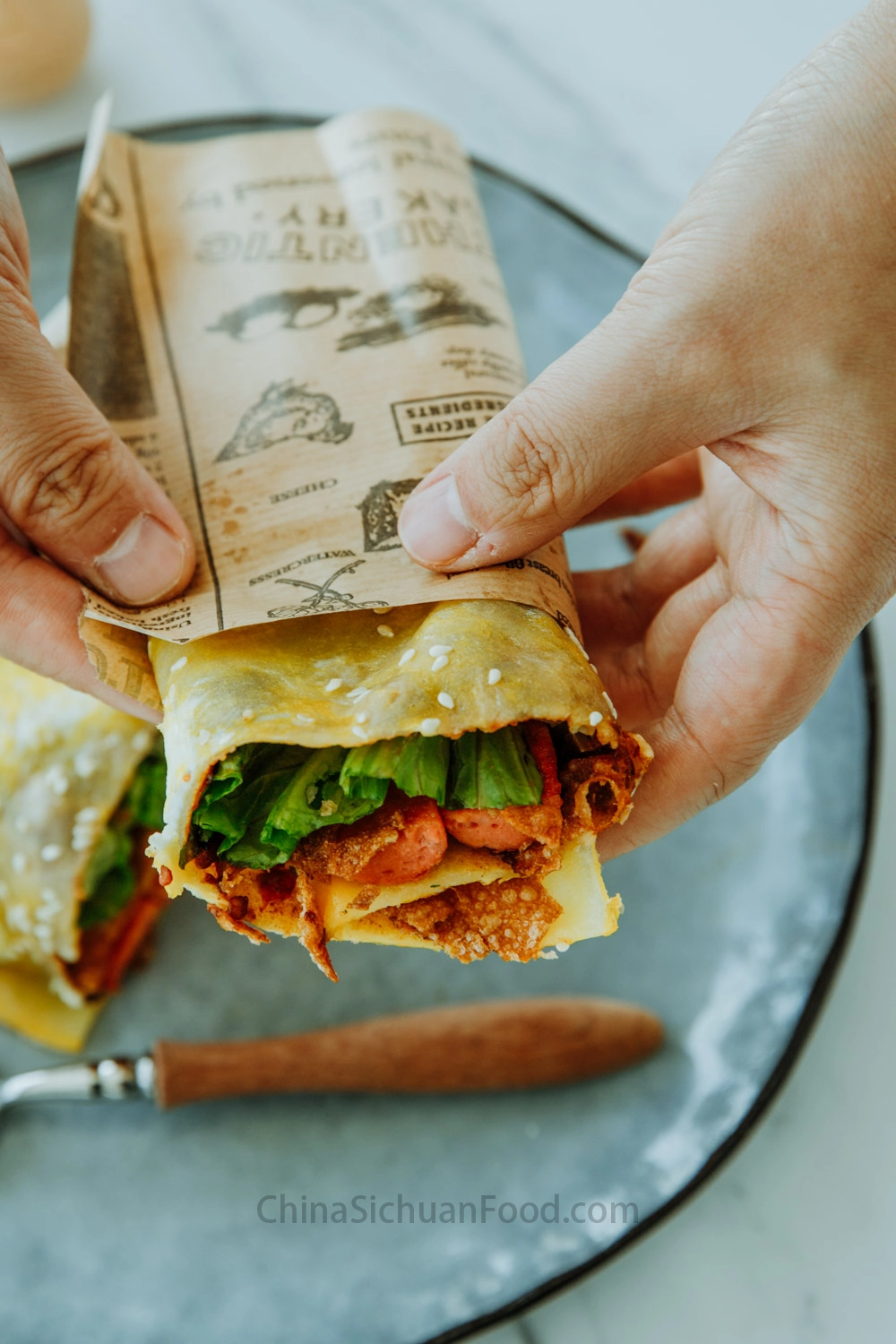
A crispy, savory breakfast crepe made from mung bean and wheat flour batter, spread thin on a griddle, topped with a cracked egg, scallions, cilantro, hoisin sauce, and a crunchy fried wonton cracker folded inside.
Nutrition & Info
Allergen Warnings
Equipment Needed
Instructions
-
1
Whisk mung bean flour, wheat flour, and water into a smooth, thin batter with no lumps, the consistency should be like heavy cream.
-
2
Heat a large flat griddle or skillet over medium heat, brush with oil, and pour half the batter onto the surface, using a crepe spreader or the back of a ladle to spread it into a thin, even circle.
-
3
Crack an egg directly onto the cooking crepe and quickly spread it across the surface with the spreader before it sets, allowing it to cook into the batter.
-
4
When the bottom is golden and the egg is set, flip the jianbing and spread hoisin sauce and chili sauce across the egg side.
-
5
Scatter chopped green onions and cilantro over the sauce, then place a crispy wonton cracker in the center.
-
6
Fold the jianbing into thirds around the cracker, press gently, and serve immediately while still hot and crispy.
Did You Know?
Jianbing is considered the most popular street breakfast in China with an estimated 2.5 billion consumed annually. The skilled vendors can produce a perfect jianbing in under two minutes, making it the ultimate grab-and-go morning meal.
Chef's Notes
Equipment Tips
- flat griddle or large skillet
- crepe spreader
The Story Behind 煎饼
Jianbing originated in Shandong province over two thousand years ago and is believed to have been invented during a military campaign when soldiers cooked thin grain batter on their shields over campfires. The dish spread throughout northern China and became the definitive street breakfast across Beijing, Tianjin, and beyond. The modern jianbing reached its current form in the twentieth century when vendors began adding eggs, crispy crackers, and multiple sauces to create a more substantial breakfast. Today jianbing carts are ubiquitous on Chinese streets every morning, and the craft of making them has been recognized as an important element of Chinese street food culture.

Comments (0)
Log in to leave a comment.
No comments yet. Be the first to share your thoughts!