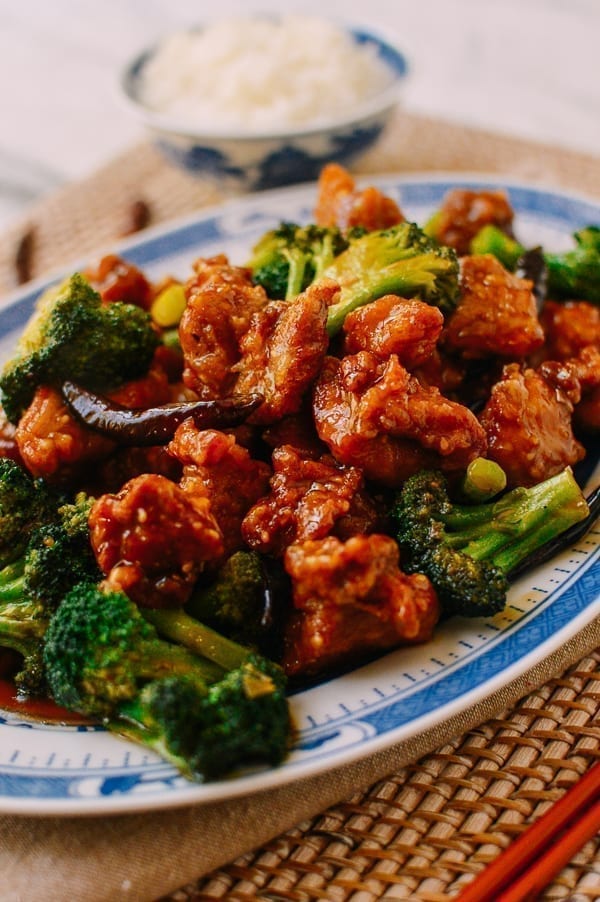
Crispy fried chicken pieces coated in a bold, slightly sweet and spicy sauce flavored with dried chilies, garlic, ginger, and a touch of vinegar. This Hunanese-inspired dish delivers an addictive combination of crunch, heat, and caramelized sweetness.
Nutrition & Info
Allergen Warnings
Equipment Needed
Instructions
-
1
Toss chicken chunks in beaten egg then dredge in cornstarch until evenly coated, shaking off excess to ensure a thin, crispy coating.
-
2
Heat vegetable oil to 180 degrees Celsius and fry chicken in batches for five to six minutes until deeply golden and cooked through, transferring to a wire rack to drain.
-
3
Pour off most oil from the wok, leaving one tablespoon, and stir-fry dried red chilies, garlic, and ginger over medium heat for thirty seconds until fragrant but not burned.
-
4
Add soy sauce, rice vinegar, sugar, and hoisin sauce to the wok, stirring until the sugar dissolves and the sauce begins to bubble and caramelize slightly.
-
5
Stir in the cornstarch slurry to thicken the sauce, then add the fried chicken pieces, tossing vigorously to coat every piece in the glossy, sticky sauce.
-
6
Garnish with sliced green onions and serve immediately over steamed rice.
Did You Know?
General Tso's chicken was invented by Hunanese chef Peng Chang-kuei in the 1950s and named after Zuo Zongtang, a Qing Dynasty military leader from Hunan. Ironically the dish is virtually unknown in Hunan province and is primarily a creation of Chinese-American cuisine.
Chef's Notes
Equipment Tips
- wok
- deep fryer or heavy pot
The Story Behind 左宗棠鸡
General Tso's chicken was created by Chef Peng Chang-kuei, a Hunanese chef who fled to Taiwan during the Chinese Civil War. He named the dish after Zuo Zongtang, a revered nineteenth-century Hunanese military leader. The original version was not sweet but rather a savory, hot dish true to Hunanese flavors. When Chef Peng later opened a restaurant in New York in the 1970s, he adapted the recipe with sugar to suit American palates. The dish became enormously popular and is now one of the most ordered Chinese dishes in the United States, though its sweeter profile differs significantly from authentic Hunanese cuisine.

Comments (0)
Log in to leave a comment.
No comments yet. Be the first to share your thoughts!