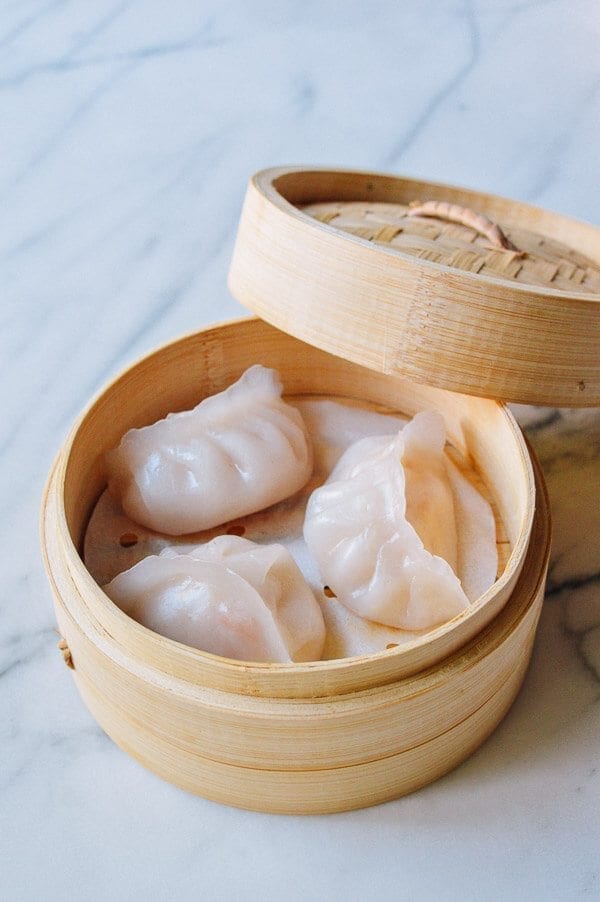
Translucent crystal-skin dumplings filled with plump shrimp in a wrapper so thin you can see the pink filling. Crown jewels of Cantonese dim sum.
Nutrition & Info
Allergen Warnings
Equipment Needed
Presentation Guide
Vessel: bamboo steamer basket
Garnishes: none
Accompaniments: soy sauce, chili oil, Chinese mustard
Instructions
-
1
Pat the shrimp completely dry with paper towels. Roughly chop two-thirds of the shrimp into small pieces, then finely mince the remaining third to create a mixture that holds together while maintaining texture.
-
2
Combine the chopped shrimp with the diced bamboo shoots, sesame oil, sugar, white pepper, salt, and cornstarch in a bowl. Mix vigorously in one direction for two minutes until the filling becomes sticky and cohesive.
-
3
Cover the filling and refrigerate for at least thirty minutes to firm up. This chilling step makes the filling much easier to handle and helps the dumplings hold their shape during pleating.
-
4
Sift the wheat starch and tapioca starch together into a heatproof bowl. Pour the boiling water over the starches while stirring rapidly with chopsticks, then add the vegetable oil and knead into a smooth, pliable dough.
-
5
Divide the dough into twenty pieces and roll each into a small ball. Using a lightly oiled cleaver blade or tortilla press, flatten each ball into a thin translucent circle about eight centimetres in diameter.
-
6
Place one tablespoon of the chilled shrimp filling in the centre of each wrapper. Fold the dough over and create seven to ten small pleats along the curved edge, pressing firmly to seal without trapping air inside.
-
7
Line a bamboo steamer with parchment paper or napa cabbage leaves. Arrange the dumplings with space between them, then steam over rapidly boiling water for eight to nine minutes until the wrappers turn fully translucent.
-
8
Serve the har gow immediately in the steamer basket with small dishes of soy sauce and chili oil on the side. The dumplings are best eaten within minutes of steaming while the wrappers are still tender.
Did You Know?
Har gow should have exactly 7-10 pleats — translucent yet strong enough not to tear.
Chef's Notes
Equipment Tips
- bamboo steamer
- rolling pin
- wok or large pot
Garnishing
none
Accompaniments
soy sauce, chili oil, Chinese mustard
The Story Behind 虾饺
### The Story
Har gow, the translucent shrimp dumpling, emerged in the early 20th century at the Yi Zhen restaurant in Wufeng Village, Guangzhou. The restaurant's owner, situated beside a river teeming with fresh shrimp, created the dumplings using the daily catch wrapped in a delicate wheat-starch dough. The original filling combined freshwater shrimp with bamboo shoots for added crunch. Har gow quickly became a cornerstone of Cantonese yum cha (tea-drinking) culture and is now recognized as one of the "Four Heavenly Kings" of dim sum, alongside shumai, char siu bao, and egg tarts.
### On the Calendar
Har gow is served year-round as part of dim sum, traditionally enjoyed during morning and early afternoon yum cha sessions, particularly on weekends when families gather at teahouses.
### Then & Now
The mark of a skilled dim sum chef is the har gow: tradition dictates exactly 13 pleats in each wrapper, which must be thin enough to turn translucent when steamed yet strong enough to hold without tearing. The filling has evolved to favor larger, sweeter ocean shrimp. As Cantonese communities emigrated worldwide, har gow became a global ambassador for dim sum culture, found in teahouses from Hong Kong to London to San Francisco.
### Legacy
Har gow represents the pinnacle of dim sum artistry, where the chef's skill is measured in the precision of each pleat and the perfect balance of wrapper and filling.

Comments (0)
Log in to leave a comment.
No comments yet. Be the first to share your thoughts!