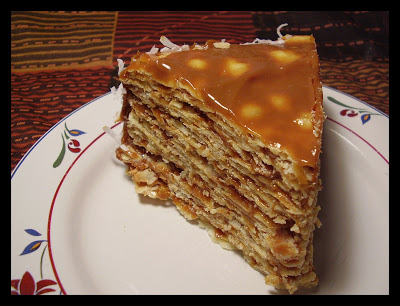
Torta Mil Hojas
Torta Mil Hojas (TOHR-tah meel OH-hahs)
Chilean Thousand-Layer Cake
An impressive layered cake of paper-thin pastry sheets stacked with dulce de leche (manjar), topped with meringue or powdered sugar — Chile's celebration cake.
Nutrition & Info
Allergen Warnings
Equipment Needed
Presentation Guide
Vessel: cake stand
Garnishes: meringue or powdered sugar, manjar drizzle
Accompaniments: coffee, pisco sour
Instructions
-
1
Make pastry: combine flour and salt, cut in butter, add egg yolks and pisco. Knead into a smooth dough. Divide into 10-12 portions.
-
2
Roll each portion paper-thin into circles. Prick with a fork.
-
3
Bake each layer at 200C for 5-7 min until lightly golden. Cool on racks.
-
4
Spread manjar generously between each cooled layer, stacking evenly.
-
5
Make meringue: beat egg whites, gradually add sugar until stiff peaks. Spread over the top and sides.
-
6
Toast meringue with a torch or under the broiler. Or simply dust with powdered sugar. Refrigerate 2 hours before serving.
Did You Know?
Torta mil hojas is Chile's most requested birthday cake, and bakeries sell them pre-assembled in every neighborhood — but grandmothers insist the homemade version is always superior.
Chef's Notes
Equipment Tips
- rolling pin
- baking sheets
- oven
- spatula
Garnishing
meringue or powdered sugar, manjar drizzle
Accompaniments
The Story Behind Torta Mil Hojas
Torta mil hojas (thousand-layer cake) arrived in Chile via French patisserie influence in the 19th century. Chileans adapted it with manjar instead of pastry cream, creating a uniquely Chilean celebration cake. It is the obligatory cake for birthdays, Fiestas Patrias, and every major family celebration.
More Chilean Dishes
 Easy
📜 Story
Easy
📜 Story
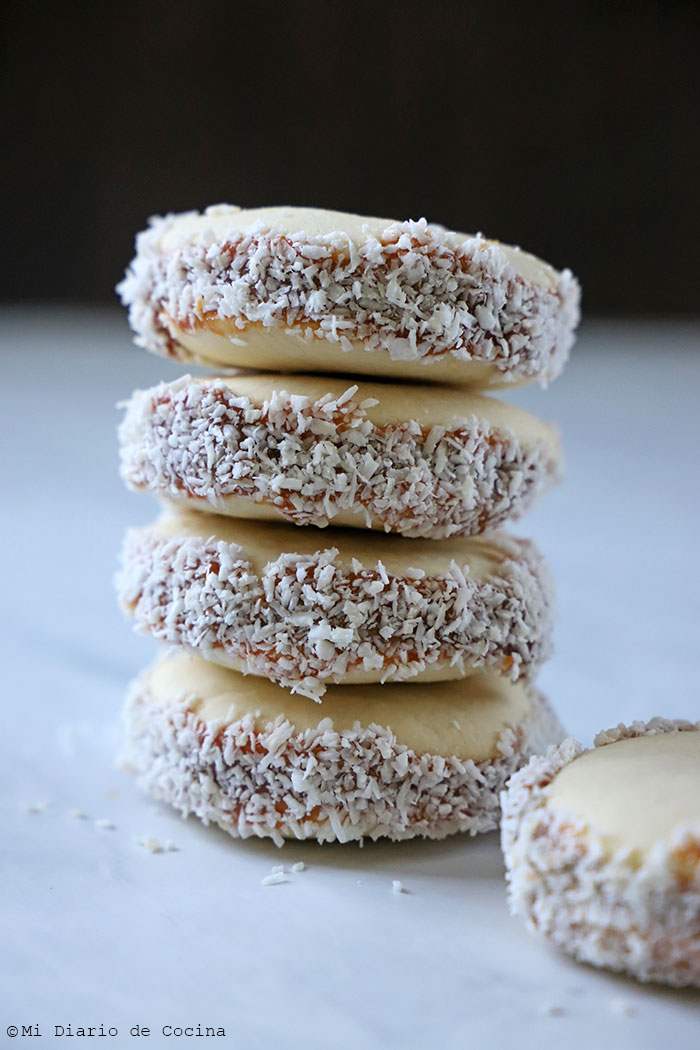
Alfajor Chileno
Chilean Dulce de Leche Sandwich Cookie
Once (tea time), dessert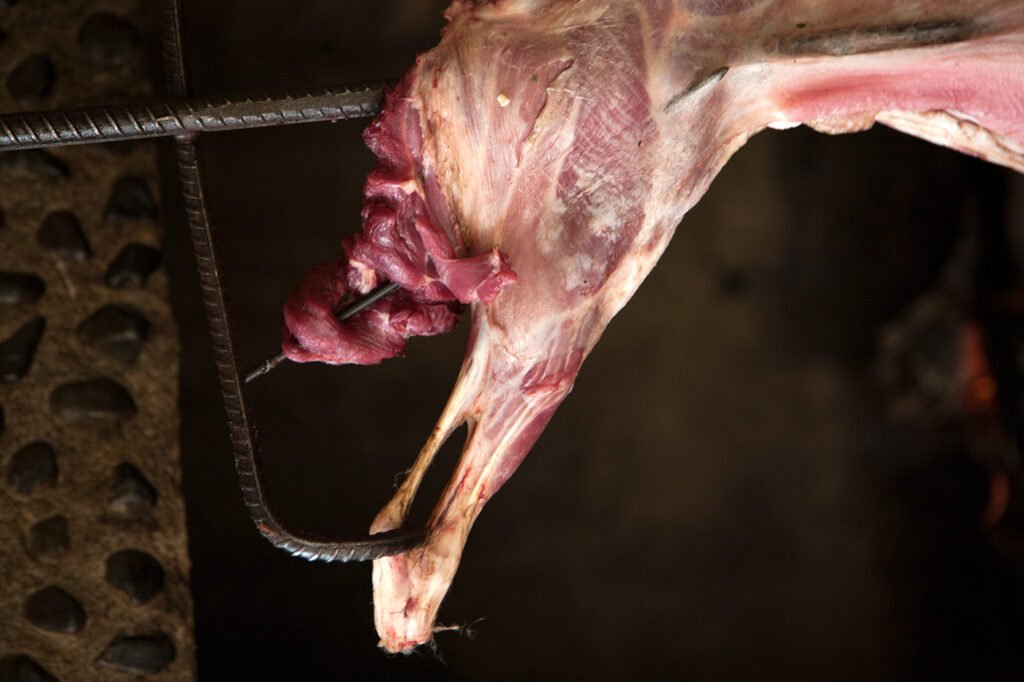 Hard
📜 Story
Hard
📜 Story
Asado al Palo
Stake-Roasted Beef
Weekend celebration, Fiestas Patrias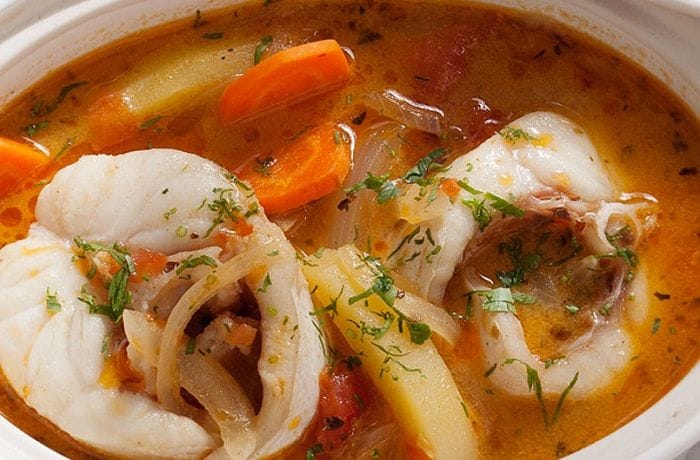 Medium
📜 Story
Medium
📜 Story
Caldillo de Congrio
Conger Eel Chowder
Lunch, coastal dining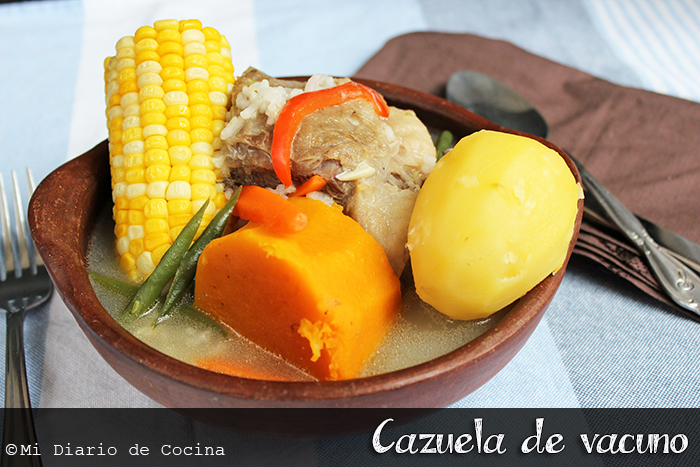 Easy
📜 Story
Easy
📜 Story
Cazuela de Vacuno
Chilean Beef Casserole Soup
Lunch, winter comfort meal
Comments (0)
Log in to leave a comment.
No comments yet. Be the first to share your thoughts!