Firm cassava flour porridge that forms the base of every Central African meal, served with sauces and grilled meats.
Nutrition & Info
Allergen Warnings
Equipment Needed
Presentation Guide
Vessel: large communal bowl
Garnishes: none
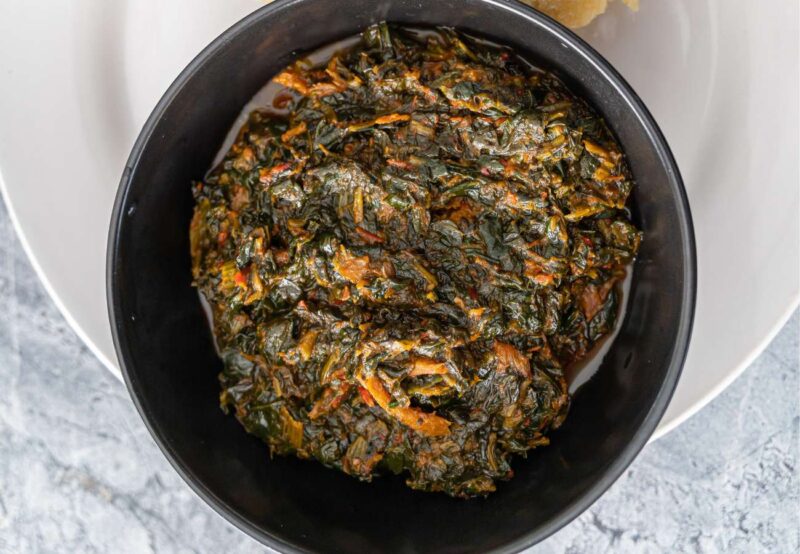
Accompaniments: peanut sauce, leafy green stew
Instructions
-
1
Measure out about two hundred millilitres of cold water into a bowl and gradually stir in approximately one third of the cassava flour to create a smooth, lump-free slurry that pours easily.
-
2
Bring the remaining five hundred millilitres of water to a rolling boil in a large, heavy-bottomed pot. Add the salt and reduce the heat to medium before proceeding to the next step.
-
3
Pour the cassava flour slurry into the boiling water in a steady stream while stirring vigorously with a strong wooden spoon. The mixture will immediately begin to thicken and require constant attention.
-
4
Gradually add the remaining dry cassava flour, a few tablespoons at a time, stirring with great force between each addition. The gozo will become extremely thick and heavy, requiring significant arm strength to keep stirring.
-
5
Continue cooking and stirring on low heat for ten to fifteen minutes until the gozo is very smooth, pulls completely away from the pot walls, and forms a single cohesive mass around the wooden spoon.
-
6
Wet your hands or the spoon with cold water and shape the gozo into smooth, rounded mounds on a serving plate. Serve immediately alongside kanda ti nyma, peanut sauce, or any vegetable or meat stew for dipping.
Did You Know?
Gozo is the heart of every Central African meal — without it, no meal is considered complete.
Chef's Notes
Equipment Tips
- heavy pot
- sturdy wooden spoon
Garnishing
none
Accompaniments
peanut sauce, leafy green stew
The Story Behind Gozo
The Story: Gozo is the Central African Republic's foundational starch: a firm, smooth porridge made from cassava flour cooked in boiling water and stirred vigorously until it reaches a thick, moldable consistency. Served as a smooth mound, gozo functions as both plate and utensil — diners pinch off pieces and use them to scoop accompanying sauces of greens, meat, or groundnuts. Cassava, introduced to Central Africa from South America via Portuguese traders in the sixteenth century, quickly became the dominant crop due to its ability to grow in poor soils and resist drought.
On the Calendar: Gozo is daily food, eaten at lunch and dinner without exception. It requires no special occasion and no celebration — it is the constant foundation of every meal.
Then & Now: While rice has gained popularity in urban areas, gozo remains the preferred starch in most Central African households, especially outside Bangui.
Legacy: Gozo is the Central African Republic's culinary backbone, the dish so fundamental that a meal without it is not considered a meal at all.



Comments (0)
Log in to leave a comment.
No comments yet. Be the first to share your thoughts!