
Ibiharage
Ibiharage n'igitoke (ee-bee-hah-RAH-geh nee-gee-TOH-keh)
Beans and Plantains
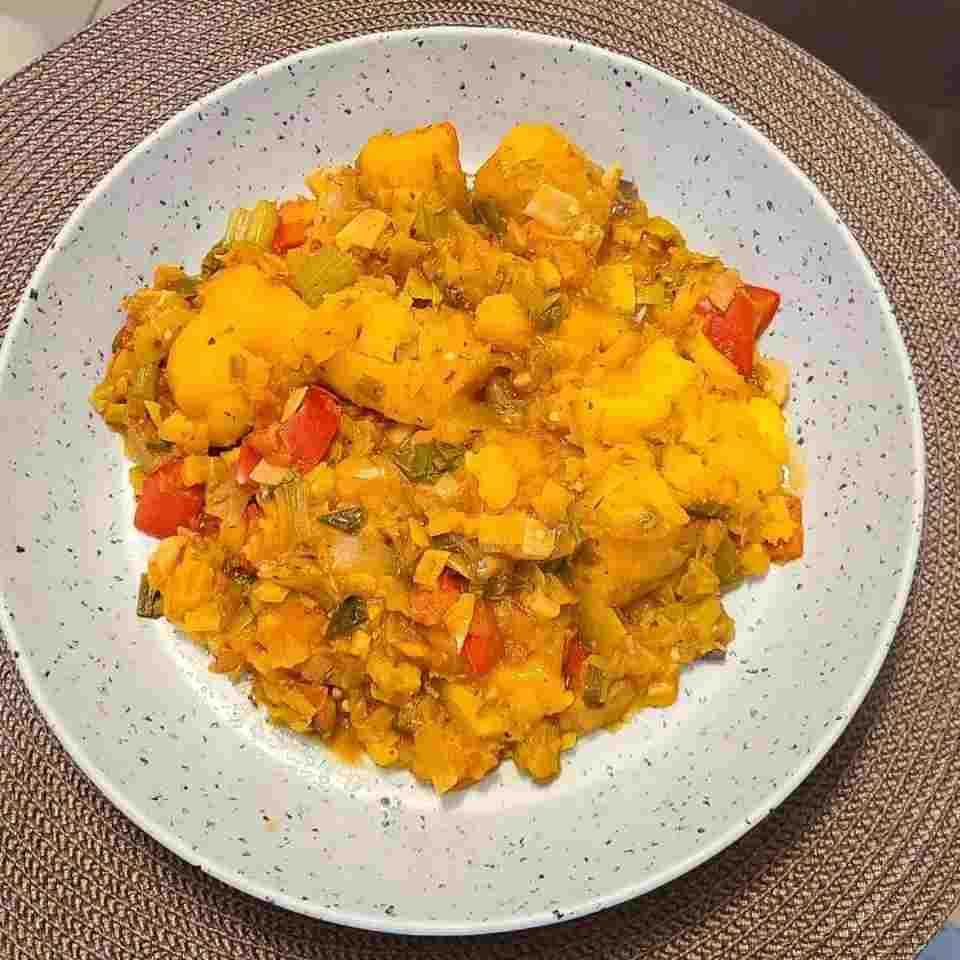
Red kidney beans cooked with green plantains and spices. Burundi's quintessential daily dish and nutritional backbone.
Nutrition & Info
Equipment Needed
Presentation Guide
Instructions
-
1
Drain the soaked beans and place them in a large pot. Cover with fresh water by about five centimetres, bring to a boil over high heat, then reduce to a steady simmer and cook for forty to fifty minutes until the beans are just tender but not mushy.
-
2
While the beans cook, peel the green plantains by scoring the skin lengthwise and pulling it away. Cut the plantains into rounds about two centimetres thick. Set aside in a bowl of salted water to prevent browning.
-
3
Drain the cooked beans, reserving about one cup of the cooking liquid. In the same pot, heat the palm oil over medium heat and saute the diced onion for five minutes until it turns translucent and slightly golden.
-
4
Add the chopped tomatoes and chilli to the pot with the onions. Cook for three to four minutes, stirring occasionally, until the tomatoes break down into a rough sauce and release their juices.
-
5
Return the drained beans to the pot along with the plantain rounds and the vegetable stock. Stir gently to combine without breaking the plantains, then bring to a simmer over medium-low heat.
-
6
Cover and cook for twenty to twenty-five minutes until the plantains are completely tender and can be easily pierced with a fork. The stew should thicken naturally as the plantains release their starch.
-
7
Season with salt and additional chilli if desired. Serve hot in deep bowls, making sure each portion has a generous mix of both the creamy beans and the soft, starchy plantain pieces.
Did You Know?
Burundi's diet is one of the most bean-intensive in the world, with beans eaten at nearly every meal.
Chef's Notes
The Story Behind Ibiharage
The Story: Ibiharage, red kidney beans cooked with green plantains and spices, is Burundi's quintessential daily dish. Beans are so central to Burundian life that the country is sometimes called the land of beans. The preparation is straightforward: dried red beans are boiled until tender, combined with chunks of green plantain, and seasoned with palm oil, salt, and sometimes onions and tomatoes. The combination provides complete protein and sustained energy for a population that remains largely agricultural.
On the Calendar: Ibiharage is daily food, eaten at lunch and dinner without ceremony. It is the meal that Burundian mothers prepare when there is nothing special to celebrate, which is to say, it is the meal of ordinary life.
Then & Now: Beans and plantains remain the most widely consumed meal in Burundi, especially in rural areas. Urban dwellers may eat rice or pasta more frequently, but beans remain the emotional staple.
Legacy: Ibiharage is the honest food of a resilient nation, proof that beans and plantains, prepared simply, can sustain a people through the hardest of times.
More Burundian Dishes
 Medium
📜 Story
Medium
📜 Story
Agatoke
Plantain in Red Bean Sauce
Lunch and dinner Easy
📜 Story
Easy
📜 Story
Amandazi
East African Doughnuts
Breakfast and afternoon tea Medium
📜 Story
Medium
📜 Story
Boko Boko
Cracked Wheat and Meat Porridge
Breakfast and cold-weather meals Easy
📜 Story
Easy
📜 Story
Brochettes
Grilled Goat Skewers
Evening, social gatherings
Comments (0)
Log in to leave a comment.
No comments yet. Be the first to share your thoughts!