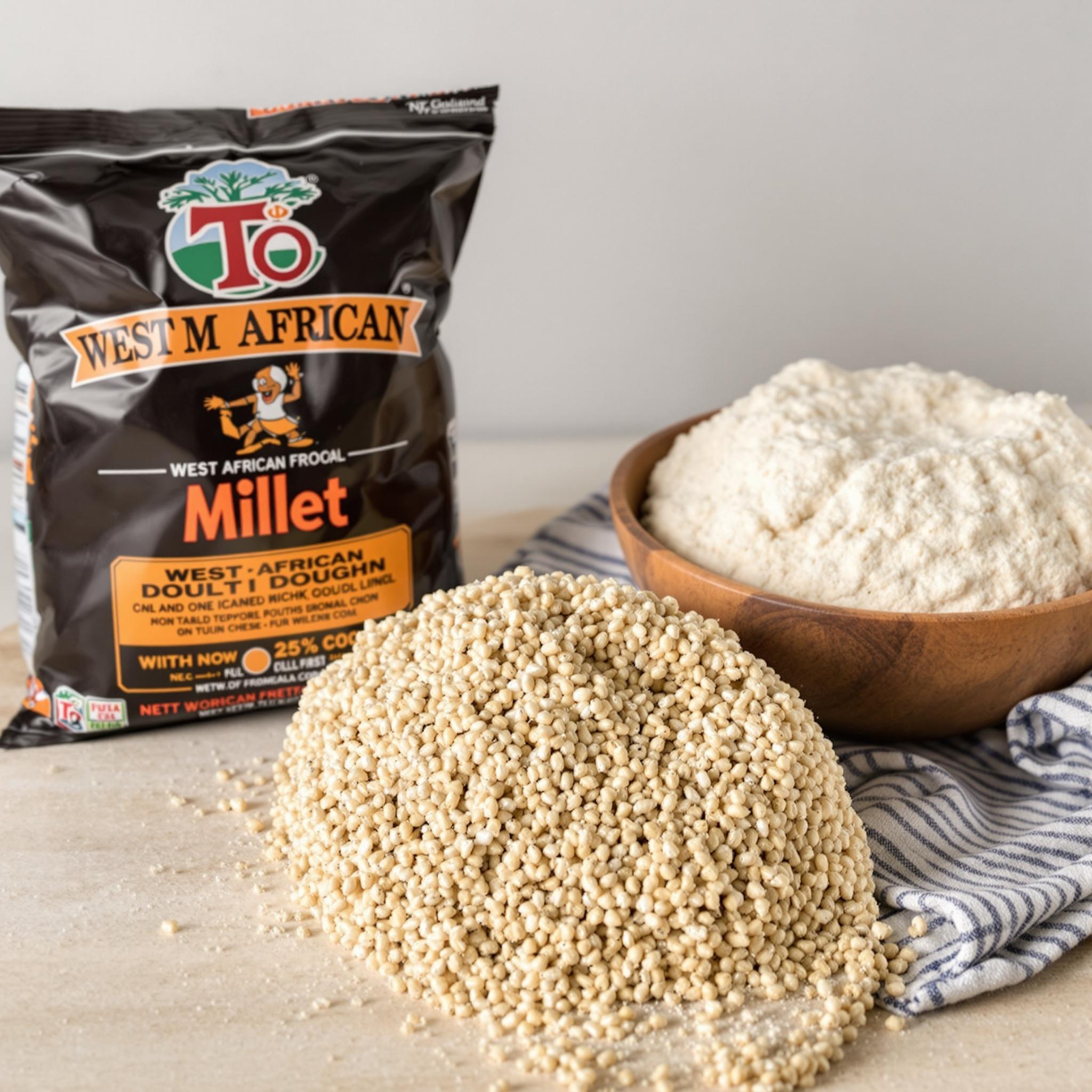
Thick millet porridge formed into a mound and served with a rich okra or baobab leaf sauce. The daily staple of rural Burkina Faso.
Nutrition & Info
Allergen Warnings
Equipment Needed
Presentation Guide
Vessel: large shared bowl
Garnishes: none
Accompaniments: okra sauce, baobab leaf sauce
Instructions
-
1
Pour about one third of the millet flour into a bowl and add two hundred and fifty millilitres of cold water. Stir until you form a smooth, thin slurry with no lumps, resembling a thin pancake batter.
-
2
Bring the remaining seven hundred and fifty millilitres of water to a rolling boil in a large, heavy pot over high heat. Slowly pour the flour slurry into the boiling water while stirring constantly with a strong wooden spoon.
-
3
Reduce the heat to medium-low and continue stirring the mixture as it thickens. Gradually sprinkle in the remaining dry millet flour, a few tablespoons at a time, stirring vigorously after each addition to prevent lumps.
-
4
Continue cooking and stirring for fifteen to twenty minutes. The to is ready when it becomes very thick and stiff, pulling cleanly away from the sides of the pot and forming a cohesive mass around the spoon.
-
5
For the sauce, heat oil in a separate pot, saute the diced onion until soft, then add the pureed tomatoes and cook for five minutes. Add the sliced okra, dried fish, dawadawa, and salt, then simmer for fifteen minutes until thick.
-
6
Wet your hands with cold water and shape the to into smooth, rounded mounds on individual plates or a shared platter. Serve immediately with the okra sauce ladled alongside for dipping and scooping.
Did You Know?
To is eaten at nearly every meal in rural Burkina Faso and the quality of its smoothness reflects the cook's skill.
Chef's Notes
Equipment Tips
- heavy pot
- sturdy wooden spoon
Garnishing
none
Accompaniments
okra sauce, baobab leaf sauce
The Story Behind To
The Story: To is the fundamental daily staple of Burkina Faso: a thick, firm porridge made from pounded millet or sorghum flour, shaped into a smooth mound and served with a variety of sauces. The most common accompaniments are sauce gombo (okra sauce), sauce feuilles (leaf sauce from baobab, sorrel, or spinach), and sauce arachide (groundnut sauce). To requires vigorous stirring with a wooden paddle as the flour is gradually added to boiling water, building arm strength that Burkinabe women develop through years of daily preparation.
On the Calendar: To is everyday food, eaten at lunch and dinner in households across the country, especially in rural areas where millet remains the primary crop.
Then & Now: Urban Burkinabe increasingly eat rice, pasta, and bread, but to remains the emotional and cultural staple, especially in villages and at traditional ceremonies.
Legacy: To is Burkina Faso's culinary bedrock, the dish that has sustained the peoples of the Sahel through centuries of drought, harvest, and endurance.


Comments (0)
Log in to leave a comment.
No comments yet. Be the first to share your thoughts!