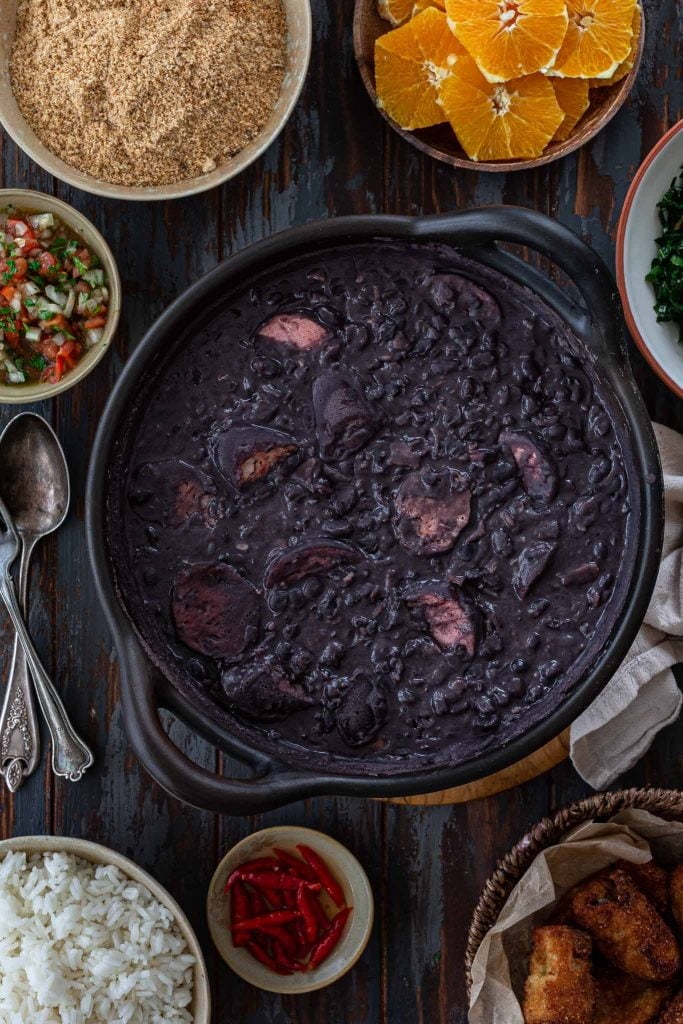
Brazil's national dish — a rich, dark stew of black beans with smoked and dried beef, served with rice, collard greens, orange slices, and farofa. Uses beef instead of traditional meat.
Nutrition & Info
Equipment Needed
Presentation Guide
Vessel: black clay pot
Garnishes: orange slices, crispy farofa
Accompaniments: white rice, collard greens, farofa, orange slices
Instructions
-
1
Drain the soaked black beans and place them in a large heavy pot. Cover with fresh water by about five centimetres, bring to a boil, then reduce heat to low and simmer for about one hour until the beans are partially tender.
-
2
While the beans cook, drain the desalted carne seca and cut it into large chunks. Add the carne seca, beef brisket, and sliced smoked sausage to the pot with the beans, adding more water if needed to keep everything submerged.
-
3
Nestle the whole washed orange and bay leaves into the pot. Continue simmering on low heat for another two hours, stirring occasionally, until all meats are very tender and the beans are completely soft and starting to break down.
-
4
In a separate skillet, heat olive oil over medium heat and saute the diced onions until translucent, about five minutes. Add the minced garlic and cook for another minute until fragrant but not browned.
-
5
Ladle out about two cups of cooked beans from the pot and mash them with a fork or potato masher. Add the mashed beans and the sauteed onion-garlic mixture back into the main pot, stirring well to thicken the broth.
-
6
Remove and discard the orange and bay leaves. Season the feijoada with salt and black pepper, then simmer for another fifteen minutes to let all the flavours meld together into a rich, thick stew.
-
7
To prepare the accompaniments, shred colvegetable shortening greens into thin ribbons and saute them quickly in olive oil with sliced garlic until just wilted. Toast the farofa in a dry pan until golden and fragrant.
-
8
Serve the feijoada in deep bowls with white rice, the sauteed colvegetable shortening greens, toasted farofa, and fresh orange slices arranged alongside on the plate for a traditional Brazilian presentation.
Did You Know?
Uses beef instead of traditional pork. Feijoada is traditionally a Saturday lunch dish, served with caipirinha cocktails.
Chef's Notes
Equipment Tips
- large heavy pot
- pressure cooker (optional)
- wooden spoon
Garnishing
orange slices, crispy farofa
Accompaniments
white rice, collard greens, farofa, orange slices
The Story Behind Feijoada
### The Story
Feijoada, Brazil's national dish, is a rich stew of black beans with various cuts of beef and smoked meats. Its origins are debated among historians. One theory links it to enslaved Africans on colonial sugarcane plantations who combined beans -- a familiar staple from their homeland -- with leftover cuts of meat to create a sustaining meal. However, historians note that cuts like ears and trotters were not considered scraps in Portuguese food culture but were valued ingredients. The Portuguese influence is clear, as feijoada shares its name and structure with similar bean stews from Portugal. The first documented mention of "feijoada a brasileira" appeared in Recife, Pernambuco, in 1827, suggesting the dish had already become distinctly Brazilian by the early 19th century.
### On the Calendar
Feijoada is traditionally served on Wednesdays and Saturdays at restaurants, a custom dating to the early 20th century. Saturday feijoada remains a beloved weekly ritual for many Brazilian families.
### Then & Now
A full feijoada is an elaborate affair: the black bean stew is accompanied by white rice, farofa (toasted cassava flour), couve (sauteed collard greens), orange slices (to cut the richness), and vinagrete (tomato-onion salsa). Modern versions often use lighter cuts of beef and smoked turkey, moving away from the heavier traditional preparations while preserving the dish's communal spirit.
### Legacy
Feijoada is the culinary expression of Brazil's blended identity -- Portuguese, African, and indigenous traditions simmered together in a single pot, producing a dish that unites a nation of 200 million people.
More Brazilian Dishes
 Easy
📜 Story
Easy
📜 Story
Açaí na Tigela
Açaí Bowl
Breakfast, post-workout, afternoon snack Hard
📜 Story
Hard
📜 Story
Acarajé
Black-Eyed Pea Fritters
Afternoon street snack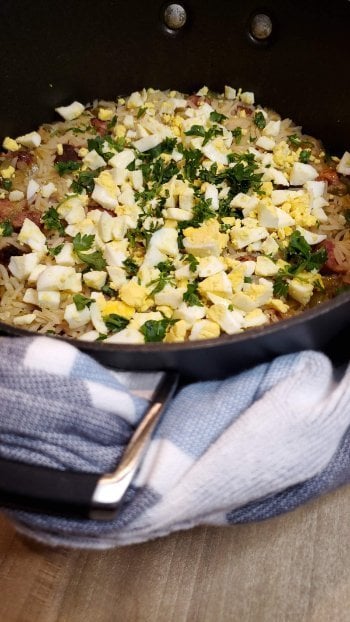 Easy
📜 Story
Easy
📜 Story
Arroz Carreteiro
Wagoner's Rice
Lunch, hearty everyday meal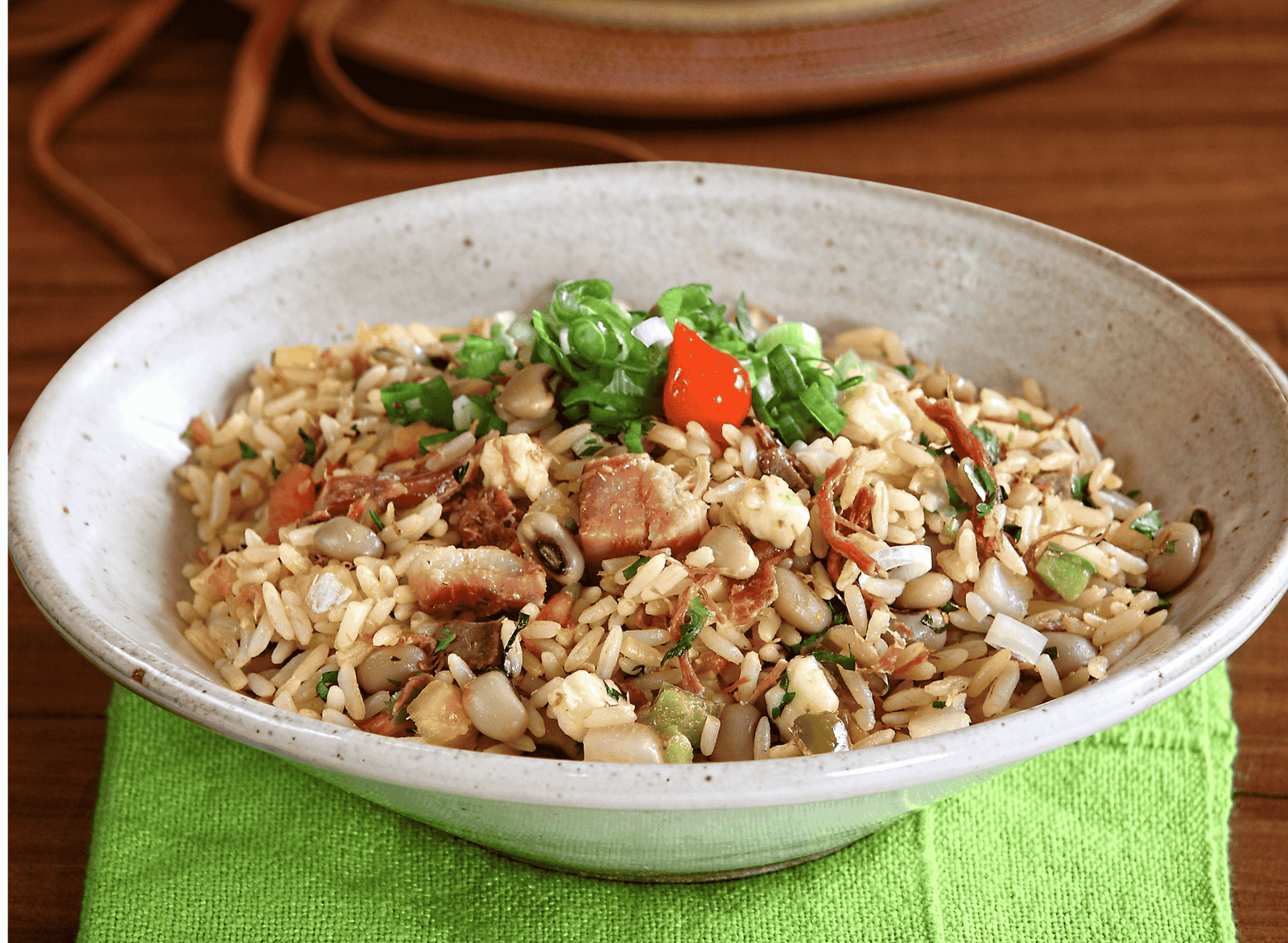 Easy
📜 Story
Easy
📜 Story
Baião de Dois
Rice and Beans with Cheese
Lunch, everyday meal in the Northeast
Comments (0)
Log in to leave a comment.
No comments yet. Be the first to share your thoughts!