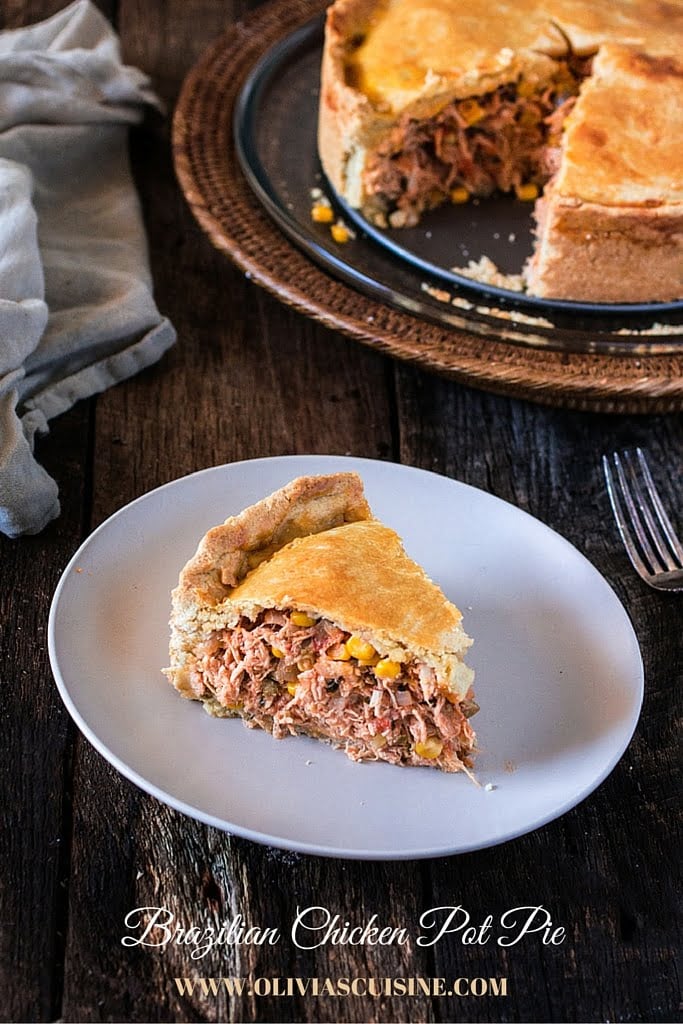
A towering, golden-crusted savory pie filled with shredded chicken, olives, hearts of palm, corn, and hard-boiled eggs in a creamy sauce, encased in a buttery, crumbly crust.
Nutrition & Info
Allergen Warnings
Equipment Needed
Presentation Guide
Vessel: springform pan or platter
Garnishes: parsley, olive oil
Accompaniments: green salad, white rice
Instructions
-
1
Make the crust: pulse flour, cold butter, egg yolks, and salt in a food processor until crumbly. Add ice water until dough just comes together. Wrap and refrigerate 30 minutes.
-
2
Make the filling: sauté onion and garlic in butter. Add flour to make a roux, then stir in cream. Add shredded chicken, hearts of palm, corn, and olives. Season well.
-
3
Press two-thirds of the dough into the bottom and sides of a greased springform pan.
-
4
Layer the chicken filling inside, arranging sliced hard-boiled eggs throughout.
-
5
Roll out remaining dough for the top crust. Place over the filling, pinching edges to seal. Cut small vents.
-
6
Brush with egg yolk glaze. Bake at 190°C (375°F) for 40-45 minutes until deeply golden.
-
7
Let cool 10 minutes before unmolding and slicing.
Did You Know?
Empadão is the grand version of empadinhas (small individual empanadas), and Brazilian grandmothers are judged by the quality of their empadão crust — it must be short, crumbly, and melt-in-the-mouth.
Chef's Notes
Equipment Tips
- springform pan
- mixing bowl
- rolling pin
- oven
Garnishing
parsley, olive oil
Accompaniments
green salad, white rice
The Story Behind Empadão
Empadão evolved from Portuguese empadas, which themselves descended from medieval European pies. In Brazil, the pie grew larger and the filling became distinctly Brazilian with hearts of palm (a native ingredient) and local olives. It is the centerpiece of many Brazilian Sunday lunches and holiday tables, passed down through generations as a family recipe.
More Brazilian Dishes
 Easy
📜 Story
Easy
📜 Story
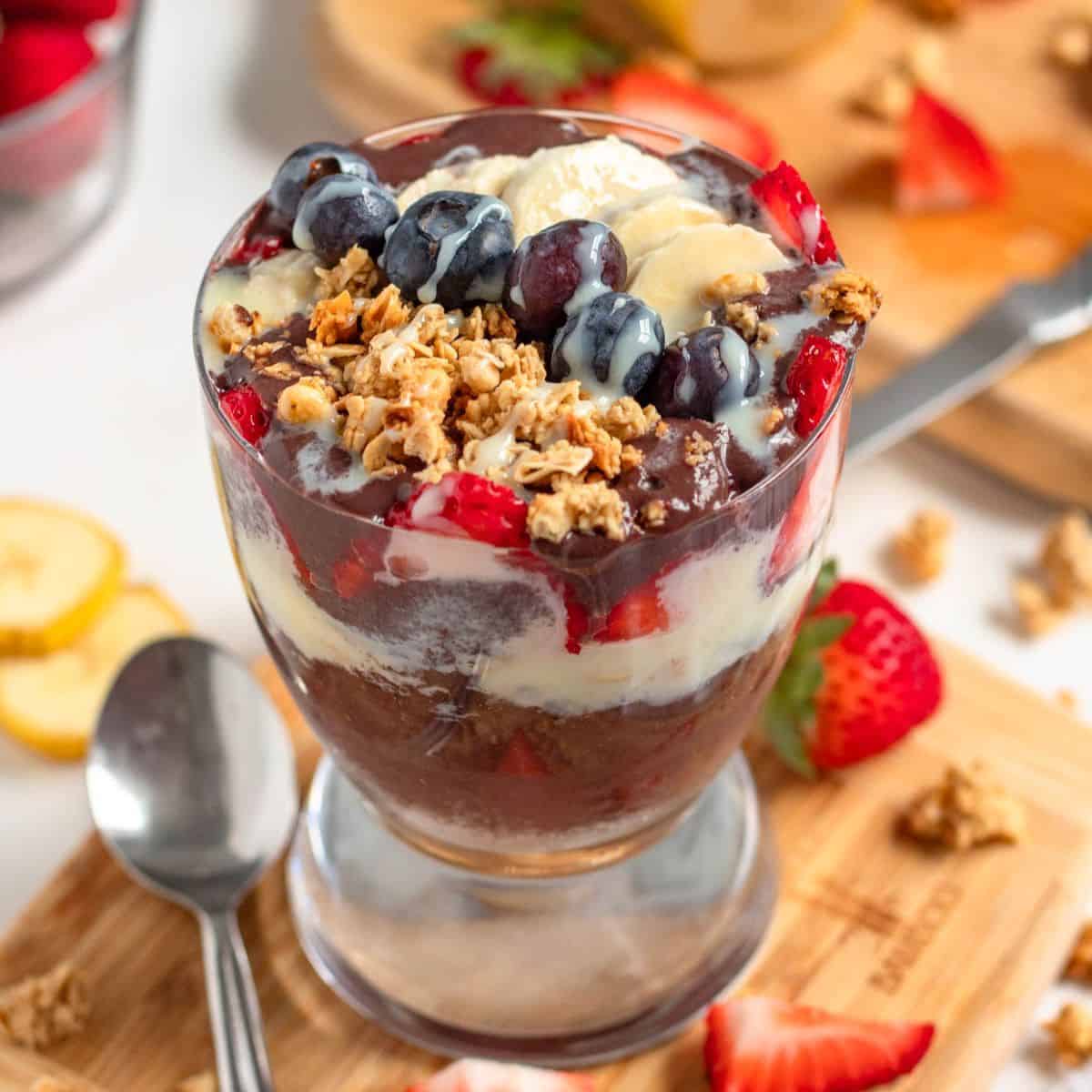
Açaí na Tigela
Açaí Bowl
Breakfast, post-workout, afternoon snack Hard
📜 Story
Hard
📜 Story
Acarajé
Black-Eyed Pea Fritters
Afternoon street snack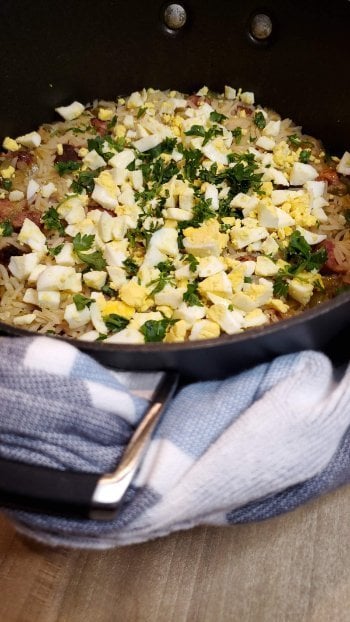 Easy
📜 Story
Easy
📜 Story
Arroz Carreteiro
Wagoner's Rice
Lunch, hearty everyday meal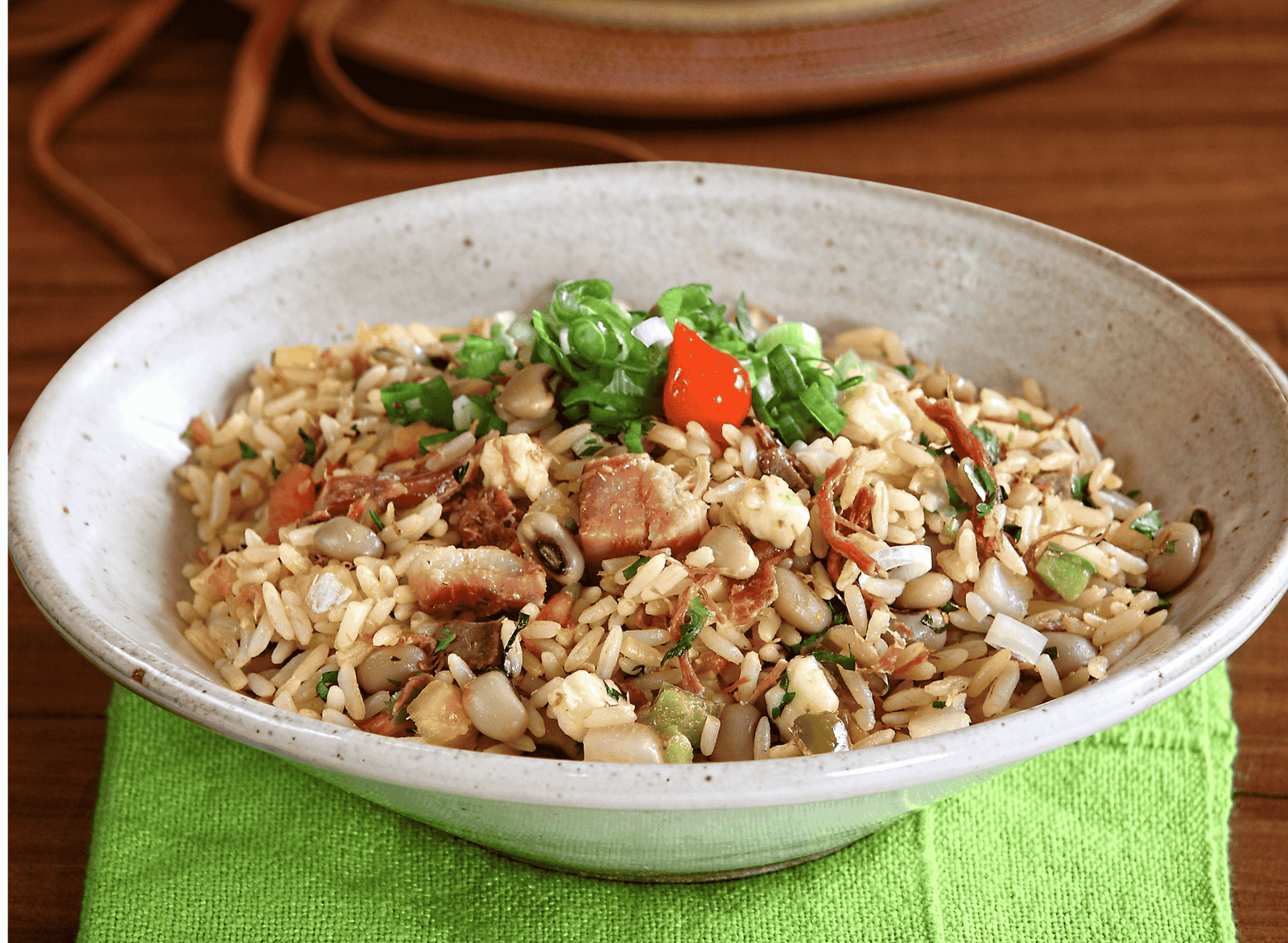 Easy
📜 Story
Easy
📜 Story
Baião de Dois
Rice and Beans with Cheese
Lunch, everyday meal in the Northeast
Comments (0)
Log in to leave a comment.
No comments yet. Be the first to share your thoughts!