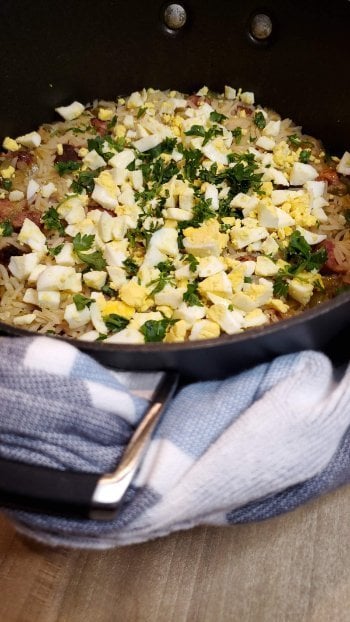
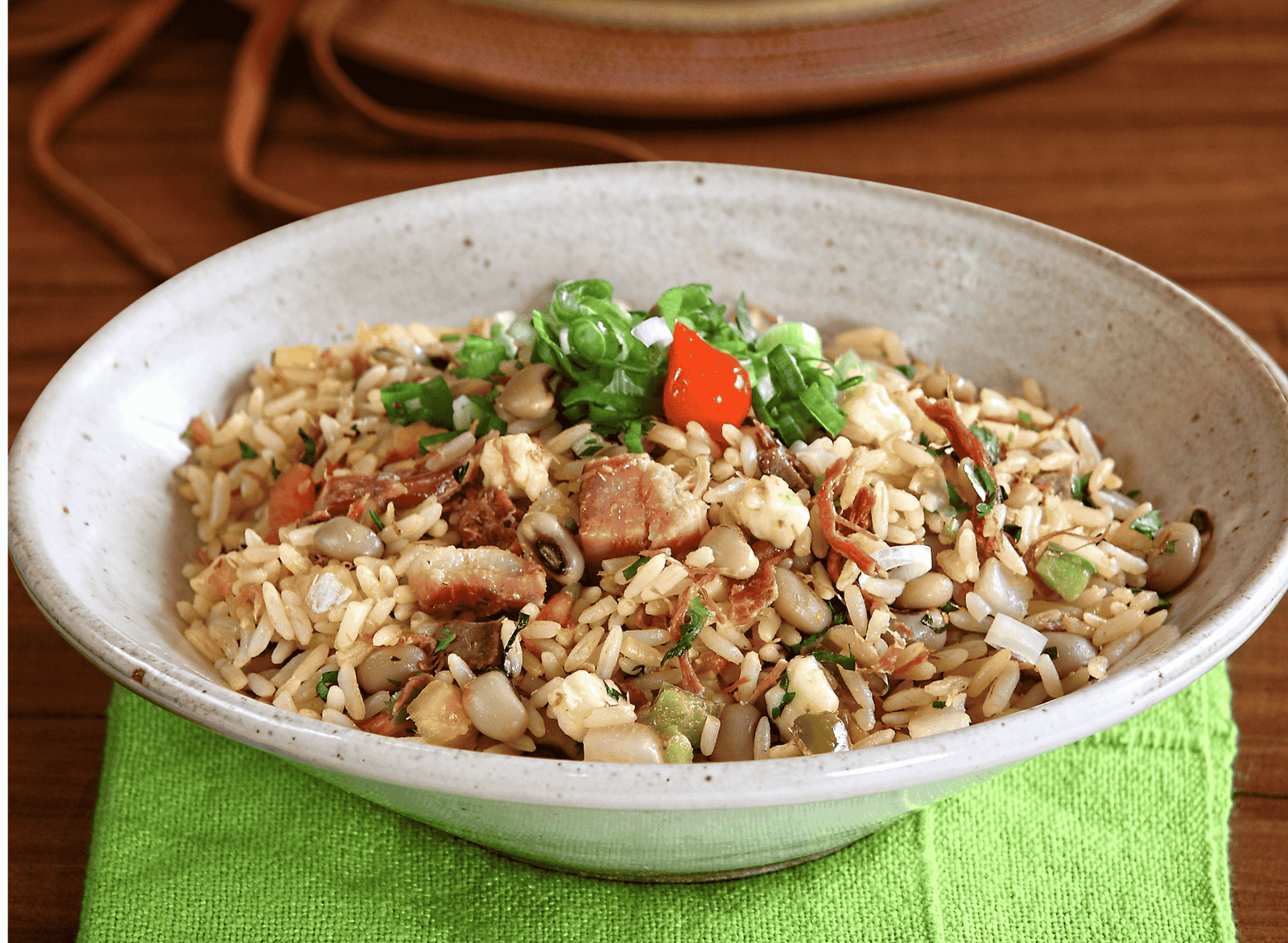
Arroz Carreteiro
Arroz Carreteiro (ah-HOHS kah-heh-TAY-roo)
Wagoner's Rice
A hearty one-pot rice dish with shredded dried beef, onions, garlic, and peppers — the fuel of southern Brazilian cattle drovers, robust and deeply savory from the sun-dried beef.
Instructions
-
1
Soak dried beef overnight, changing water 2-3 times. Boil for 20 minutes, drain, and shred into small pieces.
-
2
Heat oil in a large pot. Sauté onion and garlic until golden.
-
3
Add shredded dried beef and cook for 5 minutes until slightly browned.
-
4
Add peppers and tomatoes, cook for 3 minutes.
-
5
Add rice and stir for 2 minutes to toast the grains.
-
6
Pour in hot water, add bay leaves, and season with salt and pepper. Bring to a boil.
-
7
Reduce heat, cover tightly, and cook for 18-20 minutes until rice is tender and liquid is absorbed. Stir in parsley and serve.
Did You Know?
Arroz carreteiro literally means "wagoner's rice" because it was cooked by the carreteiros — ox-cart drivers who transported goods across the southern Brazilian grasslands and needed a filling one-pot meal.
The Story Behind Arroz Carreteiro
Arroz carreteiro is the quintessential gaucho trail food, born on the pampas of Rio Grande do Sul where cattle drovers needed substantial, easy-to-cook meals during long journeys. Carne seca (sun-dried salted beef) was the only protein that could survive the journey without refrigeration. The dish became a symbol of gaucho identity and remains one of the most popular comfort foods in southern Brazil.



Comments (0)
Log in to leave a comment.
No comments yet. Be the first to share your thoughts!