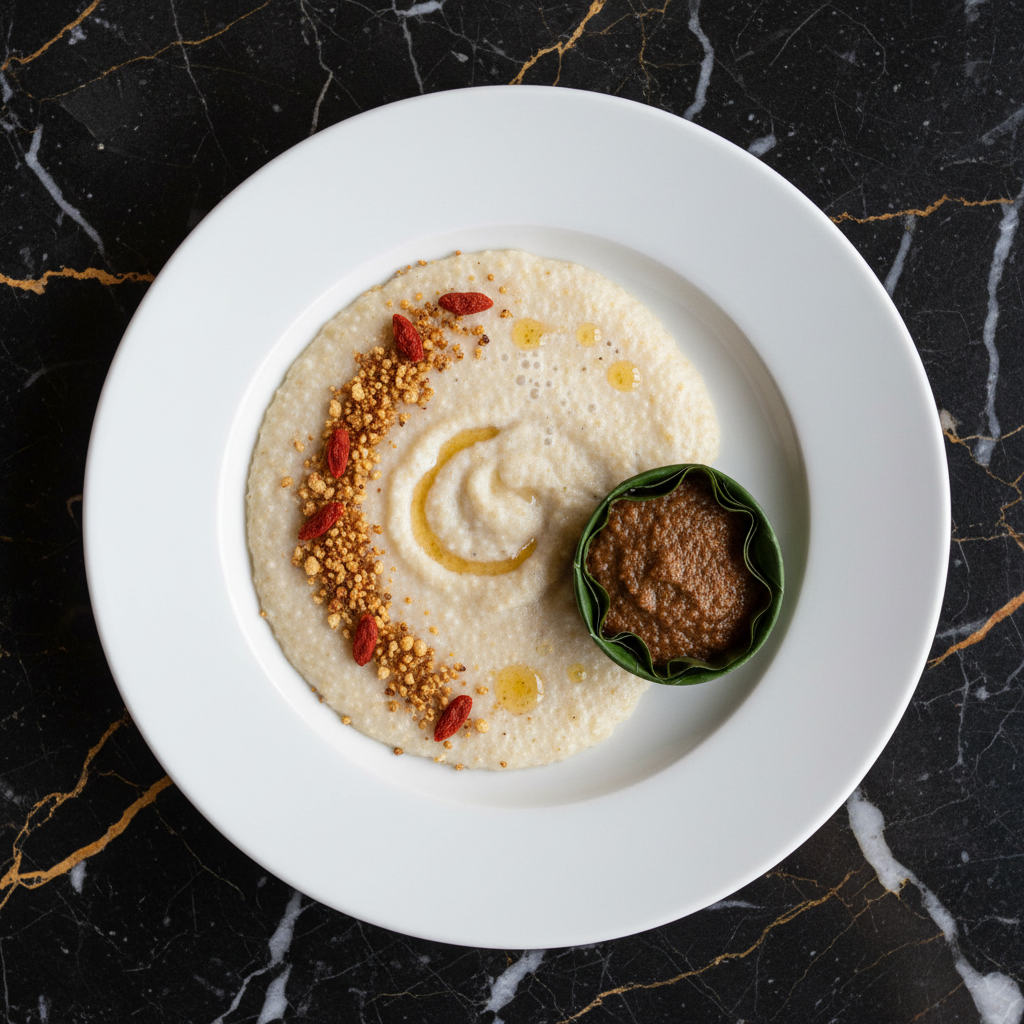
A tangy fermented porridge made from sorghum or maize meal, traditionally left to sour overnight. This thick, creamy drink-food is a breakfast staple across Lesotho, prized for its probiotic qualities and sustaining energy in the highland cold.
Nutrition & Info
Equipment Needed
Instructions
-
1
Mix sorghum flour with 3 cups warm water in a vessel
-
2
Add starter culture and stir well
-
3
Cover and leave in a warm place overnight to ferment
-
4
Next morning, bring 5 cups water to a boil
-
5
Gradually stir in the fermented mixture
-
6
Cook on medium heat for 25-30 minutes, stirring constantly
-
7
The porridge should be thick and tangy
-
8
Serve warm, sweetened if desired
Did You Know?
Motoho is often the first food given to weaning babies in Lesotho. Grandmothers carefully guard their fermentation starters, passing them down through generations as living heirlooms.
Chef's Notes
Equipment Tips
- large pot
- wooden spoon
- fermentation vessel
The Story Behind Motoho
Motoho has been a cornerstone of Basotho nutrition for centuries, predating European contact. The fermentation technique was developed as a way to preserve grain and improve its digestibility in the harsh highland climate.
Traditionally prepared by women, the porridge served as both sustenance and medicine, believed to aid digestion and build strength. During winter months, warm motoho provided essential calories for herders tending livestock in the mountains.
Today motoho remains a beloved everyday food, sold by street vendors and served in homes across Lesotho as a connection to ancestral foodways.
More Basotho (Lesotho) Dishes
 Easy
📜 Story
Easy
📜 Story
Chakalaka
Spicy Vegetable Relish
Accompaniment to any meal Hard
📜 Story
Hard
📜 Story
Joala ba Sesotho
Traditional Sorghum Beer
Ceremonies, community gatherings, celebrations Easy
📜 Story
Easy
📜 Story
Lekhotloane
Roasted Corn on the Cob
Afternoon snack, harvest season Medium
📜 Story
Medium
📜 Story
Lepu
Basotho Steamed Bread
Served with stews at celebrations
Comments (0)
Log in to leave a comment.
No comments yet. Be the first to share your thoughts!