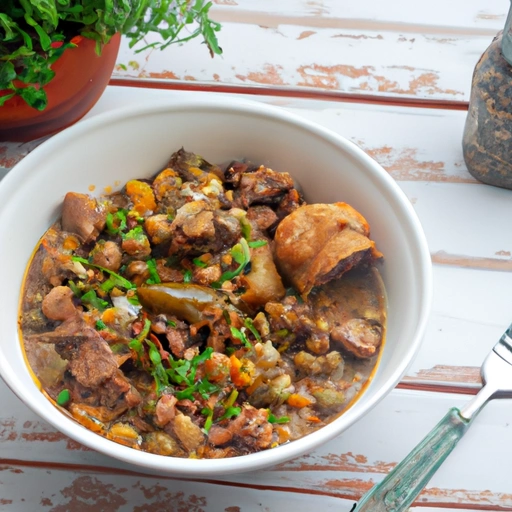
A festive dish of ground guinea corn and pigeon peas cooked with fresh herbs, butter, and seasoning, similar to Scottish haggis in texture.
Nutrition & Info
Allergen Warnings
Equipment Needed
Presentation Guide
Vessel: serving platter or casserole dish
Garnishes: fresh thyme sprigs, butter pat
Accompaniments: baked chicken, ham alternative, salad
Instructions
-
1
Cook soaked pigeon peas in boiling water until very tender, about one hour. Drain, reserving liquid.
-
2
Process pigeon peas in a food processor until smooth. Set aside.
-
3
In a heavy pot, melt butter and saute onions, chive, thyme, and marjoram until fragrant.
-
4
Add minced chicken and stir. Then add the pureed pigeon peas and ground guinea corn.
-
5
Gradually add chicken stock, stirring constantly to prevent lumps. Cook on low heat for thirty minutes, stirring frequently.
-
6
The mixture should become thick and smooth like porridge. Season well with salt and pepper, then serve warm.
Did You Know?
Jug-Jug is believed to be a Barbadian adaptation of the Scottish haggis, brought by Scottish indentured servants in the 1600s.
Chef's Notes
Equipment Tips
- food processor
- large pot
- heavy saucepan
Garnishing
fresh thyme sprigs, butter pat
Accompaniments
baked chicken, ham alternative, salad
The Story Behind Jug-Jug
Jug-Jug is one of the most culturally significant Bajan dishes, served exclusively at Christmas. Its origins lie in the 17th century when Scottish political prisoners and indentured servants were sent to Barbados. Unable to find the traditional ingredients for haggis, they substituted guinea corn and pigeon peas for oats and offal. The result is a uniquely Barbadian creation that represents one of the most fascinating examples of culinary adaptation in the Caribbean.
More Barbadian Dishes
 Hard
📜 Story
Hard
📜 Story
Bajan Black Cake
Rum-Soaked Dark Fruit Cake
Christmas and weddings Easy
📜 Story
Easy
📜 Story
Bajan Coleslaw
Barbadian Vinegar-Based Coleslaw
Accompaniment to fried foods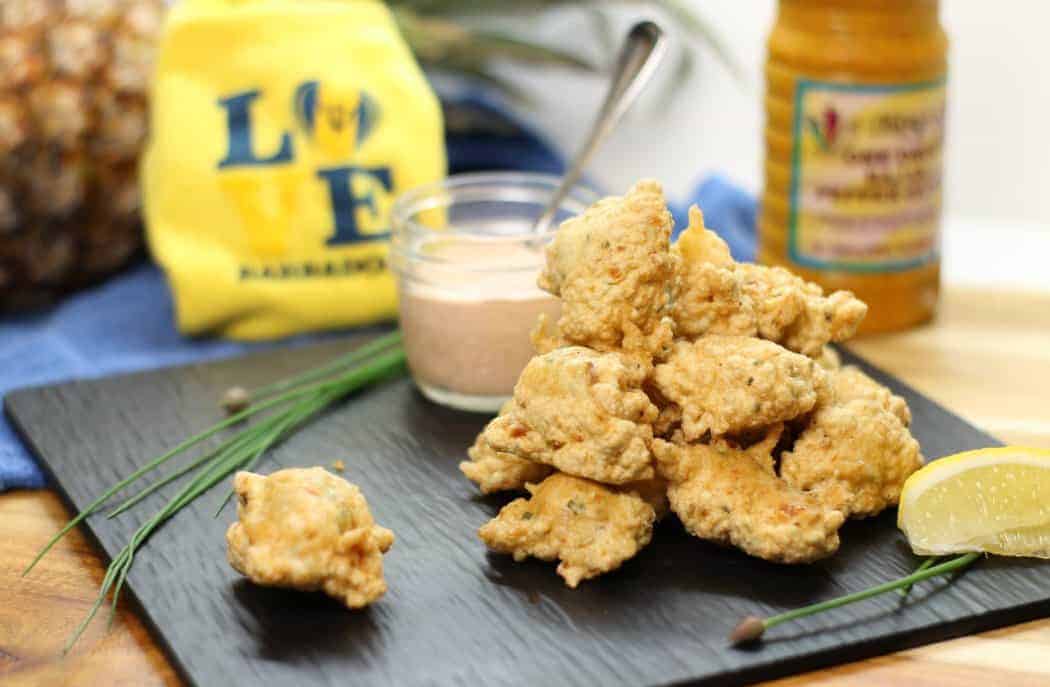 Easy
📜 Story
Easy
📜 Story
Bajan Fish Cakes
Salt Cod Fritters
Breakfast and street food anytime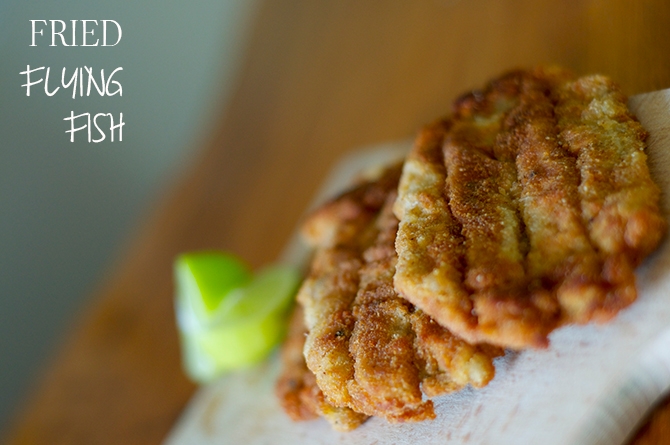 Medium
📜 Story
Medium
📜 Story
Bajan Fish Stew
Brown Stewed Fish in Tomato Gravy
Weekday dinner
Comments (0)
Log in to leave a comment.
No comments yet. Be the first to share your thoughts!