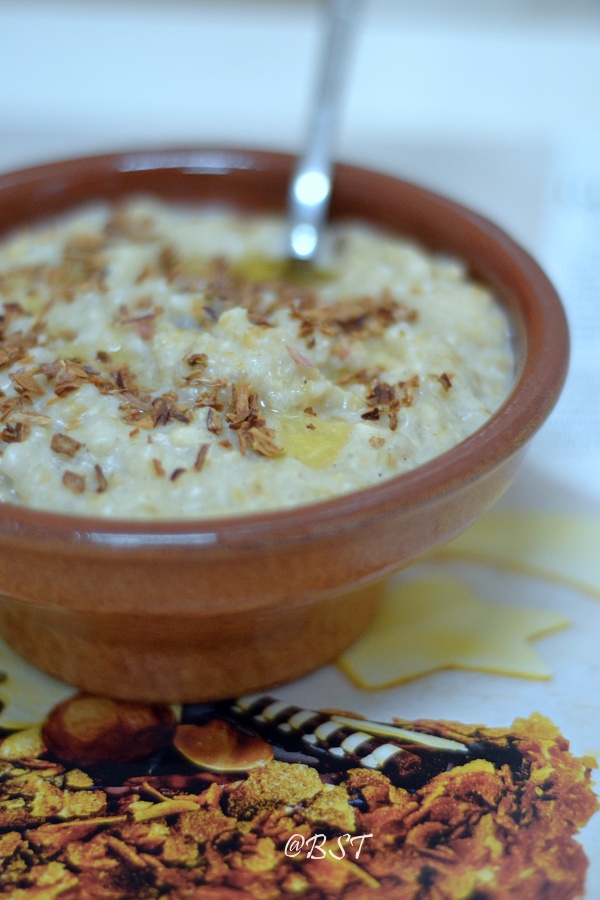
Coarsely crushed wheat simmered slowly with chicken and aromatics until it reaches a creamy, porridge-like consistency. This ancient Bahraini staple is pure comfort, warming both body and spirit.
Nutrition & Info
Allergen Warnings
Equipment Needed
Presentation Guide
Vessel: deep traditional bowl
Garnishes: ghee pool, cinnamon dust
Accompaniments: dates, yogurt drink
Instructions
-
1
Soak crushed wheat in water for 30 minutes, then drain and rinse thoroughly.
-
2
Heat ghee in a heavy pot and saute onion until golden. Add garlic, baharat, and turmeric, stirring for one minute.
-
3
Add chicken pieces and sear briefly. Pour in water and add the dried lime and salt.
-
4
Add soaked wheat, bring to a boil, then reduce to very low heat. Cover and simmer for 1.5 hours, stirring every 20 minutes.
-
5
When the wheat has broken down into a creamy porridge and the chicken is falling off the bone, shred the meat and mix it back in.
-
6
Serve in bowls topped with a drizzle of melted ghee and a sprinkle of ground cinnamon.
Did You Know?
Jireesh was once considered poor man's food in Bahrain, but today it is eagerly anticipated at Ramadan tables across all social classes.
Chef's Notes
Equipment Tips
- large heavy pot
- wooden spoon
- ladle
Garnishing
ghee pool, cinnamon dust
Accompaniments
dates, yogurt drink
The Story Behind Jireesh
Jireesh is an ancient Arabian dish that predates rice cultivation in the Gulf, when wheat was the dominant grain. In Bahrain, jireesh became a Ramadan essential, its slow-cooked nature perfectly suited to the contemplative pace of the holy month. The dish connects modern Bahrainis to their pre-oil heritage when life was simpler and food was prepared with patience and minimal ingredients. Many families still use their grandmother's specific wheat-to-water ratios.
More Bahraini Dishes
 Easy
📜 Story
Easy
📜 Story
Balaleet
Sweet Vermicelli with Egg Omelet
Breakfast, Eid mornings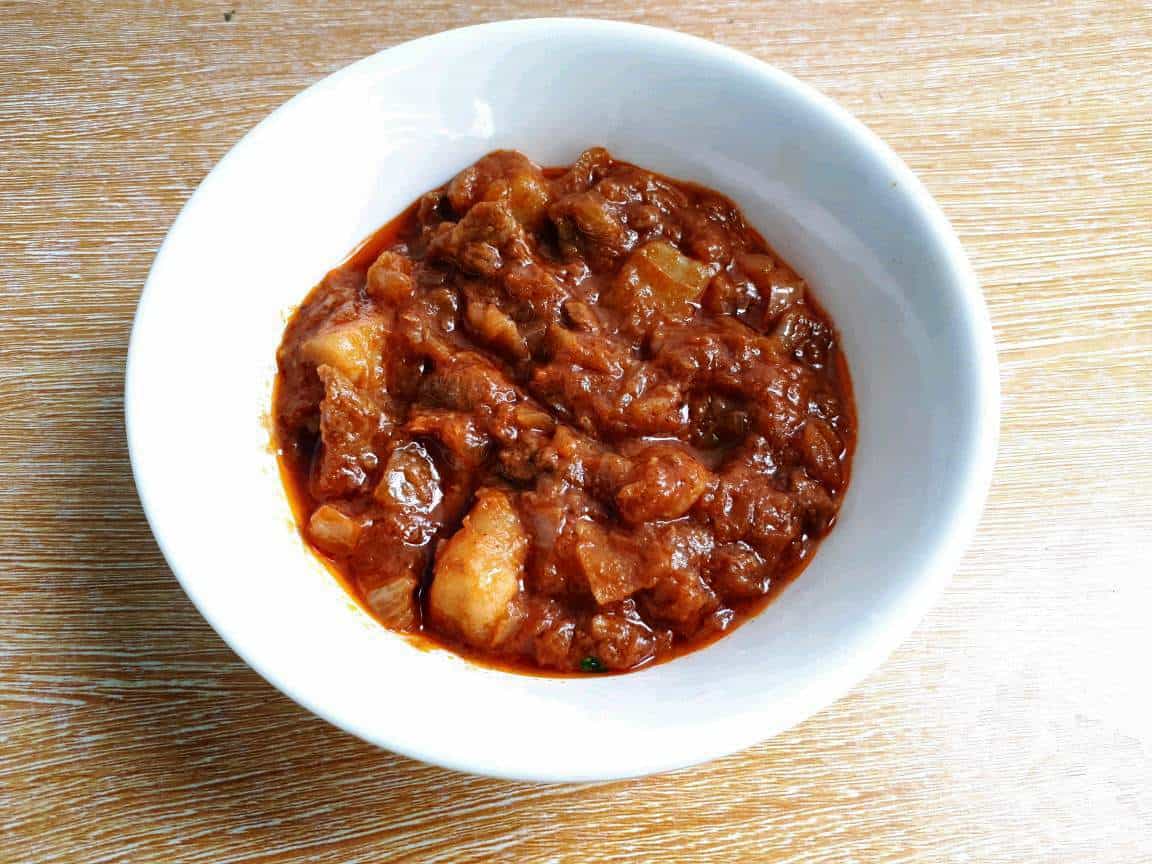 Easy
📜 Story
Easy
📜 Story
Daqoos
Bahraini Tomato Sauce
Accompaniment to rice dishes Medium
📜 Story
Medium
📜 Story
Gabout
Bahraini Dumpling Stew
Lunch, cold weather comfort meal Easy
📜 Story
Easy
📜 Story
Gahwa Arabiya
Bahraini Arabic Coffee
Anytime, guest welcome, after meals
Comments (0)
Log in to leave a comment.
No comments yet. Be the first to share your thoughts!