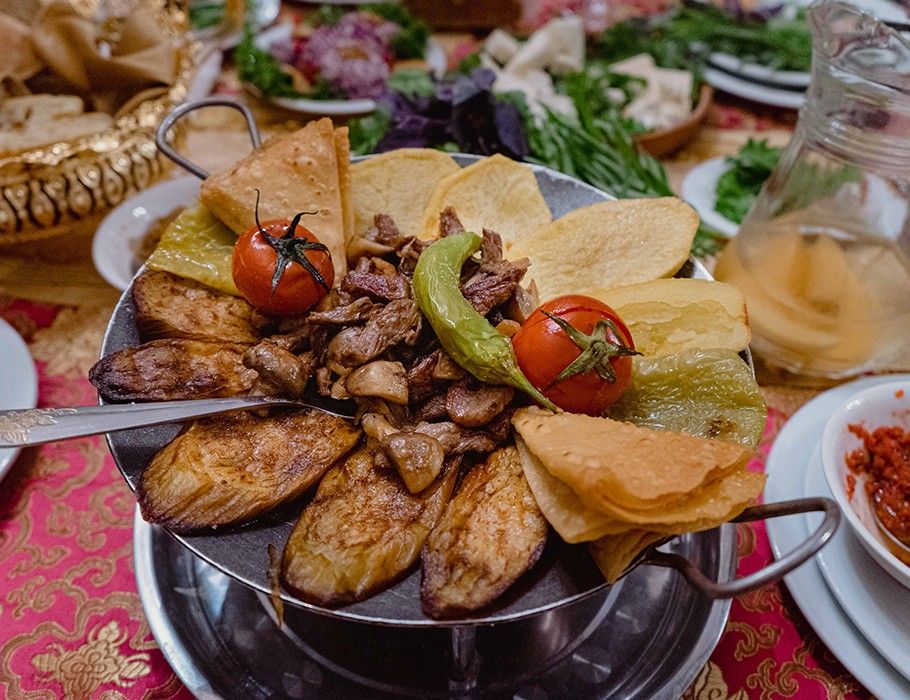
A sizzling dish of lamb, peppers, tomatoes, eggplant, and onions cooked on a convex iron griddle over open flame. Named after the sadj cooking vessel, this dish delivers smoky, charred flavors.
Nutrition & Info
Equipment Needed
Instructions
-
1
Heat sadj or cast-iron griddle over high heat.
-
2
Add tail fat or oil and spread evenly.
-
3
Sear lamb slices until browned on both sides.
-
4
Add onions and cook until softened.
-
5
Add eggplant, peppers, and tomatoes, tossing frequently.
-
6
Season with salt, pepper, and sumac.
-
7
Serve directly from the sadj with warm lavash bread.
Did You Know?
The sadj griddle was originally used upside down as a shield by Turkic warriors, then flipped over a campfire for cooking. The dual-purpose design made it the original multitool of the steppe.
Chef's Notes
Equipment Tips
- sadj or cast-iron griddle
- tongs
The Story Behind Sadj
Sadj cooking is a direct descendant of nomadic Turkic culinary traditions, where a convex iron plate served as the primary cooking surface for traveling herders and warriors. The technique predates settled Azerbaijani civilization.
The dish evolved from simple grilled meat into a more elaborate preparation featuring seasonal vegetables as Azerbaijan's culinary culture developed. Today, sadj restaurants are a distinct category in Azerbaijani dining.
Modern sadj is typically brought to the table still sizzling on its iron plate, often placed over a small burner to maintain heat throughout the meal.
More Azerbaijani Dishes
 Easy
📜 Story
Easy
📜 Story
Ayran
Azerbaijani Yogurt Drink
With meals, especially summer Medium
📜 Story
Medium
📜 Story
Badimjan Dolmasi
Stuffed Eggplant
Summer lunch or dinner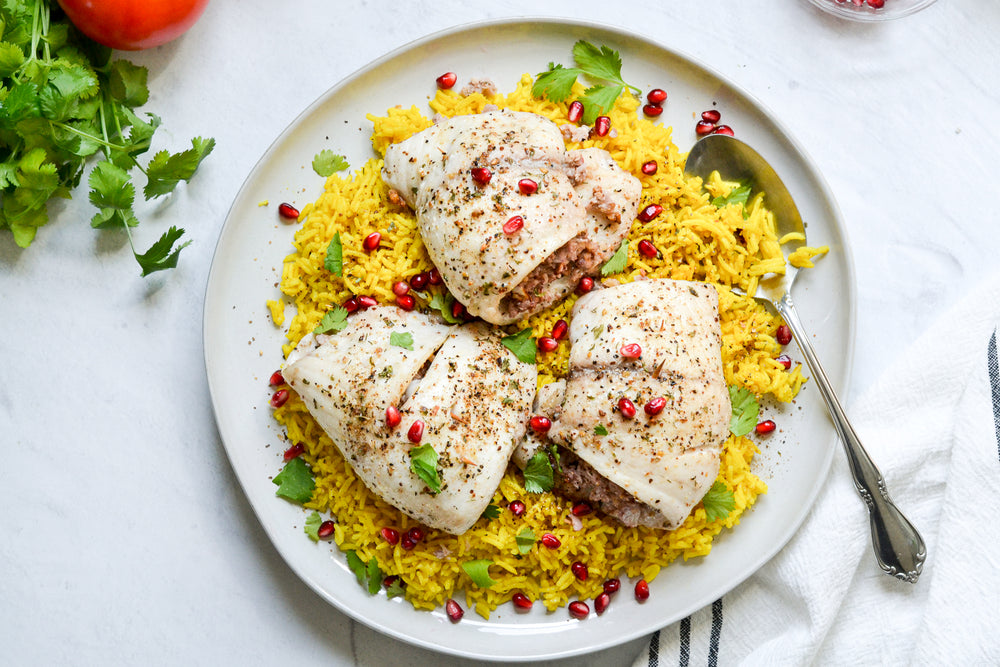 Hard
📜 Story
Hard
📜 Story
Baliq Lavangi
Stuffed Fish with Walnut Filling
Special occasions and holidays Easy
📜 Story
Easy
📜 Story
Dogramac
Chilled Yogurt and Herb Soup
Summer lunch starter
Comments (0)
Log in to leave a comment.
No comments yet. Be the first to share your thoughts!