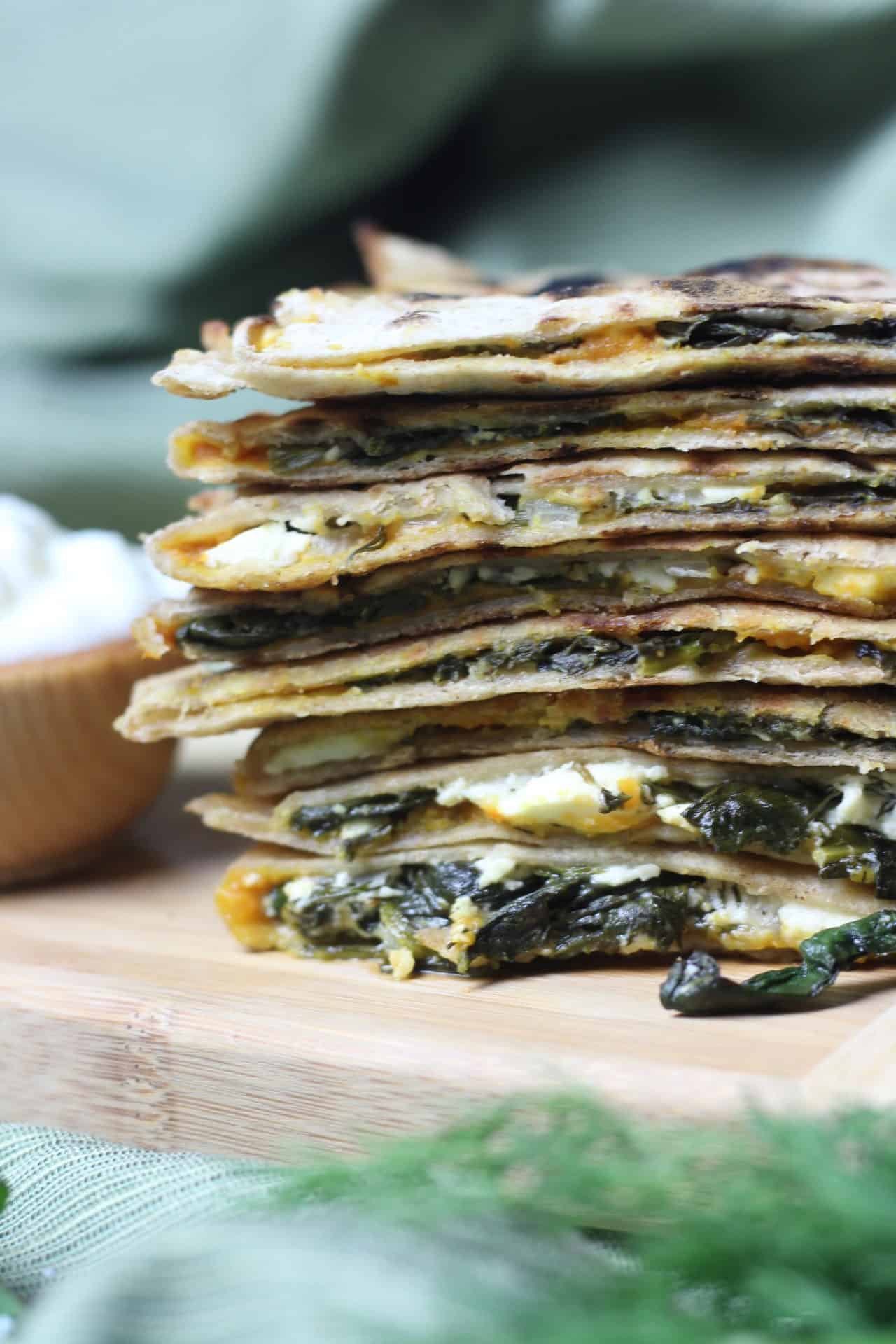
Paper-thin unleavened flatbreads folded over savory fillings of herbs, cheese, or spiced lamb, then dry-cooked on a sadj griddle until crisp and lightly charred. A beloved street food and home staple.
Nutrition & Info
Allergen Warnings
Equipment Needed
Instructions
-
1
Mix flour, salt, and water into a smooth dough. Rest 20 minutes.
-
2
Divide into 8 balls and roll each paper-thin into a circle.
-
3
Mix chopped greens with cheese and season.
-
4
Spread filling on one half of each circle and fold over.
-
5
Cook on a dry hot griddle until golden spots appear on both sides.
-
6
Brush with melted butter and sprinkle with sumac.
-
7
Serve immediately, stacked on a platter.
Did You Know?
In Azerbaijan, the greens-filled version called göyərti qutabı uses up to fifteen different wild herbs, and spring is considered the best season because the herbs are young and tender.
Chef's Notes
Equipment Tips
- rolling pin
- sadj or flat griddle
- cutting board
The Story Behind Qutab
Qutab is one of the most widely eaten dishes in Azerbaijan, with origins in the nomadic Turkic tradition of cooking flatbreads on portable convex griddles called sadj. The simplicity of the dough and the versatility of fillings made it ideal for pastoral life.
The herb-filled version became associated with the Novruz spring holiday, when families gather wild greens from hillsides. The lamb version is more common in winter months, while cheese qutab is enjoyed year-round.
Today qutab is served in everything from roadside stalls to fine dining restaurants, always accompanied by a drizzle of melted butter and a sprinkle of sumac.
More Azerbaijani Dishes
 Easy
📜 Story
Easy
📜 Story
Ayran
Azerbaijani Yogurt Drink
With meals, especially summer Medium
📜 Story
Medium
📜 Story
Badimjan Dolmasi
Stuffed Eggplant
Summer lunch or dinner Hard
📜 Story
Hard
📜 Story
Baliq Lavangi
Stuffed Fish with Walnut Filling
Special occasions and holidays Easy
📜 Story
Easy
📜 Story
Dogramac
Chilled Yogurt and Herb Soup
Summer lunch starter
Comments (0)
Log in to leave a comment.
No comments yet. Be the first to share your thoughts!