
Fragrant long-grain rice steamed with a golden saffron crust, served alongside tender lamb, dried fruits, and chestnuts. The jewel-like gazmag crust at the bottom is the most prized portion.
Nutrition & Info
Equipment Needed
Instructions
-
1
Boil rice in salted water until half-cooked, about 6 minutes. Drain.
-
2
Line the bottom of a heavy pot with buttered lavash bread.
-
3
Layer rice into pot, adding saffron water and dots of butter between layers.
-
4
Wrap the lid in a tea towel, cover tightly, and steam on lowest heat for 45 minutes.
-
5
Meanwhile, sauté onions until golden, then brown lamb cubes with turmeric.
-
6
Cook dried fruits and chestnuts separately in butter.
-
7
Serve rice mounded on a platter with gazmag on top, lamb and fruits alongside.
Did You Know?
Azerbaijan has over 200 regional variations of plov. The crispy saffron rice crust at the bottom, called gazmag, is considered the greatest honor portion and is traditionally offered to the most respected guest.
Chef's Notes
Equipment Tips
- heavy-bottomed pot
- tea towel
The Story Behind Plov
Plov is the king of Azerbaijani cuisine, with over two hundred documented regional variations across the country. The technique of parboiling rice and steaming it with a lavash-lined crust at the bottom produces the coveted gazmag, a golden crispy layer.
The Azerbaijani style of plov is distinct from Central Asian versions in that the rice and meat are cooked separately and combined at serving. Saffron from the Absheron Peninsula has historically been the defining spice.
Plov is the centerpiece of all major Azerbaijani celebrations and is considered the ultimate test of a cook's skill. A perfect plov has each grain separate, fragrant, and uniformly golden.
More Azerbaijani Dishes
 Easy
📜 Story
Easy
📜 Story
Ayran
Azerbaijani Yogurt Drink
With meals, especially summer Medium
📜 Story
Medium
📜 Story
Badimjan Dolmasi
Stuffed Eggplant
Summer lunch or dinner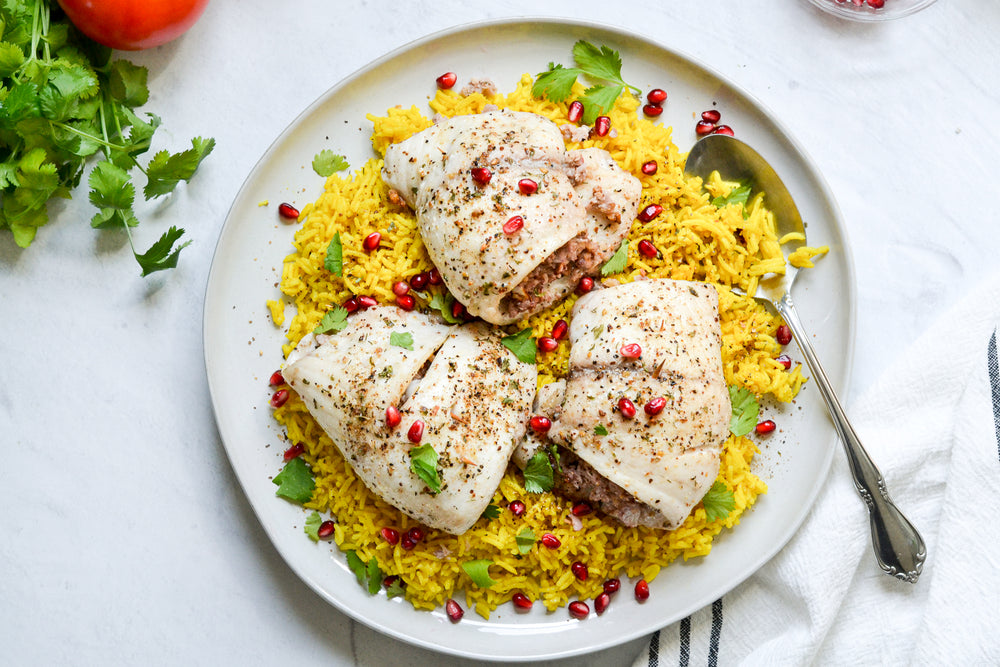 Hard
📜 Story
Hard
📜 Story
Baliq Lavangi
Stuffed Fish with Walnut Filling
Special occasions and holidays Easy
📜 Story
Easy
📜 Story
Dogramac
Chilled Yogurt and Herb Soup
Summer lunch starter
Comments (0)
Log in to leave a comment.
No comments yet. Be the first to share your thoughts!