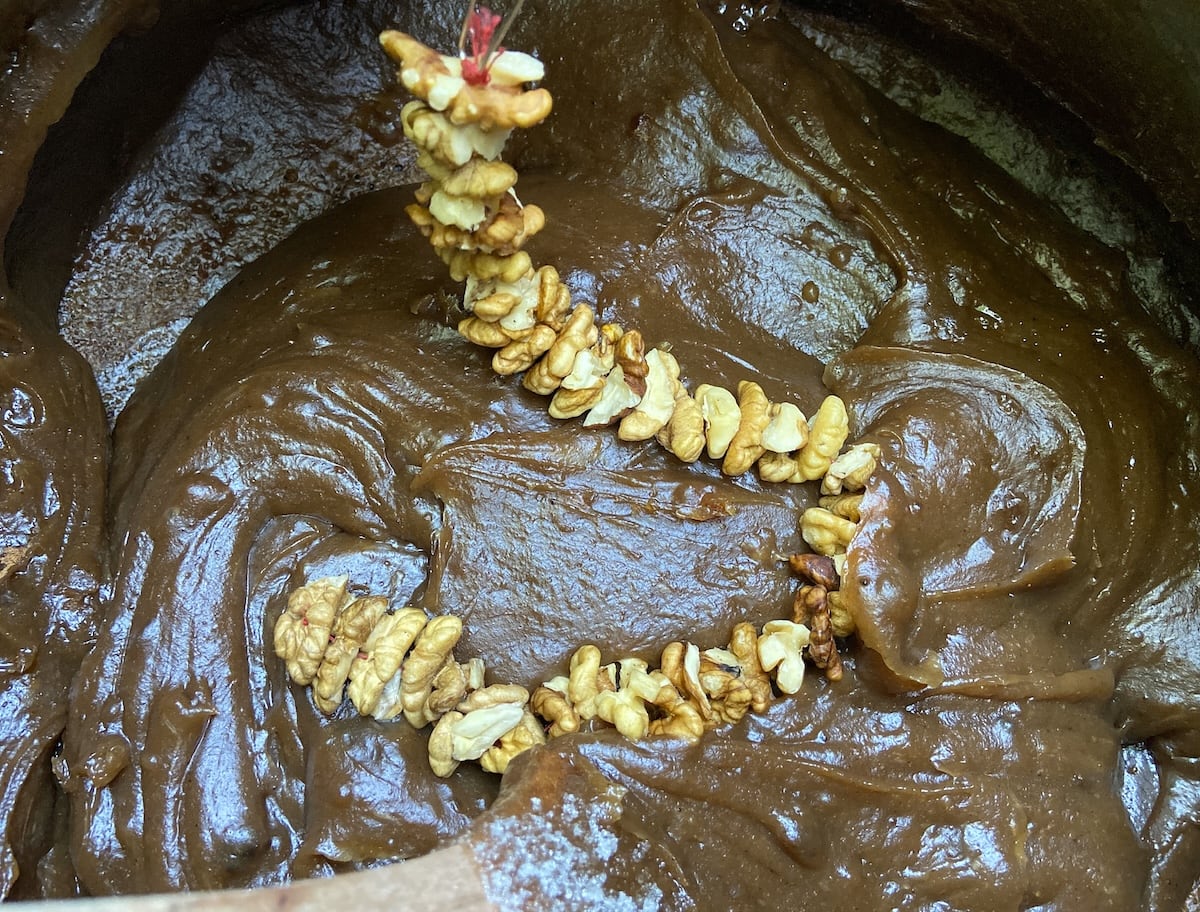
Strings of walnuts dipped repeatedly in thickened grape juice until coated in a chewy, sweet shell. These sausage-shaped Armenian candies are an ancient natural energy snack that hang to dry like edible decorations.
Nutrition & Info
Allergen Warnings
Equipment Needed
Presentation Guide
Vessel: hanging display or plate
Garnishes: powdered sugar
Accompaniments: Armenian coffee, dried fruits
Instructions
-
1
Thread walnut halves onto 30cm lengths of strong cotton thread using a large needle, leaving 5cm free at the top for hanging.
-
2
Bring grape juice to a simmer in a large pot. Gradually whisk in flour to avoid lumps. Add sugar, cinnamon, cloves, and cardamom.
-
3
Cook the grape-flour mixture, stirring constantly, for 15-20 minutes until it thickens to a consistency that coats the back of a spoon.
-
4
Dip each walnut string into the hot grape mixture, coating completely. Hang over a dowel to drip-dry for 2-3 hours.
-
5
Repeat the dipping and drying process 3-4 times until a thick, even coating builds up on each string.
-
6
Hang the finished strings in a cool, dry place for 3-5 days until firm but still slightly chewy. Cut thread to serve.
Did You Know?
Armenian grandmothers traditionally made sukhindz during the autumn grape harvest, and the strings of drying candy hanging from kitchen ceilings were a beloved sight signaling that winter celebrations were near.
Chef's Notes
Equipment Tips
- large pot
- strong thread and needle
- wooden dowel
- deep container
Garnishing
powdered sugar
Accompaniments
Armenian coffee, dried fruits
The Story Behind Суkhindz
Sukhindz, known as churchkhela in Georgian tradition, is an ancient Caucasian confection that Armenian families have been making for millennia. The technique of using concentrated grape must as both flavoring and natural preservative demonstrates sophisticated food preservation knowledge predating modern methods. In Armenian tradition, sukhindz was prepared during the autumn grape and walnut harvests, tying the candy to the agricultural calendar. The dried strings were stored for winter and featured prominently at New Year and Christmas celebrations.




Comments (0)
Log in to leave a comment.
No comments yet. Be the first to share your thoughts!