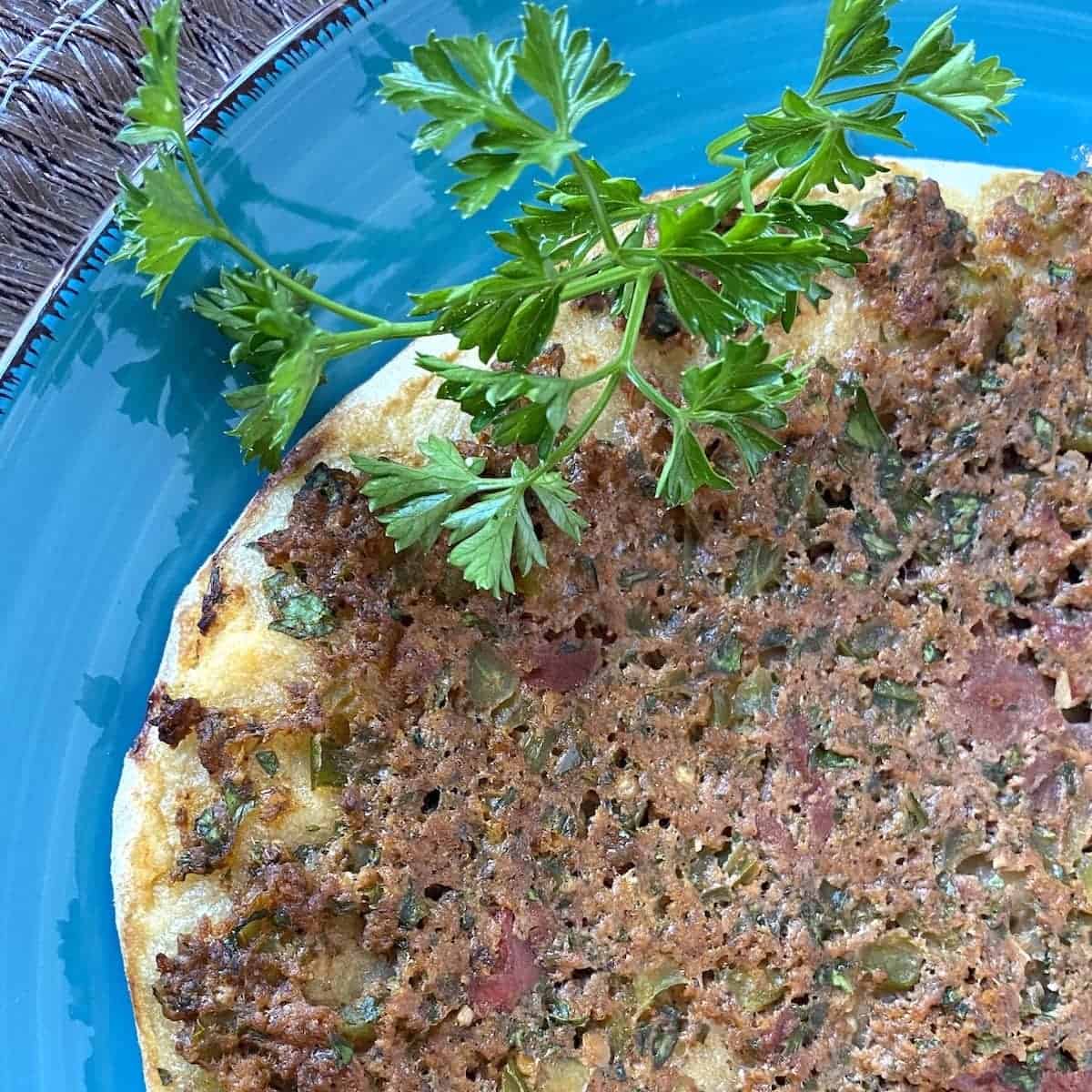
Paper-thin, crispy flatbread spread with a spiced lamb, tomato, and pepper topping — often called Armenian pizza. Rolled with lemon, parsley, and vegetables for eating.
Nutrition & Info
Allergen Warnings
Equipment Needed
Presentation Guide
Vessel: flat plate
Garnishes: fresh parsley, lemon juice, sumac
Accompaniments: pickled turnips, fresh vegetables
Instructions
-
1
Prepare the dough by combining the flour, yeast, sugar, and salt in a large bowl. Add the olive oil and warm water, stirring until a shaggy dough forms. Turn out onto a lightly floured surface and knead for 6-8 minutes until the dough is smooth, elastic, and springs back when poked. Place in a lightly oiled bowl, cover with a damp towel, and let rise in a warm spot for 45-60 minutes until doubled in size.
-
2
While the dough rises, prepare the lamb topping. In a large bowl, combine the ground lamb with the finely diced tomatoes, green pepper, onion, minced garlic, tomato paste, paprika, cumin, red pepper flakes, salt, and black pepper. Mix thoroughly with your hands for 2-3 minutes until the mixture is well-combined and has a paste-like, spreadable consistency. The vegetables and meat should be indistinguishable from each other. For an even finer texture, pulse the mixture briefly in a food processor.
-
3
Preheat the oven to its maximum temperature, ideally 250°C/480°F or higher. If you have a pizza stone or baking steel, place it in the oven to preheat as well — the intense bottom heat mimics a traditional wood-fired oven and produces a crispier crust. The extreme heat is essential for achieving the characteristic charred edges in just minutes.
-
4
Punch down the risen dough and divide it into 8 equal balls. On a lightly floured surface, roll each ball into a very thin round about 8 inches in diameter and no more than 2 millimeters thick. The dough should be almost translucent — paper-thin is the goal. Armenian lahmajoun is distinguished from thicker versions by its cracker-crisp thinness.
-
5
Spread approximately 2-3 tablespoons of the lamb topping over the entire surface of each rolled dough round, using your fingers or the back of a spoon to create a very thin, even layer that reaches all the way to the edges. Unlike pizza, lahmajoun has no bare crust border. The topping layer should be thin enough that you can almost see the dough through it.
-
6
Transfer the topped lahmajoun to the preheated pizza stone, baking steel, or a preheated baking sheet. Bake for 6-8 minutes until the edges of the dough curl up slightly and turn crispy and lightly charred, and the meat topping is cooked through and sizzling. The center should remain flexible enough to fold while the edges are crisp.
-
7
Remove the lahmajoun from the oven and immediately top with a handful of fresh parsley leaves, a squeeze of bright lemon juice, and thin slices of raw onion and fresh mint if desired. Roll it up like a wrap or fold it in half and eat it out of hand. The combination of the hot, spiced lamb with the cool, bright herbs and tart lemon is what makes lahmajoun irresistible. Serve immediately while the crust is still crackling.
Did You Know?
The dough for lahmajoun should be so thin that the meat mixture is practically touching the baking surface — this is what creates the distinctive crispy edges.
Chef's Notes
Equipment Tips
- pizza stone or baking sheet
- mixing bowl
- rolling pin
- food processor
Garnishing
fresh parsley, lemon juice, sumac
Accompaniments
pickled turnips, fresh vegetables
The Story Behind Լահմաջուն
The Story: Lahmajoun is a thin, crispy flatbread topped with a finely minced mixture of lamb (or beef), tomatoes, peppers, onions, parsley, and spices including cumin, paprika, and red pepper flakes. Often called Armenian pizza, lahmajoun has roots that stretch across the ancient Near East, with the Armenian version distinguished by its paper-thin crust and finely textured topping. The dish is mentioned in medieval Armenian texts and has been a staple of Armenian communities from Anatolia to the Levant.
On the Calendar: Lahmajoun is an everyday meal and popular street food, eaten for lunch or as a snack. It is traditionally served with a squeeze of lemon juice and rolled with fresh herbs, pickled vegetables, or tomatoes. It appears at gatherings and parties as an appetizer or casual main course.
Then & Now: Once baked in communal tonir ovens in Armenian villages, lahmajoun is now produced in bakeries and restaurants throughout Armenia, Lebanon, Syria, Turkey, and wherever the Armenian diaspora has settled. The thin crust and well-spiced topping have made it one of the most recognized Armenian foods internationally.
Legacy: Lahmajoun is the ancient flatbread that traveled with the Armenian people through centuries of migration and displacement, a portable, delicious reminder of the homeland kitchen.



Comments (1)
Log in to leave a comment.
Made this last weekend and my family loved it. Will definitely make again!