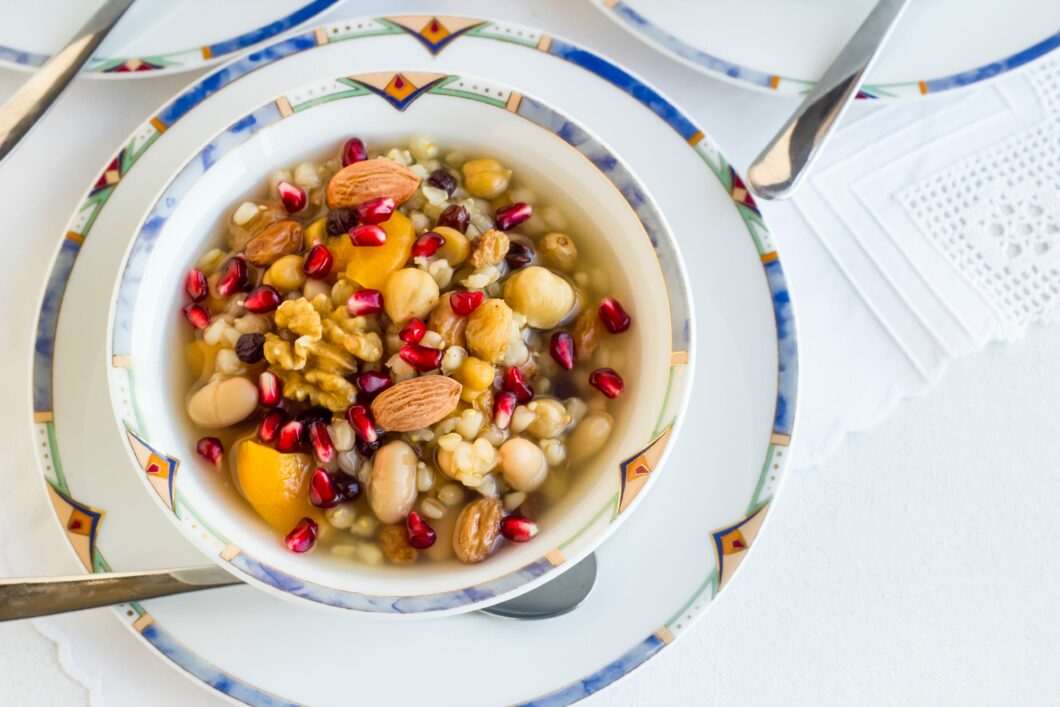
A festive Armenian dessert soup of hulled wheat simmered with dried apricots, raisins, walnuts, and warm spices, sweetened with honey and rosewater. This Christmas Eve tradition is a sweet, fragrant celebration in a bowl.
Nutrition & Info
Allergen Warnings
Equipment Needed
Presentation Guide
Vessel: decorative bowl
Garnishes: pomegranate seeds, cinnamon stick, chopped nuts
Accompaniments: dried fruits
Instructions
-
1
Soak hulled wheat overnight, then drain and rinse. Place in a large pot with 8 cups water.
-
2
Bring to a boil, reduce heat, and simmer for 1 hour until wheat is very tender and begins to burst open.
-
3
Add dried apricots, raisins, honey, cinnamon, nutmeg, and cloves. Simmer for 20 more minutes until fruits are plump.
-
4
Remove from heat and stir in rosewater. The consistency should be like a thick porridge.
-
5
Let cool to warm or room temperature. The soup will thicken as it cools.
-
6
Serve in bowls topped with chopped walnuts, almonds, a scattering of pomegranate seeds, and a cinnamon stick.
Did You Know?
Anoushabour literally means "sweet soup" in Armenian, and on Christmas Eve it is believed that eating it brings sweetness and blessing to the coming year.
Chef's Notes
Equipment Tips
- large pot
- ladle
- serving bowls
- wooden spoon
Garnishing
pomegranate seeds, cinnamon stick, chopped nuts
Accompaniments
dried fruits
The Story Behind Анушабур
Anoushabour is the most important ritual dessert in Armenian Christian tradition, served on Christmas Eve as part of the holy supper. The dish predates Christianity in Armenia, likely originating as a harvest festival porridge that was later adopted into Christian practice. Each ingredient carries symbolic meaning: wheat represents the earth and resurrection, pomegranate seeds symbolize fertility and abundance, and the dried fruits represent the sweetness of life. The preparation of anoushabour on December 24th is one of the most enduring Armenian culinary traditions.



Comments (0)
Log in to leave a comment.
No comments yet. Be the first to share your thoughts!