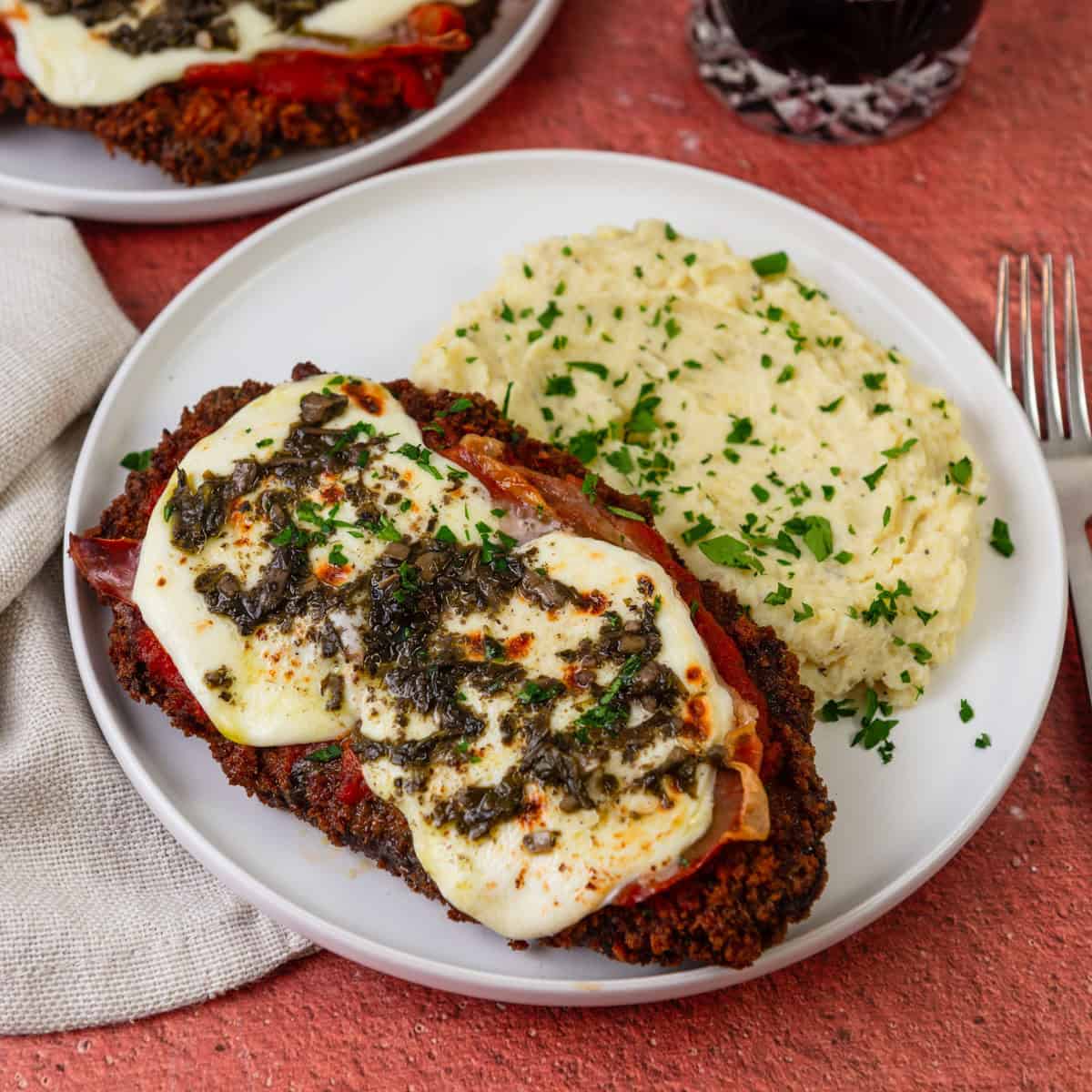
Milanesa a la Napolitana
Milanesa a la Napolitana (mee-lah-NEH-sah ah lah nah-poh-lee-TAH-nah)
Breaded Beef Cutlet with Tomato and Cheese
A crispy breaded beef cutlet topped with tomato sauce, melted mozzarella, baked until bubbly. A beloved Argentine comfort food found in virtually every restaurant.
Nutrition & Info
Allergen Warnings
Equipment Needed
Instructions
-
1
Pound the beef cutlets to an even thickness of about half a centimeter using a meat mallet. Season with salt and pepper on both sides.
-
2
Set up a breading station with flour, beaten eggs, and breadcrumbs in three separate shallow dishes. Dredge each cutlet in flour, then egg, then breadcrumbs, pressing firmly to adhere.
-
3
Heat oil in a large frying pan over medium-high heat. Fry each breaded cutlet for about three minutes per side until golden and crispy. Drain on paper towels.
-
4
Place the fried milanesas on a baking sheet. Spoon tomato sauce over each cutlet, then layer mozzarella slices on top. Sprinkle with oregano.
-
5
Bake at 200C for ten to twelve minutes until the cheese is melted and bubbly. Serve immediately with french fries or salad.
Did You Know?
Despite its name suggesting Neapolitan origin, this dish was invented in Buenos Aires in the 1940s by a cook named Jorge La Grotta at a restaurant called Napoli.
Chef's Notes
Equipment Tips
- frying pan
- baking sheet
- meat mallet
The Story Behind Milanesa a la Napolitana
Milanesa a la Napolitana is an Argentine invention born from the Italian immigrant community in Buenos Aires. The basic milanesa was brought by Italian immigrants who adapted the Milanese cotoletta. In the 1940s, a Buenos Aires restaurateur added tomato sauce and melted cheese on top, creating a uniquely Argentine hybrid that married Italian breading technique with local abundance of beef. It became a staple of Argentine home cooking and restaurant menus, representing the deep Italian influence on Argentine cuisine.



Comments (0)
Log in to leave a comment.
No comments yet. Be the first to share your thoughts!