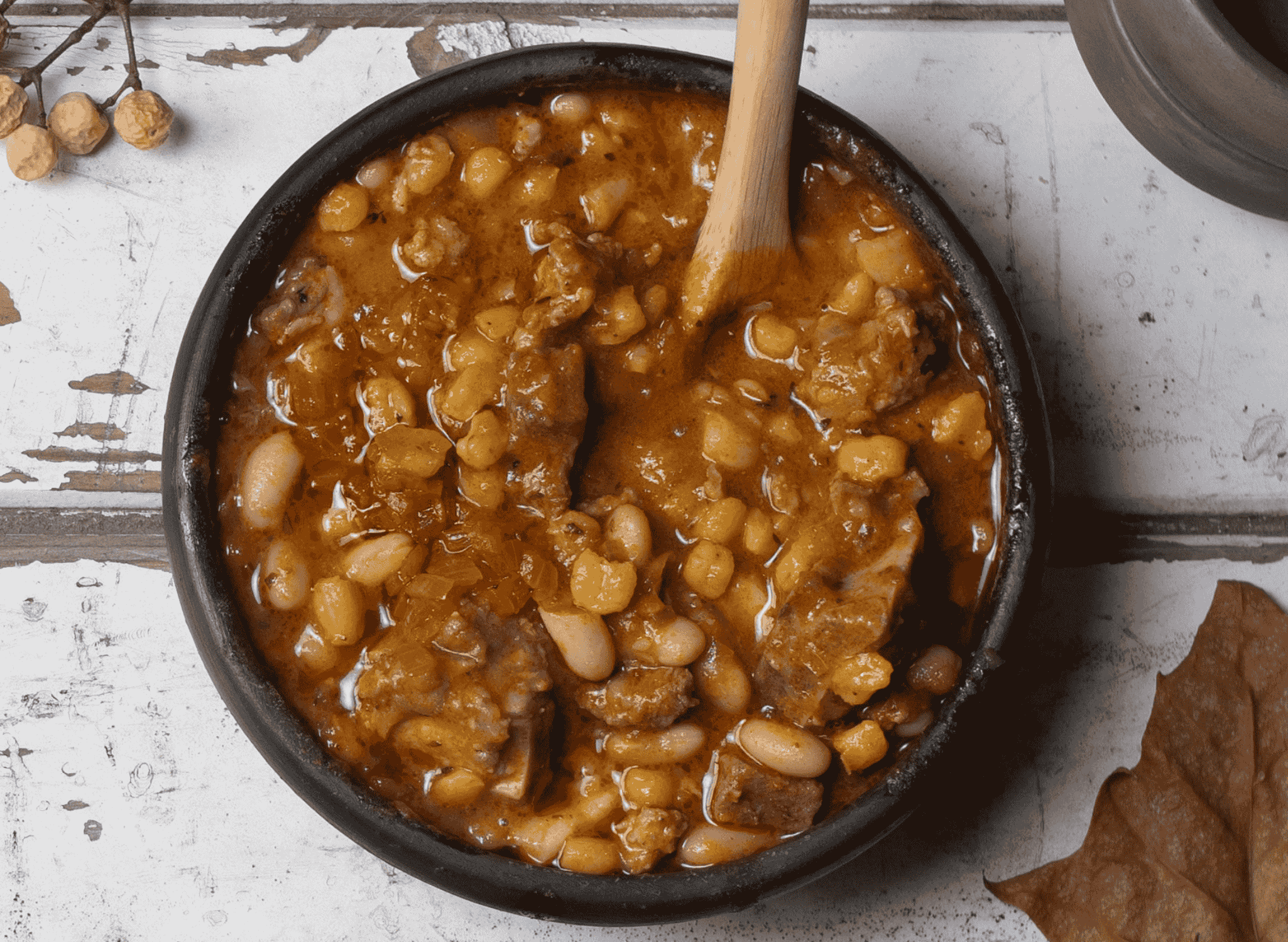
A thick, hearty stew made with white corn, beans, squash, and beef, slow-cooked for hours until rich and creamy. Traditionally served on national holidays as a symbol of Argentine identity.
Nutrition & Info
Equipment Needed
Instructions
-
1
Drain the soaked corn and beans. Place the corn in a large heavy pot with enough water to cover by several inches. Bring to a boil and simmer for one hour until the corn begins to soften.
-
2
Add the cubed beef and optional tripe to the pot. Continue simmering for another hour, adding water as needed to keep everything submerged.
-
3
In a separate pan, saute the chopped onions in olive oil until translucent. Add cumin and smoked paprika, stirring for one minute until fragrant. Add this sofrito to the stew pot.
-
4
Add the cubed squash and drained beans to the pot. Simmer for another hour until everything is tender and the squash has partially dissolved into the broth, creating a thick creamy consistency.
-
5
Serve in deep bowls topped with a spoonful of salsa criolla (chopped onion, tomato, and bell pepper in vinegar). Season with salt and garnish with spring onion.
Did You Know?
Locro is considered the national dish of Argentina and is almost mandatory eating on May 25th, the anniversary of the May Revolution of 1810. Entire neighborhoods organize communal locro cookouts.
Chef's Notes
Equipment Tips
- large heavy pot
- wooden spoon
- ladle
The Story Behind Locro
Locro has pre-Columbian roots in the Andean region of northwestern Argentina, where indigenous Quechua and Diaguita peoples prepared corn-based stews long before Spanish arrival. During colonial times, Spanish settlers added Old World ingredients like beef and squash varieties, transforming the dish into the hearty mestizo stew known today. After Argentine independence, locro became a patriotic symbol, associated with gaucho culture and criollo identity. It remains deeply tied to national celebrations.




Comments (0)
Log in to leave a comment.
No comments yet. Be the first to share your thoughts!