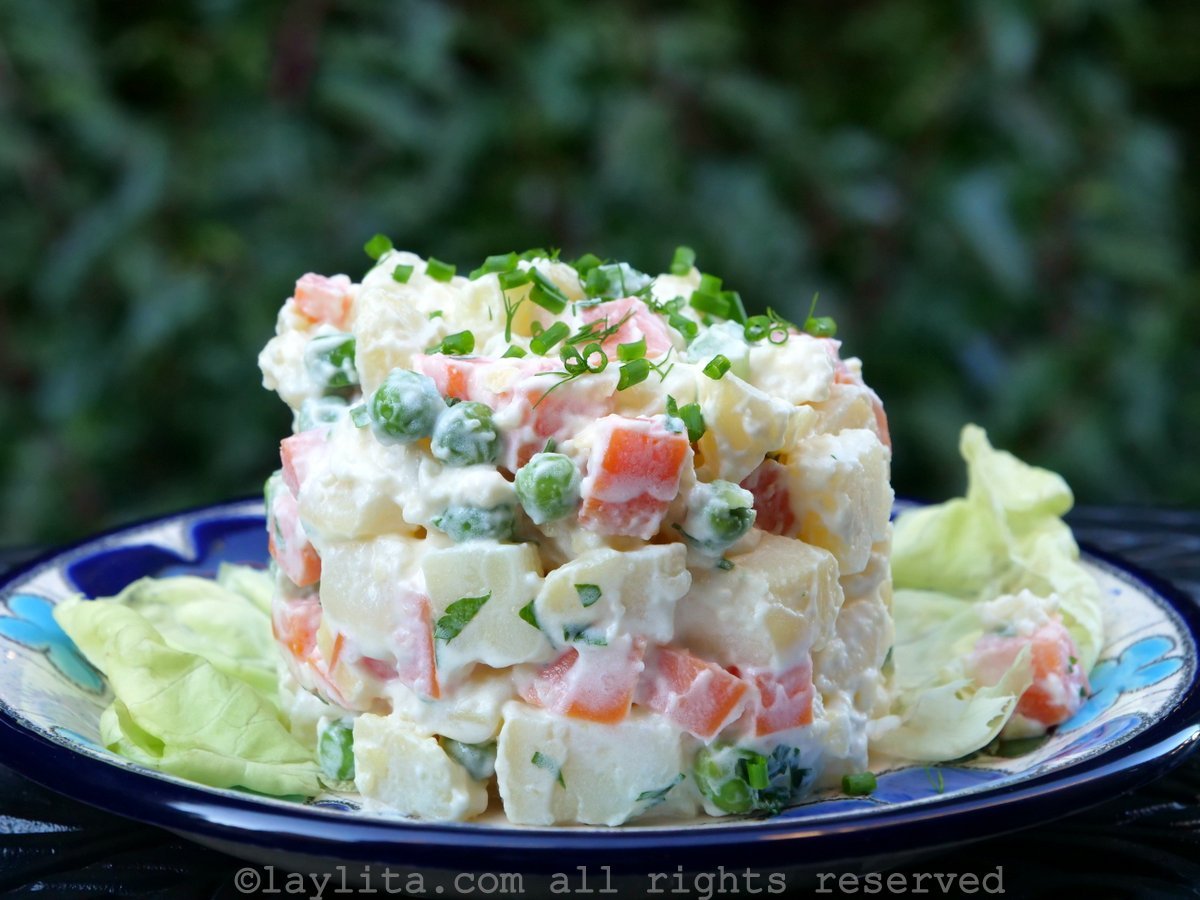
Ensalada Rusa
Ensalada Rusa (en-sah-LAH-dah ROO-sah)
Argentine Potato Salad
A creamy potato salad with diced carrots, peas, and eggs bound in mayonnaise. Despite its Russian name, this version is thoroughly Argentine and appears at every family gathering.
Nutrition & Info
Allergen Warnings
Equipment Needed
Instructions
-
1
Boil the cubed potatoes and carrots in salted water until tender but not falling apart, about fifteen to eighteen minutes. Add the frozen peas in the last three minutes of cooking. Drain well and let cool completely.
-
2
Dice the hard-boiled eggs. In a large bowl, gently combine the cooled vegetables with the diced eggs, being careful not to mash the potatoes.
-
3
Add mayonnaise and lemon juice, folding gently to coat everything evenly. Season with salt and white pepper. The salad should be creamy but the vegetable pieces should remain distinct.
-
4
Cover and refrigerate for at least two hours to allow flavors to meld and the salad to firm up.
-
5
Serve cold, smoothing the top with a spatula and optionally decorating with additional egg slices and pea arrangements.
Did You Know?
Every Argentine family claims their ensalada rusa is the best. The debate over whether to add apples, pickles, or olives has sparked more family arguments than politics.
Chef's Notes
Equipment Tips
- large pot
- mixing bowl
- sharp knife
The Story Behind Ensalada Rusa
Ensalada rusa, or Russian salad, arrived in Argentina through European immigration and quickly became one of the country's most ubiquitous side dishes. The Argentine version simplified the original Olivier salad, focusing on potatoes, carrots, peas, and eggs in mayonnaise. It became a fixture of holiday tables, particularly Christmas Eve dinner, where it accompanies vitel tone and cold meats. The dish represents how Argentina absorbed and simplified European culinary traditions, making them accessible and beloved across all social classes.



Comments (0)
Log in to leave a comment.
No comments yet. Be the first to share your thoughts!