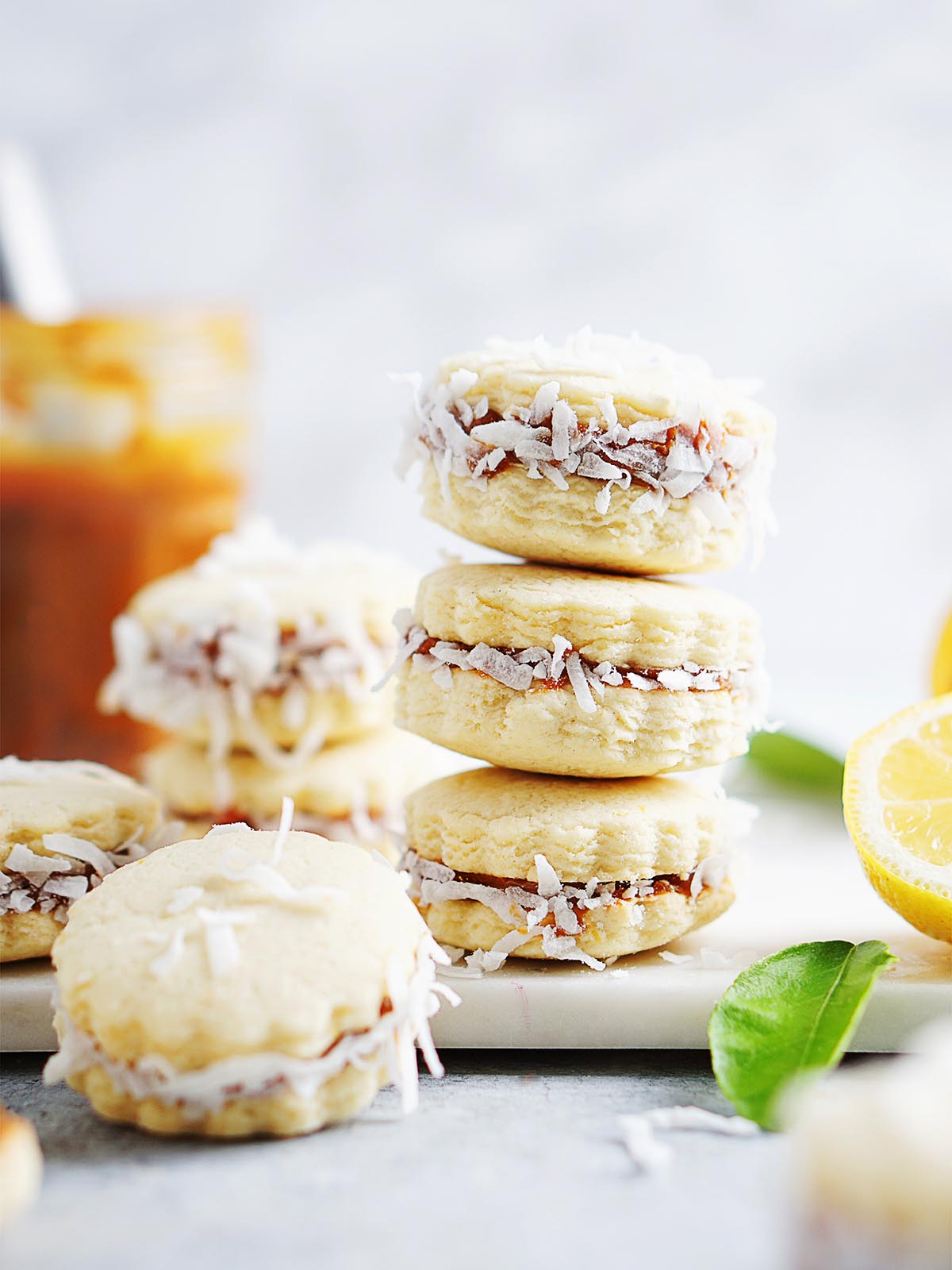
Delicate, crumbly cornstarch cookies sandwiched with dulce de leche and rolled in coconut. These melt-in-your-mouth treats are Argentina's most beloved cookie.
Nutrition & Info
Allergen Warnings
Equipment Needed
Presentation Guide
Vessel: decorative plate or box
Garnishes: powdered sugar, shredded coconut
Accompaniments: mate tea, coffee
Instructions
-
1
In a medium bowl, sift together the cornstarch, all-purpose flour, baking powder, and baking soda. Whisk to combine evenly. The high ratio of cornstarch to flour is the secret to alfajores' signature melt-in-your-mouth, crumbly texture that distinguishes them from ordinary cookies. Set the dry ingredients aside.
-
2
In a large bowl, cream the softened butter with the powdered sugar using an electric mixer on medium speed for 3-4 minutes until the mixture is pale, fluffy, and doubled in volume. Add the egg yolks one at a time, beating well after each addition. Stir in the vanilla extract, lemon zest, and cognac if using. The mixture should be light and smooth with the fragrance of lemon and vanilla.
-
3
Gradually fold the sifted dry ingredients into the butter mixture using a spatula, mixing gently until a soft, slightly crumbly dough forms. Do not overwork the dough or the cookies will be tough rather than tender. Gather the dough into a disc, wrap tightly in plastic wrap, and refrigerate for at least 1 hour until firm enough to roll. This chilling step is essential for clean-cut shapes.
-
4
Preheat the oven to 170°C/325°F and line two baking sheets with parchment paper. Roll the chilled dough on a lightly floured surface to about 5mm (1/4 inch) thickness. Cut into rounds using a 5cm (2-inch) round cookie cutter, re-rolling scraps gently. Place the rounds on the prepared sheets with 1 inch between them. These cookies spread very little, so they can be placed relatively close together.
-
5
Bake for 10-12 minutes, rotating the sheets halfway through. The cookies are done when they are just barely set on top but still completely pale — they must NOT brown. Any color at all means they are overbaked and will be dry rather than meltingly tender. The bottoms should be the palest golden. Remove from the oven and let cool on the baking sheets for 5 minutes before transferring to a wire rack to cool completely.
-
6
Spread a generous tablespoon of thick dulce de leche on the flat side of one cookie, then sandwich with another cookie, pressing gently until the dulce de leche just reaches the edges. The filling should be visible but not oozing. Hold each assembled alfajor by the top and bottom, and roll the exposed dulce de leche edge through the desiccated coconut, pressing gently to adhere.
-
7
Dust the tops of the finished alfajores lightly with powdered sugar through a fine-mesh sieve. Allow them to rest for at least 2 hours (or overnight) before serving — the cookies absorb moisture from the dulce de leche and develop an even more tender, melt-away texture the next day. Store in an airtight container at room temperature for up to 3 days, with parchment between layers.
Did You Know?
Argentina produces over 6 billion alfajores per year. Havanna brand alfajores from Mar del Plata are so famous they're sold at airports nationwide.
Chef's Notes
Equipment Tips
- mixing bowl
- baking sheet
- round cookie cutter
- electric mixer
Garnishing
powdered sugar, shredded coconut
Accompaniments
mate tea, coffee
The Story Behind Alfajores
The Story: Alfajores arrived in Argentina via Spanish colonists who brought the Moorish-origin confection from Andalusia. In Argentina, the alfajor was transformed into two shortbread cookies sandwiched with dulce de leche and coated in chocolate or rolled in shredded coconut. The Argentine adaptation became so popular that the country now consumes over six million alfajores daily, making them one of the most consumed sweets per capita in the world.
On the Calendar: Alfajores are an everyday treat, eaten as a snack with mate or coffee. They are also exchanged as gifts and are a traditional part of merienda (afternoon tea). Regional varieties appear at festivals and fairs.
Then & Now: From artisanal origins, alfajores have become a massive industry, with brands like Havanna and Cachafaz achieving national icon status. Yet small-batch artisan alfajores remain prized, and every region claims its version is the best.
Legacy: The alfajor is Argentina's most democratic sweet: beloved by every social class, available on every corner, and inseparable from the daily ritual of mate and conversation.



Comments (0)
Log in to leave a comment.
No comments yet. Be the first to share your thoughts!