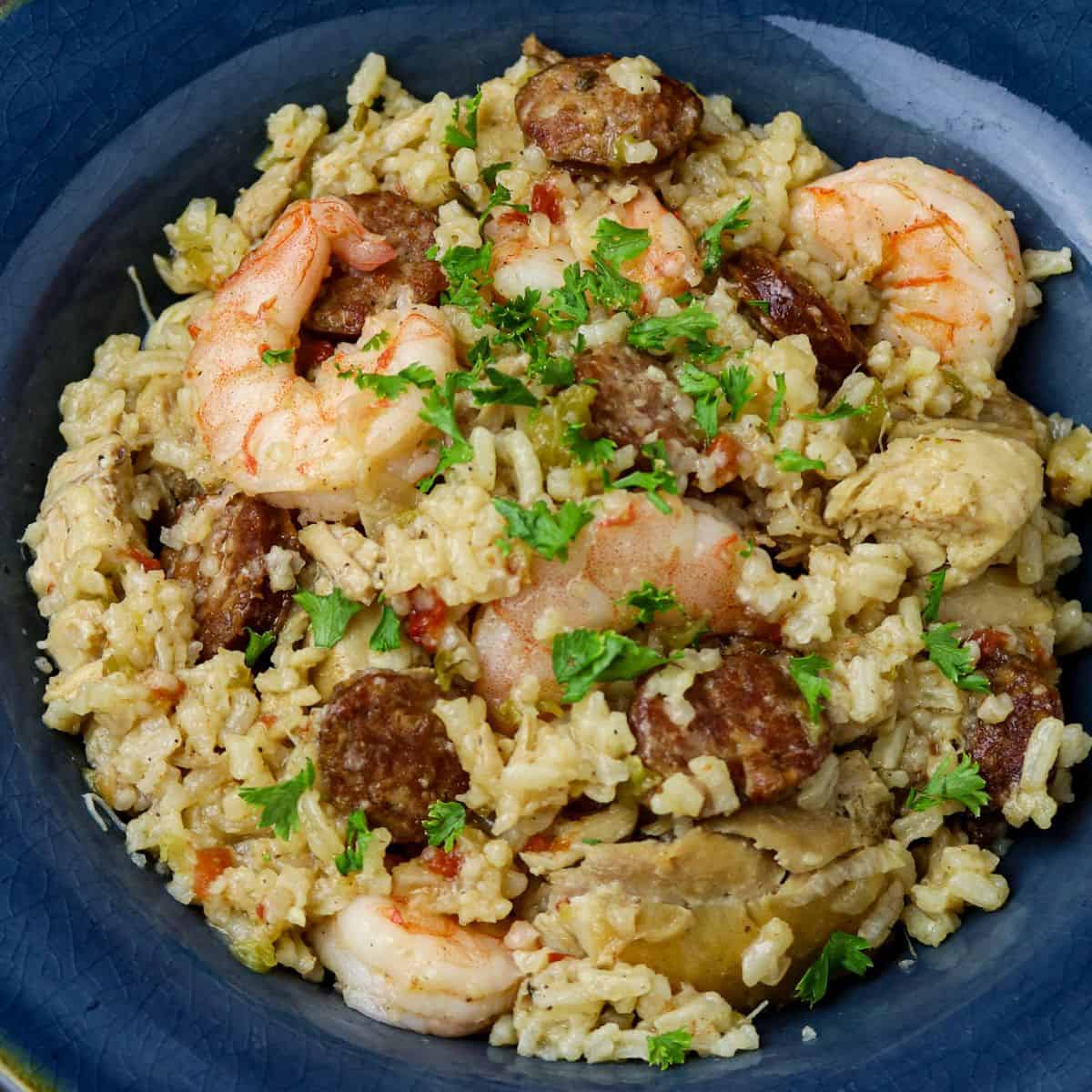
Chicken and Shrimp Jambalaya
Jambalaya (jam-buh-LY-uh)
Creole Jambalaya
A bold, one-pot Creole rice dish loaded with chicken, shrimp, andouille-style turkey sausage, and the holy trinity of onion, celery, and bell pepper in a spiced tomato base.
Nutrition & Info
Equipment Needed
Presentation Guide
Vessel: deep cast iron pot
Garnishes: sliced scallions, hot sauce
Accompaniments: hot sauce, crusty French bread
Instructions
-
1
Season chicken with Cajun seasoning. Brown in oil in a Dutch oven over high heat, 4 min per side. Remove and set aside.
-
2
Brown turkey sausage slices in the same pot. Remove and set aside.
-
3
Sauté onion, celery, and bell pepper for 5 min. Add garlic, cook 1 min.
-
4
Add tomatoes, broth, rice, paprika, and cayenne. Stir well. Bring to a boil.
-
5
Nestle chicken and sausage into the rice. Cover and cook on low 20 min without lifting the lid.
-
6
Add shrimp on top, re-cover, cook 5 min until shrimp are pink and rice is tender. Fluff and garnish with scallions.
Did You Know?
Jambalaya is Louisiana's answer to Spanish paella — both were shaped by the same colonial influence when Spain governed Louisiana from 1763 to 1800.
Chef's Notes
Equipment Tips
- large Dutch oven
- wooden spoon
- cutting board
Garnishing
sliced scallions, hot sauce
Accompaniments
hot sauce, crusty French bread
The Story Behind Chicken and Shrimp Jambalaya
Jambalaya emerged in 18th-century New Orleans from a confluence of Spanish, French, and West African culinary traditions. When Spanish settlers couldn't get saffron for paella, they substituted tomatoes, creating Creole jambalaya. Cajun jambalaya, made without tomatoes in rural Louisiana, is the brown counterpart to the red Creole version.


Comments (0)
Log in to leave a comment.
No comments yet. Be the first to share your thoughts!