
Crispy semolina flatbreads stuffed with spiced tomato and onion filling, pan-fried until golden. A beloved Algerian street food.
Nutrition & Info
Equipment Needed
Presentation Guide
Instructions
-
1
In a large bowl, combine the semolina flour, all-purpose flour, and 1 teaspoon of salt. Gradually add warm water while mixing with your hands, then add 2 tablespoons of olive oil. Knead for 5-7 minutes until you achieve a smooth, pliable dough that is soft but not sticky. The dough should be more supple than bread dough. Cover with a damp towel or plastic wrap and rest for at least 30 minutes to allow the semolina to fully hydrate.
-
2
While the dough rests, prepare the filling. Heat 1 tablespoon of olive oil in a large skillet over medium heat. Add the finely diced onions and cook for 5-6 minutes until they soften and become translucent. Add the minced garlic and diced green pepper, cooking for 3-4 minutes more until the pepper softens. Add the diced tomatoes, cumin, paprika, black pepper, and salt to taste. Cook for 10-12 minutes, stirring occasionally, until the mixture thickens and most of the liquid evaporates. The filling must be thick and dry enough that it won't make the dough soggy. Set aside to cool.
-
3
Divide the rested dough into 8 equal balls. Generously oil a smooth, clean work surface and your hands. Take one ball and begin pressing and stretching it with oiled fingers, working from the center outward, pulling and stretching until the dough becomes almost translucent and paper-thin — ideally you should be able to see the surface beneath it. This requires patience and a gentle touch to avoid tearing.
-
4
Spread 2-3 tablespoons of the cooled tomato-onion filling over the center of the stretched dough in a thin, even layer. Fold the four sides inward to create a square envelope, overlapping slightly in the center to seal the filling inside. Press gently to flatten and distribute the filling evenly within the folded dough.
-
5
Heat a large non-stick skillet or griddle over medium heat and add a thin film of olive oil. Carefully transfer the folded mhadjeb to the pan and cook for 3-4 minutes on the first side until golden brown and crispy, with visible spots of deep caramelization. Flip carefully with a wide spatula and cook the second side for another 3-4 minutes until equally golden and crisp. The filling inside should be hot and the dough should shatter slightly when pressed.
-
6
Transfer the cooked mhadjeb to a cutting board and cut into quarters or halves while still hot. Continue cooking the remaining mhadjeb, adding small amounts of oil to the pan as needed between each one. Serve immediately while warm and crispy — mhadjeb are best eaten fresh from the pan, paired with a glass of mint tea or a simple yogurt dip on the side.
Did You Know?
Mhadjeb vendors are found on nearly every corner in Algerian cities.
Chef's Notes
Equipment Tips
- flat griddle
- rolling pin
- mixing bowl
- sharp knife
Garnishing
butter drizzle
Accompaniments
tomato sauce, mint tea
The Story Behind Mhadjeb
The Story: Mhadjeb are stuffed semolina flatbreads that belong to the broader family of Maghreb filled breads, with deep roots in Algerian street food and home cooking. The dough is made from fine semolina mixed with water and oil, stretched thin, filled with a cooked mixture of tomatoes, onions, and spices, then folded and pan-fried until golden and crisp. Some historians trace the technique to Andalusian culinary influences that arrived with Muslim refugees expelled from Spain in the fifteenth and sixteenth centuries.
On the Calendar: Mhadjeb are everyday food, eaten at breakfast, as afternoon snacks, or as part of a light dinner. They appear in abundance during Ramadan, when they are prepared fresh each evening to break the fast alongside soup, dates, and other small dishes.
Then & Now: Once strictly a home-kitchen affair prepared by women who judged dough readiness by touch alone, mhadjeb have become one of Algeria's most popular street foods, sold from stalls in every city and town. Modern variations include cheese fillings and herb additions, but the classic tomato-onion version remains supreme.
Legacy: Mhadjeb represent the genius of Algerian home cooks who transform semolina, tomatoes, and patience into one of North Africa's most satisfying hand-held foods.
More Algerian Dishes
 Medium
📜 Story
Medium
📜 Story
Bourek
Algerian Stuffed Pastry Rolls
Ramadan iftar, celebrations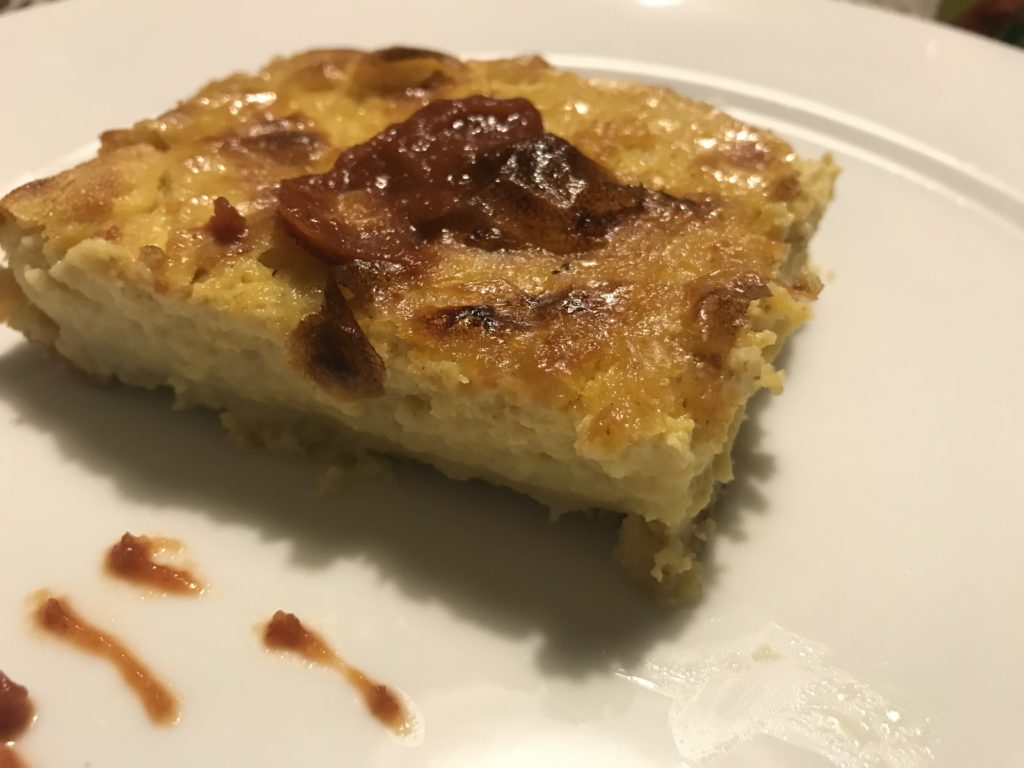 Medium
📜 Story
Medium
📜 Story
Bradj
Algerian Semolina Date Cake
Snack, Ramadan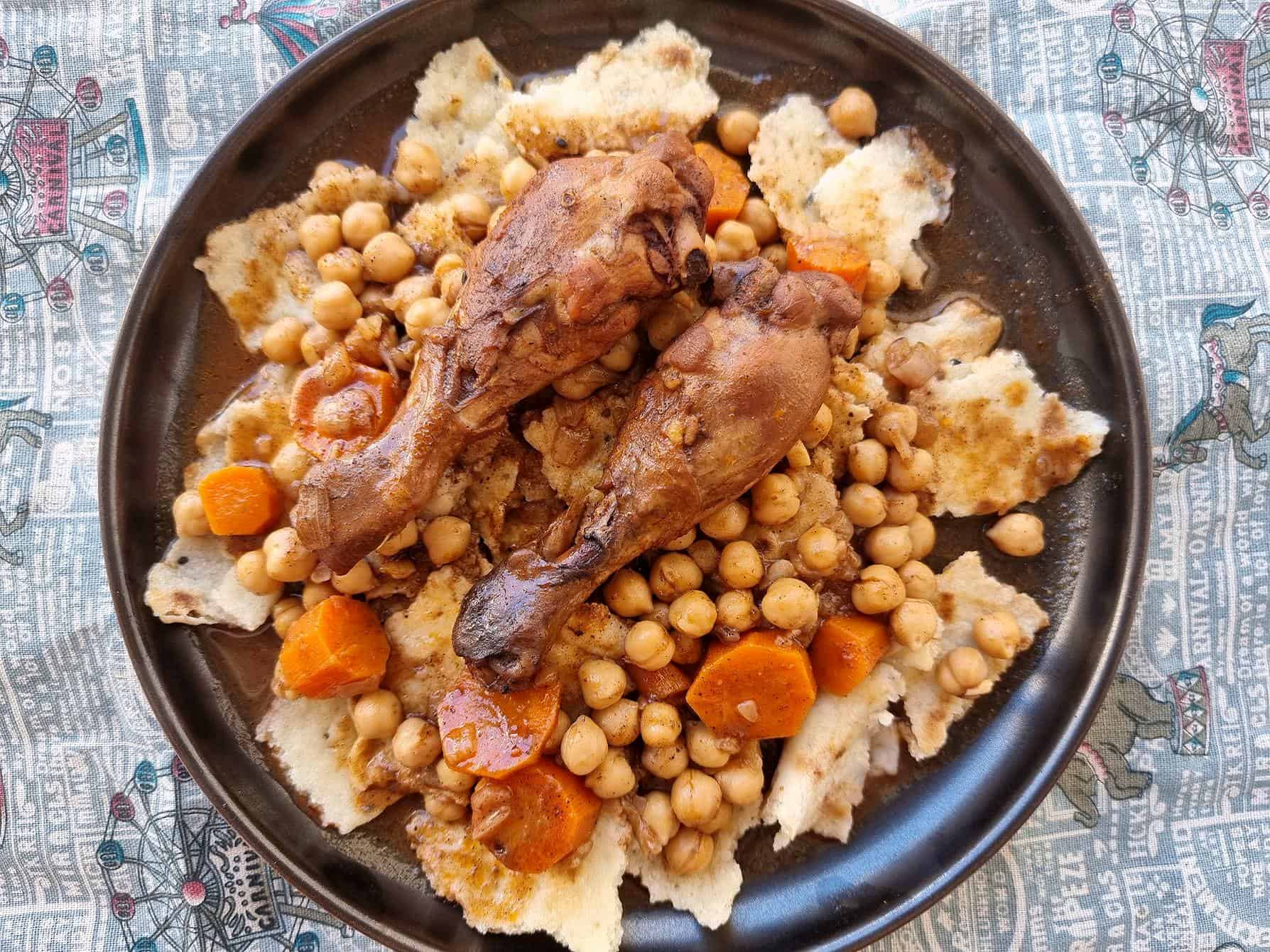 Medium
📜 Story
Medium
📜 Story
Chakhchoukha
Torn Flatbread Stew
Lunch, festive occasions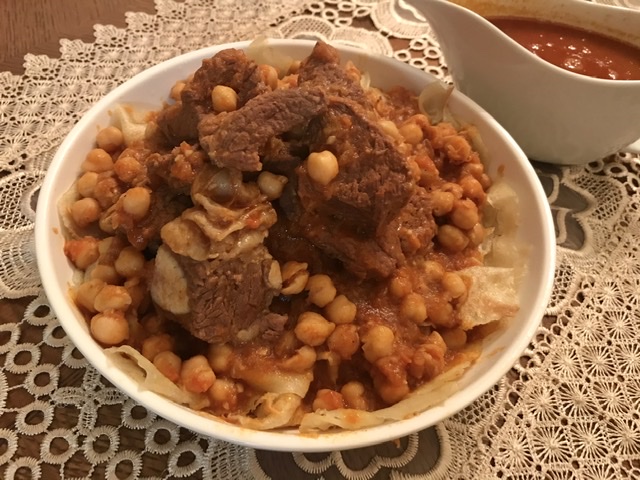 Hard
📜 Story
Hard
📜 Story
Chakhchoukha Biskria
Biskra-Style Torn Bread in Spiced Sauce
Friday lunch, celebrations
Comments (0)
Log in to leave a comment.
No comments yet. Be the first to share your thoughts!